Mental Health Investment is Improving Safety in Construction
Key Highlights
- Integrate mental health check-ins into daily safety routines like toolbox talks and pre-task planning to normalize wellness conversations.
- Train leaders using frameworks like ALGEE to recognize early signs of stress or burnout and respond effectively, fostering a supportive culture.
- Make mental health resources discreet and easily accessible through digital tools, QR codes, and confidential messaging to encourage utilization.
- Develop peer networks with trusted, voluntary advocates to facilitate early concern reporting and normalize mental health discussions among workers.
- Design work schedules that account for fatigue by rotating assignments, building recovery time, and adjusting workloads to prevent burnout and maintain safety.
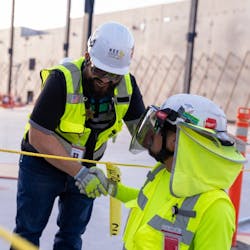
Physical risk is the adversary construction knows best. The industry has poured time, capital and discipline into safety programs designed to protect the body and keep projects moving.
That focus, however, has left another costly exposure largely unmanaged. Fatigue, stress and burnout build quietly under sustained pressure, with nearly one-third of construction workers reporting all three symptoms in 2025, according to a Travelers report.
That strain is becoming difficult to untangle from incident rates, retention challenges and project performance. With projects growing more complex, mental health and wellness needs to move from the margins of HR conversations into the center of operational risk management.
Here is why construction leaders focused on safety, retention and financial performance must begin treating mental health as a core operational strategy.
Why Wellness Is No Longer Peripheral
For decades, wellness in construction existed largely outside the work itself. Safety focused on compliance. Wellness lived in employee handbooks. The two rarely intersected.
Today, wellness functions as an operational input that shapes who stays, how crews perform and how consistently projects run. When integrated into daily operations, the impact shows up in areas leaders already measure:
Stronger Retention: Addressing burnout helps keep experienced workers on the job, preserving institutional knowledge and reducing costly turnover.
Higher Productivity: Crews with steadier focus and fewer disruptions generate less rework, protecting schedules and margins.
Lower Risk Exposure: Stronger communication and earlier intervention reduce incidents that introduce both direct and indirect costs, including medical claims and downtime.
How can organizations practically integrate wellness into the core of their operations?
Embed Wellness Where Safety Already Lives
Organizations seeing real progress tend to start in familiar places. Rather than launching standalone programs, they bring mental health into the routines crews already rely on to work safely.
Toolbox talks and pre-task planning are often the first touchpoints. Alongside conversations about lift plans or personal protective equipment (PPE), leaders make space for brief check-ins around fatigue, workload, or focus before high-risk tasks. These moments are short and practical, reinforcing the idea that mental readiness is part of working safely, not separate from it.
Supervisors also play a critical role when early warning signs appear. Instead of treating changes in behavior as discipline issues, leaders are encouraged to pause and adjust work when they notice:
· Withdrawal from the crew.
· Repeated tardiness or disengagement.
· Lapses in attention during routine tasks.
Responses vary depending on the situation. Sometimes it means rotating assignments, slowing the pace of a task, or checking in privately rather than pushing forward. Over time, these small adjustments add up.
Just as hard hats and lockout procedures became routine through daily reinforcement, mental health becomes part of the safety conversation when it is integrated into daily practices.
Train Leaders to Reinforce Wellness Through Culture
Sustained change begins with leadership. When owners, executives and site leaders invest in mental health training, it sends a clear signal that well-being is not something to manage quietly off-the-clock, but a shared responsibility tied directly to safety and performance.
The most effective training focuses on early recognition and response rather than diagnosis. Leaders learn to recognize subtle shifts in behavior that often appear before larger safety, performance, or retention challenges. Just as important, they are given clear, practical guidance on how to respond in the moment.
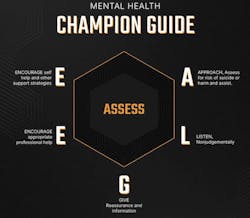
One widely used framework is ALGEE, which offers a simple structure leaders can rely on when conversations feel difficult or time is limited:
A – Approach and assess for risk of harm.
L – Listen nonjudgmentally.
G – Give reassurance and information.
E – Encourage appropriate professional help.
E – Encourage self-help and other support strategies.
Because these conversations rarely happen under ideal conditions, refresher training matters. Annual or quarterly reinforcement helps leaders stay confident and prepared. Much like CPR, mental health training is not about solving the problem on the spot. It is about acting early, reducing harm and opening the door to support before issues escalate.
When leaders respond consistently and constructively, wellness becomes part of the culture itself. Over time, it shapes how crews communicate, how concerns are raised and how pressure is managed on the job site.
Make Support Easy to Find (and Hard to Avoid)
In construction environments where toughness is closely tied to identity, even well-intentioned programs can fall flat if they feel performative. Workers may worry about being labeled unreliable, passed over for future work, or viewed differently by supervisors, especially on projects where crews rotate and reputations travel quickly.
Organizations seeing meaningful uptake focus on access that feels discreet, familiar and low-effort. Support is positioned in ways that fit naturally into the workday, including:
· Digital telehealth tools that allow workers to seek support privately.
· QR codes that lead to resources and other simple reminders placed where crews already go, such as on jobsite boxes, trailers, or break areas.
· Clear messaging that resources are confidential and available on a worker’s own terms.
When support feels routine and accessible, workers are more likely to remember it—and use it—when they actually need it.
Build Peer Pathways That Feel Safe
Even in strong cultures, not every worker will approach management. Peer networks help bridge that gap.
Credibility on the job site, rather than seniority or title, is often the strongest indicator of an effective peer advocate. They tend to be people others already trust—the ones coworkers naturally turn to for advice, who know when to listen and how to keep conversations confidential. Keeping the role voluntary, rather than assigned, is essential to maintaining that trust.
In practice, these networks look more like informal safety roles than formal programs:
· Trusted crew members volunteer as peer advocates.
· Advocates receive basic training and remain visible on site.
· Conversations stay grounded in shared experience rather than policy.
Peer advocates are not expected to solve problems. Their role is to listen, normalize the conversation and help coworkers navigate next steps. Strong peer pathways enable concerns to surface earlier, long before they escalate into safety incidents or disengagement.

Build pathways that feel safe.
Design Work to Reduce Fatigue, Not Just Respond to It
Fatigue, stress and burnout rarely appear at random. They are often the predictable result of long hours, compressed schedules and sustained pressure over the life of a project.
Rather than waiting for strain to show up as a safety or performance issue, some construction leaders are rethinking how work is planned and paced. That can include:
· Rotating assignments during high-intensity phases.
· Building recovery time into schedules after major milestones.
· Adjusting workloads when crews have been traveling or working extended hours.
However, this approach does not mean lowering expectations. Instead, it should reflect an understanding that exhausted crews are more prone to errors, disengagement and risk-taking. When leaders account for fatigue during planning, teams are better positioned to maintain focus, communicate clearly and execute safely over time.
Designing work with mental strain in mind also gives supervisors more options when pressure mounts. Instead of framing fatigue as something to push through, leaders can adjust sequencing, staffing, or timelines in ways that protect both safety and performance.
Protecting the Bottom Line Means Seeing the Whole Risk Picture
The construction industry has proven its ability to evolve when safety is at stake. Hard hats, fall protection and lockout procedures were once debated, too.
Today’s challenge is recognizing that protecting the workforce means addressing the full spectrum of risk, including the mental and emotional factors that shape how work is done.
Industrial construction leaders who embed wellness into how work is planned, led and executed will be the ones protecting their crews, controlling risk and delivering stronger financial outcomes.