How Dogs Teach us to be Better Humans
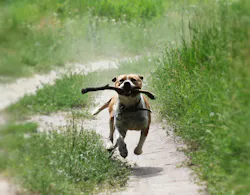
It’s that time of year again, when everyone and—much to my delight—their dogs are outside.
I know some people get nervous around certain breeds or larger dogs, but I’m equally excited for every four-legged encounter. That’s because I firmly believe that all dogs are good dogs. Any fault we may find with their behavior is not a reflection of them, but of their human guardians.
Dogs rely on us for everything: food, shelter, medical care and behavioral cues. They rely on us to tell them what to do. Or not do. Or stop doing. They learn from us, even when we don’t think we’re teaching them.
Now, some people will say you can’t teach an old dog a new trick, but I strongly disagree. Remember in the late aughts when many dogs were rescued from football player Michael Vick’s property?
These dogs were unwilling participants in a dog fighting ring. They learned to be aggressive in order to survive, and they had the emotional, and physical, scars to show for it.
But that horrific ordeal had a happier ending. Nearly all of those rescued dogs were rehabilitated, and many became therapy dogs or pets. They learned to change their behaviors. They learned to not be scared. They learned to trust. They learned to love.
I’m not saying it was an easy or fast process for the dogs, trainers or new human guardians, but the outcomes were nonetheless inspiring. Those dogs were the embodiment of resilience and perseverance.
I believe dogs are some of our greatest teachers, and this is but one example. I’m sure your own dogs, past and present, are constantly showing you new things about the world. It makes me wonder whether we can apply what dogs show us in other aspects of our lives, too.
I think we could learn to be more patient while stuck in traffic and more joyful in our day-to-day routines. I also think we could reexamine our approaches at work and reconsider our relationship with colleagues. Reading Rick Tobin’s article on multilingual workforces, I was struck by how simple acts could have such lasting consequences.
Tobin provided several examples that have stuck with me: learning some basic safety phrases in another language, rephrasing the question to be a conversation starter rather than feel like an interrogation, using clear language and conducting demonstrations to ensure comprehension.
I know that the world can feel exceptionally heavy right now. Inflation and prices for seemingly everything are sky high. Discourse seems to have reached new levels of acerbity. There’s so much happening around us, and so much of it feels out of our control.
And yet, we still have the power to make someone’s life better—as long as we’re willing to keep trying.
As Tobin’s piece reminds us, there are many benefits to be had from developing a learning culture, creating an inclusive environment, gaining buy-in and building psychological safety. Best of all, these grand initiatives are within our reach. Often, they can start small, scale up and cost very little.
In other words, you can implement them without an elaborate formal program that’s been approved by legal, operations and untold other layers of management. You just have to take a meaningful first step, then another and another.
We know that the carrot is usually more effective than the stick. We know that it takes weeks, if not months, to build new habits. We know that it can take even longer to break old habits and unlearn bad behaviors. We know that the results need not be perfect to be effective. We know that heart and intention matters.
We often forget the other bits, like the capacity to understand, forgive and appreciate. How people want to succeed, do right by others and root for you along the way. Let’s harness this energy and remember what dogs teach us: That there’s no time like the present to learn a new trick or two, and that people are worthy of second (or third or fourth) chances.
Read more:
 multilingual_word_cloud
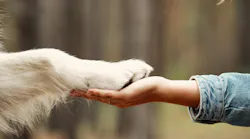 human hand and dog paw intertwined
About the Author
 Nicole Stempak
Nicole Stempak
Nicole Stempak is managing editor of EHS Today and conference content manager of the Safety Leadership Conference.