Something to Talk About: A Psychological Pandemic
Key Highlights
- Over 1 billion people worldwide suffer from mental health disorders, surpassing COVID-19 cases, indicating a significant global crisis.
- Emotional contagion can influence mental health, with negative emotions spreading among coworkers, affecting workplace dynamics.
- Excessive AI use and screen time contribute to mental fatigue, burnout, and cognitive overload, posing safety risks for workers.
- Strategies like mindfulness, setting boundaries, and open discussions about psychological safety are vital for mitigating mental health issues at work.
- AI has potential to predict mental health crises, but human-centered approaches remain essential for fostering a psychologically safe environment.
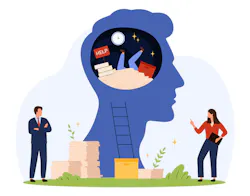
We’re living in an era of non-stop health scares, one right after another, since apparently COVID-19 was a powerhouse for TV ratings and pageviews. So far, thankfully, none of the recent medical outbreaks has quite scaled the heights of a full-fledged pandemic. However, there is another health epidemic that has proven to be alarmingly resilient, shows no signs of abating, and in fact is getting worse by the day: the mental health crisis.
Has it reached the point where we should start referring to the mental health crisis—psychological conditions that include anxiety, depression and suicidal ideation—as a pandemic? Maybe not, if we go with the thinking that a mental health disorder isn’t infectious, meaning you can’t “catch” it from another person… at least not in the physical sense. But on the other hand, more than 1 billion people have some type of mental health disorder, according to the World Health Organization (WHO), which is substantially more than the number of people who caught COVID (780 million reported cases at last count).
And maybe you can catch psychological distress from other people after all; researchers have studied a condition known as emotional contagion, which is when other people’s emotions and behaviors influence your own, sometimes without you even knowing it. According to Dr. Adam Borland, a psychologist with Cleveland Clinic, “It’s very easy to adopt the types of behaviors and thought processes of the people you surround yourself with. If you surround yourself with people who are positive, you’ll probably feel more optimistic. If you surround yourself with people who are always pessimistic, it might be easier for you to automatically gravitate toward negative emotions.” And, he adds, emotional contagion can have a direct impact on a person’s mental health.
To put it into a workplace context, it’s quite possible that a worker’s anxiety could be so intense that it triggers a negative emotional reaction from a coworker. Dr. Borland cites an example of a worker being anxious about completing a task, which causes a coworker to start feeling anxious as well, even if they can’t pinpoint the reason.
The Cleveland Clinic offers a number of practical ways to avoid the impact of somebody else’s negativity, such as adopting mindfulness techniques, setting boundaries, focusing on gratitude, limiting social media and screen time, and seeking help from a therapist. Of course, rather than taking that advice, many people are opting instead to take the increasingly popular shortcut of letting AI solve the problem for them. But in fact, improper use of AI can very easily make things worse:
· We’ve written before about AI fatigue, which occurs when an employee’s workload increases because their boss assumes that using AI makes it easier for an employee to get their work done—as a result, the worker feels overwhelmed because they’re asked to do even more.
· Researchers are trailblazing a new field of research into the harmful effects of AI on the human brain (ironic, since the development of AI tools derives from research on how to mimic the human brain), and they’re coming up with fanciful terms to describe it. Harvard University, for instance, refers to brain fry; the University of Pennsylvania uses the term cognitive surrender. Basically, it’s what happens when too frequent use of AI overloads the human brain, leading to mental fatigue and burnout and other negative conditions.
· AI is typically accessed through a device, most likely a laptop, tablet or smartphone. The average American is now believed to spend at least seven hours per day looking at a screen, and it’s been well established that excessive screen time has detrimental effects, both physically and mentally.
For safety professionals, the immediate concern is: How effective are my workers going to be if they’re anxious, depressed, burnt out, or overloaded? Whether a worker is operating heavy equipment, driving a vehicle, working on a roof, or sitting at a desk, they’re all potentially in harm’s way, whether physically or psychologically. How do you keep people psychologically safe in a world that’s becoming increasingly dangerous?
One possible answer could be AI itself. Studies (yes, it seems like everything is being studied these days) are looking into using AI to predict potential mental health crises. But in terms of what should you be doing today, Harvard’s Amy Edmondson says the first step is decidedly AI-free and screen-free: talk about psychological safety at work and prioritize it. When you openly prioritize psychological safety as a leader, she suggests, you can define and dispel misconceptions about it. There may not be a vaccine to forestall a mental health crisis, but simply talking about it at work can go a long way toward diminishing its spread.
About the Author
 Dave Blanchard
Dave Blanchard
Editor-in-Chief / Senior Director of Content
During his career Dave Blanchard has led the editorial management of many of Endeavor Business Media's best-known brands, including IndustryWeek, EHS Today, Material Handling & Logistics, Logistics Today, Supply Chain Technology News, and Business Finance. In addition, he serves as senior content director of the annual Safety Leadership Conference. With over 30 years of B2B media experience, Dave literally wrote the book on supply chain management, Supply Chain Management Best Practices (John Wiley & Sons, 2021), which has been translated into several languages and is currently in its third edition. Prior to joining Endeavor/Informa/Penton, he spent a decade covering the artificial intelligence industry. He is a frequent speaker and moderator at major trade shows and conferences, and has won numerous awards for writing and editing. He is a voting member of the jury of the Logistics Hall of Fame, and is a graduate of Northern Illinois University.