Will Viewing Employees as Industrial Athletes Reduce Injuries?
Most people might not admit it, but being called an athlete is a compliment. It evokes a level of competency that has been earned through hard work.
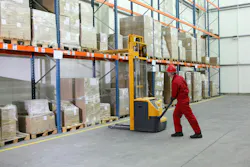
So, the term industrial athlete is quite apt for people doing the hard physical labor in manufacturing as well as warehousing. The term originated when sports medicine researchers noted the similarities between workers in physically demanding jobs and athletes.
As far back as 2015, Ford Motor Company adopted the term.
“We refer to our assembly line employees as ‘industrial athletes’, due to the physical nature of the job,” said Allison Stephens, technical leader for assembly ergonomics at Ford, in an article in Automotive World. “We have made data-driven decisions through ergonomics testing that has led to safer vehicle production processes and resulted in greater protection for our employees.”
Some companies have taken the concept as far as setting up what most of us would consider a gym inside their facility. One such example is at Mitsubishi Power in Florida. Its site features a rehabilitation facility that includes a universal exercise machine, a stationary bike, an athletic training cot, and specialized therapeutic tools for deep-tissue massage.
Working with the Orlando Orthopedic Center and training employees as you would athletes, Mitsubishi achieved the following results:
- OSHA recordable injuries dropped from 14 to 4 in the first year.
- Over the last five years, recordable injuries have remained limited.
- Mitsubishi Power has achieved nearly 2 million hours worked without a single lost-time incident.
Online retailer Amazon has adopted this mindset. In 2021, they introduced the Working Well program, which includes onsite trainers who provide services such as pre-shift stretching, injury recovery and ergonomic analysis. A pilot for this program found that it reduced musculoskeletal disorders (MSDs) such as sprains by 32% over a year, according to a report in Retail Dive. MSDs account for 40% of Amazon’s work-related injuries.
Pharmacy chain Walgreens uses an industrial athlete program across its distribution centers. According Industrial Athlete, a company that provides services in this area, Walgreens reported a 267% reduction in work-related injuries after treating warehouse staff with sports-medicine frameworks.
Even NASA has asked its employees to consider themselves industrial athletes. In a paper for employees at the Kennedy Space Center, NASA said the following:
Are you an industrial athlete? The answer is YES! Industrial athletes are people who work in manufacturing plants, light industrial facilities, and offices. As employees of Kennedy Space Center, you are part of the industrial setting. Here at KSC, your job and daily routines can be repetitive and vigorous, leading to accidents and injuries. The physical nature of your job alone can make you more susceptible to musculoskeletal injuries.
To build a robust program for industrial athletes, UC Santa Cruz recommends including the following elements.
· Ergonomic risk assessments—Identifying and assessing the risk of MSDs associated with a specific job or task.
Ergonomics and biomechanics training—Educating employees on how to use their bodies safely and efficiently.
Injury prevention programs—Train employees on proper body mechanics, nutrition, conditioning and awareness.
Ergonomic interventions—Making changes to the workplace or the way work is done to reduce ergonomic risks. This could involve changes to equipment, work processes, or job design.
By viewing employees as industrial athletes and providing services that an athlete would receive, there is a business case to be made. A 2026 study for a warehouse using an athletic trainer to provide group stretching sessions, guided whole body exercises, light massage, ergonomic assessments, and job coaching, found that for every $1 spent on the program, the company saved an estimated $6 on medical expenses.
Armed with a strong ROI, a tested protocol and a true appreciation for the physical demands placed on employees, companies would be wise to view employees as industrial athletes and offer them the same services that traditional athletes deserve.
About the Author
 Adrienne Selko
Adrienne Selko
Senior Editor
Email [email protected]
Adrienne Selko is also the senior editor at Material Handling and Logistics and is a former editor of IndustryWeek.