Beyond Injury Reduction: Building a Durable Workforce From Hire to Retire
Key Highlights
- Employees should experience safety as an investment in their long-term well-being, not merely an effort to keep them off an injury report.
- Two ideas matter: Readiness is the ability to meet today's demands. Durability is the capacity to sustain that readiness over time.
- Are you mainly tracking the injuries you prevent, or are you also looking at the capabilities you help employees build? Do your efforts develop both the moment-to-moment awareness to respond rather than react and the longer-term habits that support durability?
For decades, environmental, health and safety (EHS) professionals have worked to reduce injuries, strengthen controls and create safer workplaces. That work remains essential. But injury rates alone cannot tell us whether employees are becoming healthier, more capable or better prepared for the demands of a long career.
Consider an employee who completes 30 years without a recordable injury but enters retirement with declining mobility, persistent discomfort and little energy for activities they enjoy. Is that the full picture of success?
When programs are defined mainly by recordables and lost workdays, we risk overlooking the person behind the numbers. Employees should experience safety as an investment in their long-term well-being, not merely an effort to keep them off an injury report.
The larger objective should be building employee durability—from hire to retire and beyond. Injury reduction remains a critical outcome, but it is not the entire mission.
What Does a Durable Industrial Athlete Look Like?
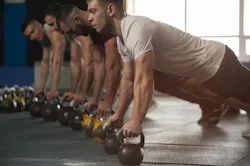
We often call physically demanding workers industrial athletes. The comparison is useful when we take it seriously. Athletes prepare for performance, manage readiness and prioritize recovery. Industrial employees also need to perform under physical and mental demands, often repeatedly for decades.
An industrial athlete is an employee who develops and maintains the physical and mental capacity to meet work demands, adapt to challenges and recover effectively—building the durability to perform safely throughout a career and enjoy life beyond it.
Two ideas matter: Readiness is the ability to meet today's demands. Durability is the capacity to sustain that readiness over time.
This doesn't mean every worker needs to train like a professional athlete. It means organizations should help employees develop and preserve their capabilities while designing work to minimize unnecessary harm.
Mental Capacity Shapes Physical Behavior
Preparing industrial workers often means teaching strength, movement mechanics and ergonomics. But mental capacity also influences how employees use and maintain those physical capabilities.
Why do employees sometimes make decisions they know are not in their best interest?
In my experience teaching mental performance skills, I've seen employees begin to realize how much of their day is spent surviving rather than thriving. As they become more self-aware, they notice how pressures at work and home can leave them reacting as if every challenge is urgent. Some also start questioning coping habits that offer temporary relief but do little to help them recover or build lasting well-being.
Knowledge doesn't automatically translate into behavior. Stress, fatigue, emotions, distractions and established habits influence attention, judgment and actions.
Mental performance training helps employees develop two complementary capabilities: the self-awareness to respond intentionally in the moment and the strategic awareness to make choices that support long-term well-being.
The first is about responding rather than reacting.
Imagine a utility worker approaching the end of a demanding shift. Fatigue is increasing, attention is narrowing and pressure to finish the task is growing. Without recognizing these signals, the employee may operate on autopilot, rushing or overlooking important details.
With stronger self-awareness and self-regulation, the employee has an opportunity to pause, recognize their internal state and choose a more deliberate response. That might mean slowing down, communicating a concern or reassessing the task.
The second is about intentionally building the future.
The same capacity for reflection can help us step outside daily routines and consider how today's behaviors influence tomorrow's capabilities. Are we prioritizing sleep and recovery? Maintaining physical activity? Developing healthy routines? Making decisions that support the kind of life we want 10, 20 or 30 years from now?
These decisions may seem small individually, but repeated over time, they become the building blocks of durability.
Physical capacity helps determine what employees are capable of doing. Mental capacity influences how consistently they apply, maintain and develop those capabilities.
Mental performance training does not replace engineering controls, safe procedures or adequate staffing. It complements them by helping employees recognize changing conditions and choose intentional responses, both in the moment and over time.
An Internal Dashboard for Everyday Decisions
An Internal Dashboard gives employees a practical way to notice changes in readiness.
Green means focused and prepared. Yellow may mean distracted, fatigued or frustrated. Red signals that attention or emotional control may be too compromised for the task at hand.
The goal isn't to stay green all day. It's to recognize when conditions change and respond appropriately.
One practical strategy is Pause, Breathe, Respond. Pausing interrupts autopilot. A deliberate breath creates space to assess the situation. Responding means choosing an appropriate action—perhaps adjusting pace, asking for help, raising a concern or stopping work.
Self-talk can shape how employees interpret pressure. Habits and routines can make beneficial actions more consistent. An inner compass—mission, vision and guiding principles—can connect everyday decisions to personal priorities. Together, these skills help bridge the gap between knowing what to do and doing it.
Durability Runs on a 24-Hour Cycle
We often concentrate safety education on the hours between clock-in and clock-out. Yet readiness is shaped by what happens before, during and after work.
Consider a 24-Hour Readiness Cycle: Wake Up, Perform, Recover and Restore. Employees prepare for the day, manage work demands, transition toward recovery and protect sleep. Each phase influences the next.
Movement, nutrition, sleep and stress management all affect how employees feel and function. Strategic awareness helps people recognize that daily routines are not isolated choices; they are bricks laid along a longer path toward durability.
But this must not become another way to blame employees for fatigue. Long shifts, inadequate staffing and unpredictable schedules can undermine recovery regardless of personal discipline. Durability requires individual skills and organizational conditions that make readiness and recovery realistic.
From Training Events to a Learning Ecosystem
If durability develops over years, one-time training cannot carry the effort.
Formal education can introduce physical and mental resilience: body mechanics, ergonomic principles, recovery methods, self-awareness, self-regulation and habits. Field-based injury prevention specialists, safety professionals and supervisors can reinforce those lessons through jobsite coaching, pre-work preparation and everyday conversations.
The goal is a learning ecosystem where employees practice useful skills at work.
That ecosystem should evolve with the employee. New hires may need foundational movement and readiness skills. Experienced employees may benefit from strategies for changing physical capabilities, cumulative demands or new responsibilities.
This broader view aligns with the National Institute for Occupational Safety and Health's Total Worker Health approach, which integrates protection from work-related hazards with efforts to advance worker well-being. NIOSH's National Center for Productive Aging and Work likewise emphasizes well-being across the working life and age-aware workplace practices.
Measuring What Matters—and Remembering Who Matters
Recordable injuries and lost workdays still matter. But if we want durability, we need measures that show whether employees are developing and applying capabilities that support it.
Are employees learning skills they can use? Do they recognize when fatigue or frustration is affecting their decisions? Can they speak up without hesitation? Are supervisors reinforcing healthy practices, and do schedules and workloads make those practices possible?
These indicators need to be assessed for quality, not simply counted. Over time, work ability, functional capacity and sustained participation can add context to traditional safety outcomes. No single measure proves a program caused fewer injuries.
And one question deserves particular attention: Do employees feel valued as people, rather than as potential injury data points?
When employees see genuine investment in their mental skills, physical readiness and recovery, the message changes. Safety is not just about avoiding the next incident. It is also about having the capacity to work well, go home with energy and enjoy life outside the job. That message has to be backed by safe conditions and real support.
Employees are parents, partners, friends and people with plans beyond work. They want to play with their children, stay active, pursue hobbies and enjoy retirement. A career should not require them to gradually surrender those possibilities.
A Challenge for EHS Leaders
Before adding another program, take a look at what your current approach is designed to accomplish. Are you mainly tracking the injuries you prevent, or are you also looking at the capabilities you help employees build? Do your efforts develop both the moment-to-moment awareness to respond rather than react and the longer-term habits that support durability?
The opportunity may be less about starting over and more about finding the gaps in what already exists. Injury reduction tells us something important about what we are preventing. Employee durability challenges us to consider what we are building. We should not simply aim to add years to a career; we should help add capability to those years. That is a meaningful objective for EHS: a workforce that can perform today, adapt tomorrow and enjoy life from hire to retire—and beyond.
About the Author
 Nick Magana
 Nick Magana
Nick Magana, M. S. is an Ergonomics & Industrial Athlete Program Manager at Southern California Edison (SCE.)
He is a human performance professional with more than 20 years of experience in workplace wellness and safety. With academic training in kinesiology, exercise physiology, and sport psychology, he specializes in applying performance-based principles to physically demanding occupations. His work helps industrial athletes develop the physical capacity, mental resilience, and behavioral skills needed to perform safely and thrive throughout their careers.