Dust Collection: A Core Control for Safety, Compliance and Performance
Key Highlights
- Dust collection is a primary safety and process control—not merely a housekeeping or air-quality measure.
- Effective source capture depends on proper hood design and airflow, not just downstream filtration.
- Testing materials for combustibility helps facilities make informed decisions about hazards and protection.
- Poor dust control can increase exposure, maintenance, contamination, downtime and employee turnover.
- Regularly review dust systems and housekeeping practices when materials, processes or facility layouts change.
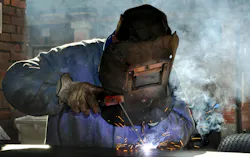
In many industrial facilities, dust collection is still treated as an air quality concern or a housekeeping task—something to address after production creates a problem. That mindset can leave a significant gap in a facility’s safety program.
Dust-related risk rarely appears overnight. It accumulates slowly, becomes part of the work environment and, over time, can begin to look normal. Conditions that would raise immediate concerns in another setting may become accepted as part of the job. At that point, the issue is no longer just cleanliness. It can affect worker health, combustible dust exposure and the overall safety culture of the facility.
A practical dust management strategy starts with a simple recognition: Dust collection is not a secondary support system. It is a primary control that directly affects safety, compliance and daily operational performance.
Worker Health Starts at the Point of Capture
Airborne dust is a direct exposure risk. Fine particles can remain suspended in the air, move through a facility, and be inhaled during normal operations. Employers are expected to control those hazards through appropriate ventilation, housekeeping and hazard communication practices.
Many facilities assume that having a dust collector means the issue has been addressed. In practice, the most common gap is not the collector itself. It is what happens at the point of capture.
Dust that is not captured at the source does not simply disappear. It escapes into the workspace, settles on surfaces and is often reintroduced into the air through routine activity. Over time, that creates ongoing exposure for employees and increases the burden on housekeeping teams.
From a practical standpoint, many systems do not struggle because the filter media is ineffective. They struggle because the system was not designed to capture dust effectively where it is generated.
Facilities that prioritize proper hood design, airflow balance and source capture can see improvements beyond air quality. Cleaner work areas can support morale, recruiting and retention. When employees routinely go home covered in dust, it sends a clear message about working conditions—and that message can affect whether people stay.
Combustible Dust Risk Is Often Misunderstood
One of the most common field-level gaps is uncertainty about whether a facility’s dust is combustible. Some facilities operate on assumptions. They may believe their material is not a risk, or they may assume an older system is “grandfathered” and does not need to be evaluated against current expectations. Both positions can leave a facility exposed.
Combustible dust refers to fine particulate material that can ignite or explode when suspended in air under the right conditions.
When fuel, oxygen, an ignition source, dispersion and confinement come together, a dust explosion can occur. Many common materials, including wood, plastics, metals and food ingredients, can present combustible dust hazards when reduced to a fine particulate form. Despite that, dust testing is often delayed until an outside party asks for it. In many cases, testing happens after involvement from OSHA, a fire marshal, or an insurance provider seeking verification of risk and compliance. Until then, system design decisions may be based more on assumptions than data.
That creates a significant gap. If the material has not been tested, the facility may not know the level of risk or the type of protection required.
Familiarity can also reduce urgency. Teams working in dusty environments every day may become desensitized to conditions that deserve attention. What should stand out as a hazard can begin to feel like normal operating conditions. That shift in perception is one reason combustible dust hazards are often underestimated until an incident, inspection, or insurance review forces a closer look.
Compliance Is Driven by Recognized Hazards, Not Assumptions
A common misconception is that compliance risk only becomes real after a facility has experienced an incident. OSHA does not need a single combustible dust standard to enforce safety expectations. Existing regulations, along with the General Duty Clause, can be used when employers fail to address recognized hazards.
In addition, OSHA inspections may reference NFPA standards as a recognized benchmark for identifying and mitigating combustible dust hazards. With the transition to NFPA 660, combustible dust requirements and guidance are being consolidated into a single standard intended to help facilities evaluate and manage these hazards across industries.
In practice, compliance is often reactive. Facilities may be prompted to act after an OSHA citation, an inspection related to a known hazard, or insurance requirements tied to risk exposure.
At that point, companies typically move into a more structured process, often beginning with a Dust Hazard Analysis to identify risks and determine which controls are required.
A more effective approach is to address these questions before an external driver forces action. Waiting usually increases cost, complexity and operational disruption.
Operational Performance Is Directly Affected
Dust collection does not affect safety alone. It also has a clear impact on how a facility runs. When dust is not properly controlled, the effects can show up in several ways:
• Increased maintenance due to particulate entering moving components.
• Contamination of products or processes.
• Additional labor for cleaning and rework.
• Reduced equipment life and reliability.
• In some cases, production is slowed or stopped to address issues that could have been prevented with better dust control.
Facilities can also spend significant time and money recruiting, hiring and training employees, only to lose them within weeks because of poor working conditions. Work environments where employees leave each shift covered in dust create an immediate perception problem. Over time, that can contribute to higher turnover and ongoing staffing challenges.
From an operational standpoint, dust management should be viewed like any other process control. If the system is not effectively capturing and containing dust, the facility is likely compensating somewhere else—through labor, maintenance, downtime, or lost productivity.
Practical Steps to Strengthen Dust Management
An effective dust strategy does not start with equipment selection. It starts with understanding the material, the process and the risk.
Focus on capture, not just collection. Make sure dust is captured at the source through proper hood design and airflow rather than relying only on downstream filtration.
Control accumulation. Maintain a housekeeping program that removes dust without creating additional airborne hazards.
Test and document materials. Do not rely on assumptions about combustibility. Testing provides the data needed to evaluate risk and select appropriate controls.
Review systems when processes change. Changes in materials, production rates, equipment, or layouts can affect both risk and system performance over time.
These steps are not complicated, but they do require a shift in mindset. Dust collection is not simply about meeting a requirement. It is about controlling a known hazard and supporting the way a facility operates.
Closing Thoughts
Facilities do not get into trouble simply because dust is present. Dust is part of many industrial processes. The issue is how well it is understood, captured and controlled.
Assumptions about combustibility, reliance on outdated systems and normalization of poor conditions all increase risk over time. Facilities that treat dust collection as a core part of the process are better positioned to improve safety, support compliance and strengthen day-to-day performance.
The difference is not always the dust collection equipment itself. More often, it is the way the problem is approached.
About the Author
 Adam Andrews
director of engineered solutions
Adam Andrews is director of engineered solutions at A.C.T. Dust Collectors, where he helps manufacturers and industrial facilities improve worker safety through effective dust collection, fume extraction, and industrial ventilation solutions. He works with safety professionals, engineers, and plant managers to reduce employee exposure, address combustible dust hazards, and support regulatory compliance while improving operational performance. Adam has extensive experience in industrial air quality and process ventilation and works with facilities across North America to develop practical, engineered solutions for complex workplace challenges.