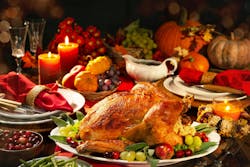
Whether or not you’re "headin' for Pennsylvania and some homemade pumpkin pie" or are "travelin' down to Dixie’s sunny shores," there are plenty of hazards to be mindful of this Thanksgiving holiday.
AAA estimates that a record 81.8 million people will travel at least 50 miles from home between Tuesday, November 25 and Monday, December 1. Of those, at least 73 million (90%) of travelers will be driving to their destination.
While traffic may be inevitable, especially if you’re traveling on Wednesday, car trouble can be avoided—or at least prepared for. AAA responded to nearly 600,000 emergency roadside assistance calls this time last year to help travelers with dead batteries, flat tires and empty fuel tanks.
This year, be sure to check your car battery health, top off the tank (or charge up the battery) and check tire pressure—including your spare. Make sure your roadside emergency kit is fully stocked and ready in case you encounter any inclement weather or travel conditions along the way, too.
The roadways can also be deadly. The National Safety Council estimates that 439 people may die on U.S. roads this Thanksgiving holiday. For the past 25 years, 30% to 40% of those Thanksgiving roadway fatalities involved an alcohol-impaired driver.
Last week, Bloomberg and The Wall Street Journal wrote about the “cousin walk” and the growing trend of cannabis usage on Thanksgiving. In fact, cannabis-market tracker BDSA says the day before Thanksgiving—now being dubbed Green Wednesday—is the second-biggest day of the year for legal U.S. cannabis business sales.
Although we couldn’t find data for how many Thanksgiving fatalities were attributed to cannabis or marijuana consumption, driving while high is still driving under the influence and can be deadly. Research recently presented at the American College of Surgeons Clinical Congress Scientific Forum analyzed coroner records in Montgomery County, Ohio (which includes the metropolis Dayton) from January 2019 to September 2024. They found 42% of drivers killed in crashes tested positive for THC, the primary psychoactive compound in cannabis that makes people feel high.
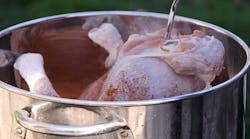
Beyond travel and substances, there’s also plenty of potential hazards surrounding star of the show: the turkey itself. Safe thawing, prep and cooking technique—especially deep fat frying and smoking—can be troublesome.
Despite concerns of drying out or complaints from hangry, impatient dinner-goers, it's important to ensure that bird is cooked to a minimum internal temperature of 165 degrees Fahrenheit throughout. After dinner, you must promptly refrigerate any leftovers to make sure they don’t enter the danger zone, where the food temperature is between 40 to 140 degrees Fahrenheit. Remember, you must eat or freeze any leftovers by Monday to prevent spoilage. As always, not all table scraps are safe for pets, so make sure to keep a close eye out for any quick paws.
If you choose to run in a turkey trot, partake in some Black Friday or Small Business Saturday shopping, watch college or professional football, or play any touch football, those activities can present opportunities to overindulge and possibly injure yourself, too.
Thanksgiving is a time to spend time and appreciate your loved ones and friends, but just about every aspect of the holiday, from travel to food to decorations, can be dangerous. So, armed with the knowledge and importance of safety, we hope you can enjoy yourself and relax—without any injuries or near-misses.
For those of whom this time of year is difficult, we hope it lands gently. Please, take good care of yourself and those around you.
Read more:


About the Author

Nicole Stempak
Nicole Stempak is managing editor of EHS Today and conference content manager of the Safety Leadership Conference.