Fall Protection Safety, Revisited



A new year means a new calendar, but it does not mean a clean slate.
Unfortunately, the problems of 2025 still persist, and it will take effort and action to change them. But for problems with known solutions and interventions, solving them should seem like a slam dunk, not an expedition for a great white whale.
Alas, this is the quagmire safety professionals have been traipsing around for years—at least with regard to fall protection.
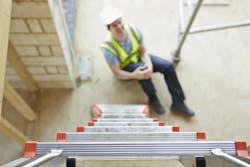
Once again, Fall Protection-General Requirements (1926.501) was the Occupational Safety and Health Administration’s Number 1 violation of fiscal year 2025. The number of violations issued is 393 fewer than in the previous year. But a closer look at the data, combined with anecdotal evidence reveals that there are no silver fixes to make working at heights much safer, much faster.
Instead, safety professionals will have to address the root causes that led to the falls, including culture and communication, before harnesses, arrest systems and the like can effectively protect workers.
In a follow-up to their 2024 podcast recording, Managing Editor Nicole Stempak had a nuanced discussion with Philip Jacklin, continuing education program manager for Diversified Fall Protection, about what is required to reduce falls in 2026.
You can listen to their full conversation below. Be sure to subscribe to the Great Question: A Manufacturing Podcast, so you never miss an episode.
Podcast Recording Excerpt:
[Editor's Note: This transcript has been lightly edited for grammar and clarity, such as to omit word repetitions and incomplete thoughts.]
Nicole Stempak: It's good to have you back, Philip! We spoke in December 2024 about falls and how they are persistently a problem in the safety realm and for safety management just across all industries. But it is OSHA's most cited violation, and that hasn't changed [in years.]
The data that came out in September of 2025 said that for fiscal year 2024, fall protection general requirements was [the most cited violation]. There was a little caveat in that there were nearly 400 fewer violations than in 2023, but I mean it's 5,914, so it's still really high. As someone who works in fall protection and trains people on fall protection, I wanted to ask you what has changed or what hasn't changed since we've last spoken.
Philip Jacklin: Well, I mean there have been a few changes. I think I might be an optimist, but I do consider the notion in the field that more fall protection is good and effective is is moving forward. I'm somebody that talks to several people every week, nearly, on fall protection matters. The questions that come up show that there's a lot more awareness of this problem than just like introductory questions, if that makes sense. I've definitely seen like an emotion and attitude, more people talking about it online. I think those are soft indicators of progress getting made.
As far as whatever statistics we might be able to pull, it does seem that since we've talked…there have been notable decreases in a few categories. One really notable one from some Bureau of Labor Statistics data did say that work fatalities among buildings and grounds cleaning and maintenance workers decreased from 2023 to 2022. Showing that this kind of progression is happening is, I think, good in recent years when we see violations stay consistently Number 1. The number of citations may go up and down, but actually seeing worker fatalities decrease on data I think is really good news. So there there's some positive changes happening.
NS:Yeah, and that the lag in historical data is not a new phenomenon or a new problem. I guess you could say when it comes to making those analyses, it does take time and they use submitted data, so that's just kind of baked in there. It does bring to light another ongoing conversation about historical data versus proactive data and whether a company or organization chooses to track leading indicators, such as near-misses and the like, to intervene. It is a challenge to sometimes quantify or calculate that return on investment for something that hasn't happened. [After all,] you're not paying out for workers’ comp claims for an injury that doesn't happen. I didn't know if you were seeing or hearing anything about falls being tracked proactively or, I should say, events that could lead to a fall being tracked more closely at companies.
PJ:That is a tough one to definitely qualify, but [it’s like] I said earlier: the notion of awareness that people in the field have towards this problem. The nature of the projects we've been working on in our organization, with our customers, actually does show that people are thinking in a much more proactive manner.
Whatever tracking we may do—talking to each other, sales metrics, things like this. It's less reactive calls to, “Somebody got an OSHA citation, or there was a violation, or there's an injury or fatality.” That's why we got this referral to this business or that's what gave us this business lead. It's a lot more of businesses are trying to get compliant ahead of time. They either participate in a consultation with their state OSHA or local OSHA office, and they just wanted to make sure that [they can say,] “We're dotting our I's and crossing our T's. That's why we hired a safety and regulatory manager for our company.” There are a lot of these companies with these resources, so I would say that's one thing that shows more proactiveness is getting taken.
Unfortunately, on the other side of it, though, we see that a lot of the fatalities and injuries are happening more in construction and a lot more in residential construction. These are ones where unfortunately these big companies and their resources aren't going to necessarily trickle down to these subcontractors in residential construction, where the injuries and fatalities are happening. We see it [reflected in datasets] like the OSHA Top 10 indicator. I think that's a big one because when you say that's the Number 1 violation—and even though numbers have gone up and down—I think it's important to note that it is the 1926 code that is the most common violation, and that's the construction industry. While some numbers are going down [for] worker maintenance crews…it's these construction falls that are really increasing every year, according to the numbers, unfortunately.
NS:I'm glad that you brought that up because, like so much of the other data we're seeing come out of the federal government, there's a lot of mixed results. Or trying to make sense of this because one indicator may be up, but another indicator may be down. Or, like you said, while certain industries might see improvement, others are seeing it worsen, so that kind of cancels each other out. Those are just a couple examples of how it can look confusing.
PJ: They're very, very disproportionate metrics. Another example of that is looking at Hispanic workers or workers [for whom] English is their second language have a higher rate of suffering from a fatality on a jobsite. When we talk about things moving forward—proactive things, worker maintenance crews improving—these other things are not getting addressed, so very disproportionate.
NS: For safety professionals in general, progress is being made. But it's clear that work needs to be done still. I think the confounding thing about falls is that it's kind of solved, right? It's not like figuring out how to ethically use artificial intelligence or something that's new or that's changing as much.
We have—and have had—fall protection equipment. We know what happens, how to safeguard, have fall arrest systems, and such. The fact that it's continuing to be a problem says that it's not the products, it's the culture, right? Or it's something to do with the communication between workers and employers.
PJ:You're right. This isn't necessarily. We don’t have to reinvent the wheel on how to do these things. Like you said, the solutions are pretty much there. The art of providing fall protection is a sound science. It's hazard elimination, building design or designing buildings with parapets or guardrails integrated from the get-go that protects everyone that will ever step foot on their rooftop. These are pretty simple things that could be added. It's just a matter of they're not getting added. And then it trickles down.
If we're using some of that data before we were talking about, where decreases are happening—like worker fatalities among building and grounds cleaning maintenance workers that decreased from 2022 to 2023—showing that there are building owners, employers and property managers that are able to take possession of a rooftop and say, ‘Hey, there's a maintenance crew up here, and here's all the tasks they have to do. There are sound, feasible ways to provide this protection, be they a guardrail or a fall arrest system or whatever.’
However complicated or simple it has to be, and they're able to do it and add it, then it protects those workers pretty much for the life of that rooftop. Then all the maintenance workers, either that current crew or future, can use that same equipment. It's just a matter of where the point of influence comes in.
I think if we were able to have the right people in the right room, it'd be about integrating things like fall protection anchors into construction framing for residential houses. That way, they'd be integrated into a spec, they'd be installed, they'd be a nominal cost added. Then, workers and homeowners in the future could use things like that. It's just like, getting people in that room is an infeasible attempt to provide a very, very feasible solution. I think that's what you've talking about. It's a very frustrating problem to witness.
Read more:
 falling_off_ladder
 Wide angle picture of male worker wearing full safety harness while working at height
 worker standing on a ledge tethered with fall protection PPE overlooking housing complex and mountains
About the Author
 Nicole Stempak
Nicole Stempak
Nicole Stempak is managing editor of EHS Today and conference content manager of the Safety Leadership Conference.