Safey Culture Success: 26 Years without Lost Time Incident

Sentry Equipment’s standard of safety is foundational but continually improves, says EHS Director Canton Larson.
Feb. 26, 2026
4 min read

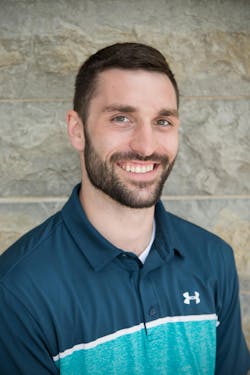
The safety record of Sentry Equipment stretches so long – 26 years without a lost time incident – that its current EHS director, Canton Larson, was only three years old when the last incident occurred.

Established in 1925 as the Henszey company manufacturing power plant components and milk evaporators, Sentry Equipment now manufactures products to serve the oil and gas,  food and beverage, and water/wastewater industries.

Larson, whose enthusiasm for the field is front and center, exemplifies the safety culture embraced by the company. 

EHS Today asked Larson to talk about how the safety culture is vital to both the company’s and his success.

EHS: What were the key ingredients of your safety culture norms that led to the company’s 26-year milestone?

CL: First, there is strong leadership by- in. Long before I arrived six years ago, safety was ingrained into our culture.  It's a safety standard that is written in stone.

The next most important aspect is the pride of the workforce. One example is how they take care of their workstation in the office, in the shop an in service vehicles.We implemented the 5S system for cleanliness and housekeeping, which ensures that we do the little things right.

If we do the little things correctly, then we eliminate larger hazards.  

And finally, we hold people accountable to our safety standards.

EHS: How does your structure of employee ownership tie into your safety record?

CL: The structure of employee ownership was explained to me in terms of the company as a big pie and everyone having a slice of it. The bigger the pie, the more profitable.

Safety comes into play as the foundation of how we are able to expand our business, the pie.

It is our safety record that is most important to our customers. They have very strict requirements for allowing us on-site. We need to complete questionnaires that ask about our total recordable incident rate (TRIR), experience modification rate (EMR), and the safety training we have completed. 

If we don’t have a good record, we can’t get onto the site, and it hinders profits down the road. 
EHS: Looking over the past few years, what challenges have you had in terms of safety and how did you overcome them?

CL: On a personal level, when I came to this job out of college, I learned that implementing safety procedures in the real world was much different than what was in our books. I needed to clearly understand how safety fits into how our business works and then learn to balance costs, time and resources.

From a company perspective, when we acquired a wastewater company in 2022, it was a challenge as this was a new area of business for us. We are very experienced in the oil and gas industry, but wastewater tanks present a different safety challenge. We now need to get new permits and offer new training in order to mitigate the risks of this type of work.

The service manager of the facility and I developed a close working relationship in order to create the processes we need. We strive to continually improve the process by documenting trends and then creating new policies.  

EHS: What is the safety strategy for 2026?

CL: The service side of the company is expanding. We now have 40 people and have two locations outside of our headquarters, so we need to ensure we have procedures to take into account all aspects of safety. We are looking to uncover gaps and get programs and policies in place to cover those.

EHS: You have been known to say, “safety is cool”.  Can you explain what you mean by this?

CL: This attitude started when I had my son 18 months ago, and I recalled learning in school that the key goal of our industry is to send people home the same way they came to work. That took on more meaning as my son was born. My colleagues have children, spouses and others that they need to come home to.

This awareness increases the need to use PPE correctly and follow standards. It also means that as a company, we continually improve on what we offer employees.

For example, we are looking into updating our PPE, including gloves and glasses that make them easier to use. We update our machines to ensure that they provide the highest level of safety. And we continuously improve our training. We take pride in having a safe work environment.

All of that shows that we are trying to make sure that everyone is safe. No one wants to receive a call that a loved one is in the hospital because they didn’t use a machine properly.

So, I think it’s cool that my job in safety, making sure people get home safely,  is one that is bigger than myself.

About the Author

Adrienne Selko

Senior Editor

Email [email protected]

LinkedIn

Adrienne Selko is also the senior editor at Material Handling and Logistics and is a former editor of IndustryWeek. 


Sign up for our eNewsletters
Get the latest news and updates

Voice Your Opinion!

To join the conversation, and become an exclusive member of EHS Today, create an account today!