An All-encompassing Approach Toward Workplace Safety
Key Takeaway
Monique Parker, CSP, will be president of the American Society of Safety Professionals (ASSP) starting July 1, 2026. With a 20-plus year career in safety, Parker has seen and experienced a lot of change; she shares what she's excited for and will be focusing on during her time at the helm.
Monique Parker cares about people. Not just workers, but people.
Because people are so much more than what they do for their job. They have needs that must be met. They have loved ones they care about. They have hobbies, interests and pastimes they want to pursue. They have others who depend on them.
And it all boils down to this: These people need to leave work in as good — or better — condition than when they arrived.
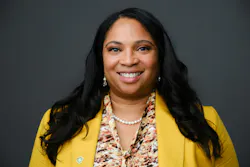
You can call it total worker health, psychological safety, good business or whatever you want, but that’s what Parker, CSP, is focused on.
“At the end of the day, the focus needs to be on the people,” she says. “As long as the people are centered in whatever efforts they’re doing, that’s what’s most important.”
Parker will bring that mindset with her during her term as president of the American Society of Safety Professionals (ASSP) and vice chair of the ASSP Foundation, which starts July 1. She joined the ASSP Board of Directors in 2024 and has held leadership positions in the Women in Safety Excellence (WISE) and Blacks in Safety Excellence (BISE) common interest groups and participates in several other ASSP communities.
Parker has spent more than 20 years in safety. Currently, she is the chief sustainability officer for Elevra Lithium, a dual-listed lithium producer and developer. Previously, she has worked in textiles, chemical manufacturing, building materials and food production.
Parker spoke with EHS Today about the state of the profession, what’s next, and the joys of safety.
EHS Today: You earned a bachelor’s degree in chemical engineering and have worked in several different industries. What first drew you to safety?
Monique Parker: It was purely by accident the way I was drawn to safety. As a chemical engineer, I was in the textile industry for the first three years of my career and decided that I really wanted to do environmental.
When I started looking for environmental jobs, they were all connected to safety. I had worked in manufacturing, so I knew a little bit about safety but obviously, I was a partaker of it and not a leader. When I started looking for jobs in environmental, and I saw they were connected, I was like, ‘Well, I guess I need to figure out what this safety thing is.’ There was this textile company who said ‘We don’t care if you don't have experience. We'll teach you all you need to know.’
Hence, the beginning of my career in safety. I found that I loved everything about it. In EHS, I was able to fulfill my technical side with the environmental, so I still got to deal with air, water and all those things. But the safety side is where the joy of the role came out, because I got to deal with people.
It was the best career move ever because all of me was fulfilled: the technical, the people and all the in-between. Twenty-two years later, I’m still here loving every minute of it.
I don’t know if I’ve ever spoken to anyone before who equates safety with joy, but we all could use more of that in our lives! Speaking of positive emotions, what are you looking forward to in your upcoming term as president?
One of the most important things for me is workforce development. How people get to safety is so diverse. It’s important to me that we nurture each and every one of our members — and those in the profession — to figure out not only how or why they got there, but what they can do next. What does it look like? How can they expand their knowledge base?
Another thing that’s important for me is engagement. We have 36,000 members, and I’d love to get more of our members engaged. There are so many different offerings that we have, so many different ways people can get involved, from a chapter level to a task force and all the things in between: practice specialties, common interest groups, you name it. I really want to help people find their path, their group, their people within our society, so that they do have a network that they can call on at any time, whether it’s to benchmark, whether it’s to network, or whether it’s just to have a cup of coffee. Sometimes, we just need somebody to talk to. That’s really important for me as well, that our members find their space within the society, and they feel like they belong.
Lastly, is mentoring — really engaging with all levels of people in our profession. Whether they’re newcomers, whether they’ve been in the industry longer than me or the same time, just really engaging and networking and driving us together. We have so much to share. We come from so many different experiences and backgrounds. It’s important for us to know that and learn from each other, so that we can better improve our profession and the society as a whole.
Obviously, we want you to get a restful night’s sleep, but for lack of a better phrase, what are some safety concerns that keep you up at night?
One of the first things is serious injuries and fatalities (SIFs). How do we manage the understanding of the incidents so that we can start getting some better root causes and address the underlying issues? It’s so important! At ASSP, we’re focusing a lot on that area with our new standards-based user groups (SBUGs). We’re focusing on some of the items that are very heavy in SIFs: fall protection and lockout/tagout. We also have an SBUG for AI because we feel AI can have a big impact on how we manage some SIFs.
I have already mentioned the workforce instability. We’ve got a group of amazing professionals that have been around for quite some time that are getting ready to retire. We’ve got a new group coming in that are trying to figure things out. We’re just making sure that we, as a society, are setting the workforce up to be successful in whatever realm or industry that they’re in.
And then last, but not least, worker well-being. A concern of mine is that we focus so much on physical safety — Did you cut your finger? Did you hurt yourself in the physical sense? — but we really have to look at the whole person and how that person is showing up to work. We have to ask ourselves, ‘How are we going to support them through their day?’ so that they are able to focus on what they’re doing, and they’re not distracted by things that are maybe outside the realm of the day-to-day activities they’re doing. Being in mining and construction, we see some of the highest suicide rates in the workforce. It’s really important that we dig deeper than just the physical and look at all the further aspects: psychological safety and worker well-being as a whole.
Over the years, I’ve heard some folks say, ‘Why does this matter? It’s outside the scope of occupational safety and health.’ But then I think about workers who are battling cancer, caring for aging parents, worrying about a crippling amount of debt, et cetera. If you’re struggling with your physical, mental or emotional health, you can’t show up to work and be safe.
I know exactly what you mean. If we just stand back and say everything revolves around people and how people show up and how they can be present, then it changes our whole mindset of how we operate, how we provide for the needs or desires of workers so they can perform their job safely and securely.
One of the things I used to say at one of my jobs is ‘I'm having a bad day. Can you watch out for me?’ That’s what we tried to promote. If you just weren’t on your A-game that day, find a buddy that’s going to check on you to make sure you’re remaining focused. I think that's important.
That’s a lovely use of the buddy system. OK, switching gears, what are you excited about?
One of the things that I’m most excited about are the SBUGs. It’s a concept that sounds simple: You bring a bunch of people together. You talk about how you implement some of the rules. You talk about the good, the bad and the ugly. What worked. What didn’t work. And you think, 'Why haven't we done this before?' There's probably been a lot of groups that have, they just never put a title to it.
What I like about our way of doing it is the diversity. We’re going to be intentional about the diversity of the groups we’re bringing together. We’re going to bring regulators, industry, companies and safety professionals. We want to be all-encompassing, because at the end of the day we need all these voices to be heard.
To me, it’s just a game changer when it comes to the beyond compliance concept of fully integrating standards that have been developed and designed in order to help us be better. How do you fully implement it into a way that’s responsible, that’s understandable, and that’s achievable for the workforce to fully engage with?
The responsibilities of safety professionals are rapidly changing. Do you see the role itself changing?
I definitely see a change. I think it’s a change for the good in regard to how well safety will be embraced within various organizations, regardless of industry, and the impact it’ll have overall.
Twenty-plus years ago, I was very focused on compliance, what the regs said, how I was going to navigate it, how I interpreted it and how I was going to employ it. The regulations are there. They’re always going to be there. But the newer generation is really looking at how do they work into the system, so they’re becoming more strategic. They’re seen as more integrated into the operation.
Safety is not called in just because there’s an accident. They’re called in to have conversations about risk as a whole for the enterprise. They’re called in to look at budgets. We’re not just saying ‘How much do you need for PPE?’ but looking at what technology and tools are necessary in order to for them to advance.
Safety is such an evolving profession. We are becoming more than just the safety person. We are becoming more integrated into how businesses run and what risks look like.
Wonderful! Talking about the newer generation of workers, what do they bring to the table?
From what I've seen, I think one of the things they bring is a true commitment to self. There is a great deal of self-awareness that they have of their non-negotiables. When I was younger, we really didn't have boundaries. It was like, do all you can and get all you can get done. But the generation coming up now, they've lived through a lot of different things, COVID being one, and they definitely are more aware of how life in general impacts them and the things that are important to them. They're very true to their values and beliefs.
I don't want to say there's a negative because everybody can look at every generation and be like, ‘Oh, they need to stop doing that.’ Every time I think about what an older generation said the newer generation needed to stop, that is the thing that helped us progress to be better for the next generation. And so, I just want them to be confident in who they are and learn how to be adaptable, but not too flexible that they forget who they are.
Thank you for being so positive, and I didn't mean to be critical of Gen Z. I don’t think the desire for meaningful work is exclusive to younger workers. Plus, the first few years are always a bridge between what you learn in school and what you learn on the job. Speaking of learning, I wanted to know what you thought about how safety professionals can better learn from and teach one another.
I think the best thing we can do to learn from each other is just sit down, listen and have a conversation. Sometimes — and I've been guilty of this myself — but sometimes you think ‘I've been doing this for so long. I know all the answers.’ And we may have experiences where we feel like we know all the answers, but I guarantee you, I've never known all the answers. Having the vulnerability to say that is one thing that we, as professionals, can learn from each other. It's OK to not know, but it's not OK to not go find an answer.
What I really want to impress is that we're an evolving society. We're evolving in the world we live in and how we navigate the environments that we work in. We need to have the ability to adjust, adapt and, again, really listen. The times I've been able to be the most thoughtful are when I stop talking, listen and ask questions that help you get clarity.
I want to go back to something we touched on earlier. Many potential SIFs are persistent challenges. Progress has been made over the decades, but lately it has stagnated. How can we make substantial progress?
I think it boils down to ‘If my world is this one little bubble, and all I know is this bubble, then I haven’t explored to understand what others can do or what other things are out there.’ That’s where I see that networking of different opinions, different industries, different mindsets really can help us explore and come up with the next best thing. Someone on the other side of the U.S. may be doing this great thing that we’ve never seen or heard about, but because we don’t have an opportunity to engage maybe in that industry, then we’re missing out.
Bringing those diverse groups together is where I think our biggest opportunity is. I feel like our SBUGs will help us get there quicker, because we’re not going to focus just on the Southeast or the Northwest. It’s going to be all over. We’re going to come together and have those hard conversations. That’s where you get that exciting new thing, whether it’s an invention, a process or technology.
Well, we've certainly covered a lot of ground. Is there anything we haven’t discussed that you’d like to add or emphasize for our readers about the coming year?
I feel like next year is going to fly by, because every year seems to fly by faster and faster! But I want to make sure that I’m very intentional in the moment. I want to engage with as many members as I possibly can because I love to have good conversations. This is what fuels me.
Every time I talk to someone, my goal is to really be present in the moment and engaged so that I can be better for myself, be better for our society, and be better for our members at the end of the day. One of the things that’s really important is that opportunity to connect.
Do you have any advice for anyone who wishes to replicate what you’re doing?
My advice is to say yes to some of the hard things. Don’t be afraid to challenge and stretch yourself, so that you can see different perspectives and do different things. And have fun while you’re doing it!
Read more from past ASSP presidents:
 safety_leadership_future
About the Author
 Nicole Stempak
Nicole Stempak
Nicole Stempak is managing editor of EHS Today and conference content manager of the Safety Leadership Conference.