Addressing Risk of Suicide in Construction
Key Highlights
- The suicide rate for construction workers is 53.2 to 56 deaths per 100,000 workers. This rate is four to five times higher than the national average and nearly five times the rate of all other jobsite construction fatalities combined, according to the CDC.
- Program called Hard Hat Courage is saving lives by making it safe to talk about our mental health—every day, on every job site.” The idea is to put mental health on par with physical health.
Some statistics hit especially hard.
“In 2019, when we lost a coworker, we realized that our industry has the highest rate of suicide of any industry,” said Andy Anderson, regional safety manager at Ames Construction based in Burnsville, Minneapolis.
The suicide rate for construction workers is 53.2 to 56 deaths per 100,000 workers. This rate is four to five times higher than the national average and nearly five times the rate of all other jobsite construction fatalities combined, according to the CDC.
As a company, we asked ourselves what we could do and what we should be doing,” said Anderson.
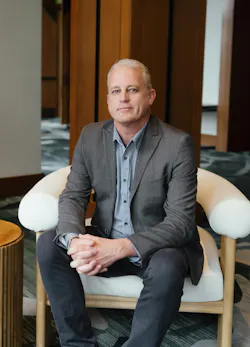
Anderson is not alone in grappling with this ongoing emergency in his industry. In fact, the industry has banded together under an organization called Hard Hat Courage, an initiative of the American Foundation for Suicide Prevention (AFSP) created with Bechtel Corporation, the Virginia-based construction company.
Its mission is to save lives by “making it safe to talk about our mental health—every day, on every jobsite.” The idea is to move mental health on par with physical health.
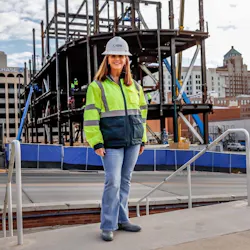
“After feedback from our CEO advisory council, which includes companies like Turner, Black and Decker, DeWalt and others, many companies are using the program we created called Talk Saves Lives for Construction,” explains Trisha Calabrese, senior vice president of programs at AFSP.
Training Programs
Training programs are an ideal tool for construction in particular. “Suicide is such a complex story, and there are so many factors,” explains Anderson. “Specific to construction, scheduling is a major issue. A lot of our projects are out of town, and you're away from your family, you're away from your friends, and your responsibilities. It’s hard on families and on workers.”
So, Ames, which employs 3500 people, brought in AFSP’s Talk Save Lives program as well as the Mental Health First Aid program. “To integrate the information from these programs into our company, we created mental health ambassadors,” says Anderson. “We identified people around the country who were already having conversations with people about how they were feeling.”
Anderson’s goal was to help employees get comfortable talking about what they were facing. “It's okay to say you're not okay and ask for some help or some assistance and just say, hey, you know, I'm not doing well today and I need to step back, or I've got an appointment I need to go to address some things.
“And so, we've set up three or four ambassadors in each of our areas around the country and gave them a lot of training because we want them to be comfortable. It's a scary conversation and people don't want to make a mistake,” Anderson says.
Ames also knew it was important to reach the families of employees, so they mailed information to employees’ homes. They let family members know who they can call and that this resource is available 24-7. “Because you never have a crisis on a Tuesday at 9 o'clock when you're sitting at your desk and have all the access to everything. It's in the middle of the night on a weekend,” says Anderson.
Another strategy Ames is using is to incorporate mental health awareness into already established programs. Their core safety focus is called STCKY Wheel (Stuff That Can Kill You). It now incorporates aspects of mental health in this assessment, including stress, fatigue, and challenges inside and outside of work that can affect workers on the job. They emphasize that these concerns can affect workers on the job just as much as physical risks can.
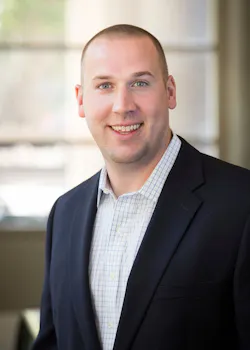
A holistic approach is also being used at Clark Construction, which is based in Bethesda, Maryland and employs 5,000, as the company believes that safety encompasses the whole person – including their physical, mental, and emotional well-being. To that end, they are committed to having a consistent dialogue about mental health to normalize conversations around suicide and emotional wellness.
Clark also uses the Talk Saves Lives program. “The most meaningful indicator is seeing our Clark team engaged in the training and conversations and empowered with new information and tools they can leverage in their personal and professional lives,” says Seth Randall, regional safety director at Clark Construction. “We’re also aligned with AFSP to reach their goal of training 500,000 people, industry-wide, in construction through Talk Saves Lives.”
And they are doing their share toward this goal as they have established a robust network of more than 100 Talk Saves Lives facilitators across every region and department.
This communication network has been successful. “Several facilitators have noted that engagement in Talk Save Lives courses has been greater than in other company trainings,” noted Randall. The company said they have found that team members are receptive, raise their hands, and open up. Clark said it believes that when you give space to talk about these issues and people’s personal experiences, they want to share.
How to Create an Internal Program
Sharing such personal experiences within a company setting, especially in construction, takes time. Anderson feels you have to grow the program organically. “Get leadership involved early, get the buy-in at the top. To get that buy-in, overwhelm them with statistics and really sell that this is a significant issue. Be deliberate, be patient.”
After all, Anderson notes, “we're builders. We're good at building things.”
Randall agrees that a thorough process is best. “Start by acknowledging that there’s an issue, even if no one at your company is talking about it yet. You don't need a massive budget or to make a large-scale investment to have a meaningful impact. Companies can start small. What matters is that you've got leadership support and a plan to make the effort sustainable. This is not a check-the-box exercise. At Clark, we value it as a key part of our overall investment in our people.”
Similar to Clark, Ames views these programs as investments not only in their own workforce but also in the general population of construction workers. “We share the same resources; we share the same talent pool,” Anderson says.
Strong action is necessary to confront the depth of the issue of suicide in construction. “You need to be open to saying this is an issue - an industry-wide issue - and then commit to action,” said Randall.
Resources
This initiative is an initiative of The American Foundation for Suicide Prevention (AFSP) and offers a variety of resources, including toolbox talks, posters and stickers for hard hats.
And they offer a blueprint called “Building a Response Plan for a Mental Health Crisis".
Construction Industry Alliance for Suicide Prevention
This group offers toolbox talks.
Construction Hike for Hope is a series of local hiking events hosted by AFSP in communities across the country to raise awareness about mental health and suicide prevention in the construction industry.
OSHA
The agency has a section dedicated to suicide prevention in construction.
It includes a paper, "The role of employers in preventing suicide."
About the Author
 Adrienne Selko
Adrienne Selko
Senior Editor
Email [email protected]
Adrienne Selko is also the senior editor at Material Handling and Logistics and is a former editor of IndustryWeek.