Safety Culture Is Brand Strategy, Whether Companies Realize It or Not
Key Highlights
- A strong safety culture involves employee empowerment, rigorous controls, and transparent reporting systems that prevent minor issues from becoming major crises.
- Case studies show that companies like Kraft Heinz and Johnson & Johnson successfully used safety as a brand differentiator, while failures like Boeing and Takata resulted in catastrophic reputational and financial damage.
- Safety investments include testing, supplier controls, traceability, and change management—viewed as essential controls rather than administrative overhead.
- Leadership should shift focus from safety program costs to the potential costs of safety system failures, including recalls, legal actions, and loss of consumer trust.
- Ultimately, safety is integral to profitability, marketing, and reputation—investing in safety is investing in the company's most valuable asset: its trustworthiness.
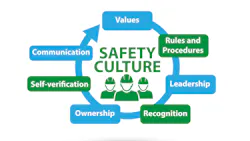
One of the most underestimated business truths I have encountered in 18 years of EHS, product safety and regulatory risk work is this: When a company genuinely prioritizes safety, it is also protecting its brand, its customers, its reputation and, ultimately, its bottom line.
Safety is too often treated as a cost center. I see it differently. A strong safety culture is a business investment—and one of the most effective forms of brand protection a company can build.
What a Strong Safety Culture Actually Looks Like
It is not a poster on a wall. It is a culture where employees are empowered to stop a process when something is wrong; where quality controls cannot be bypassed simply because production is behind schedule; where deviations trigger investigation rather than rationalization; and where product safety professionals have the authority, resources and independence to challenge business decisions.
It is a culture where testing, supplier controls, traceability, change management, complaint monitoring and corrective action systems are funded because leadership understands that these are not administrative overhead—they are controls against reputational and financial risk.
A Case in Point: Kraft Heinz
Kraft Heinz’s current Global Code of Conduct instructs employees to “never bypass quality controls or take shortcuts” that could compromise food quality or safety, and directs employees to make food safety a personal responsibility by raising potential hazards immediately.1 The Code’s own internal guidance is direct: failure to follow food safety requirements could put consumers at risk and lead to a recall.
That is precisely the mindset I mean—and, importantly, this does not mean Kraft Heinz is recall-free. The company has had recalls, including a 2022 Capri Sun recall after a diluted cleaning solution was inadvertently introduced into a production line,2 and a 2023 Kraft Singles recall after a wrapping-machine defect left plastic film on cheese slices, creating a potential choking hazard.3
The lesson is not that good companies never recall products. The lesson is that a mature safety culture builds systems designed to identify problems, respond quickly and prevent a small deviation from becoming a major crisis.
The Inverse: When Safety Becomes Subordinate to Production
Boeing’s 737 MAX experience remains one of the clearest illustrations of what happens when that discipline breaks down. The U.S. House Committee on Transportation and Infrastructure’s 18-month investigation found that production pressures—driven by competition with Airbus—led Boeing to cut costs and protect the 737 MAX production schedule in ways that jeopardized the safety of the flying public, and the Committee identified a “Culture of Concealment” in which the company withheld critical information from the FAA, its customers and its pilots.4 The consequences were measured not only in dollars, but in 346 lives, a global grounding of the aircraft, regulatory intervention and years of reputational damage.
Takata offers a starker example still. The U.S. Department of Justice found that Takata falsified critical airbag test data for more than a decade, concealing failures and withholding accurate information even after problems surfaced in the field.5 Takata pleaded guilty to wire fraud and was sentenced to pay $1 billion in criminal penalties, including $975 million in restitution. NHTSA data attributes approximately 67 million recalled airbags in the United States to the defect, with 28 confirmed U.S. deaths and roughly 400 reported injuries.6 This is not a story of underinvestment in safety—it is a story of information that should have triggered action instead being actively suppressed.
Blue Bell Creameries illustrates a third pattern. A 2015 Listeria outbreak led to recalls and the temporary closure of every Blue Bell plant. FDA and CDC investigations linked the contamination to insanitary manufacturing conditions, and Blue Bell ultimately agreed to pay $19.35 million in combined criminal and civil penalties.7 Again, the true cost was not the cost of cleaning a facility—it was the cost of losing control of the system.
Why This Matters for the Brand, and Why It Matters for Counsel
Customers will never see a company’s HACCP (Hazard Analysis Critical Control Point) plan, its product stewardship assessments, its supplier audit records, or the controls built into its manufacturing process. But they will notice when those systems fail—and once consumers begin asking, “Can I trust this product?”, the marketing department inherits a problem that marketing alone cannot solve.
There is no better illustration of the inverse—safety-centered decision-making protecting a brand—than Johnson & Johnson’s response to the 1982 Tylenol poisonings. After seven people died from cyanide-laced capsules that had been tampered with after leaving the manufacturing process, Johnson & Johnson recalled more than 31 million bottles nationwide and invested over $100 million in rebuilding the product’s safety and packaging.8 Tylenol went on to recover its market position. That was not merely crisis communications; it was a demonstration of values, and those values became part of the brand.
A Different Question for Leadership and Counsel to Ask
Companies—and the compliance and legal functions that advise them—should stop asking “How much will our safety program cost?” and start asking “What will it cost us if the system fails?” The cost of prevention is visible on a budget line. The cost of a safety failure is scattered across recalls, production shutdowns, regulatory investigations, litigation, insurance costs, customer attrition, lost contracts, employee turnover, supply chain disruption, management distraction, damaged investor confidence and, perhaps hardest to quantify, damaged trust.
Safety is not separate from profitability; it protects profitability. It is not separate from marketing; it strengthens marketing’s credibility. It is not separate from reputation; it is one of reputation’s foundations. And it is not simply about preventing accidents; it is about designing an organization where the right action is the easiest action to take because the systems, resources, controls, leadership and incentives all support it.
After 18 years working across EHS, product safety, regulatory compliance and product stewardship, this is the principle I keep returning to: Invest in safety, and you are investing in your brand. In the end, an intact reputation may be the most valuable marketing strategy a company never has to buy.
Notes
1Kraft Heinz Company, Global Code of Conduct (June 2025 ed.), “We Do the Right Thing in the Marketplace.”
2Kraft Heinz Company recall statement, August 2022, as reported by ABC News affiliates, Aug. 16, 2022.
3Kraft Heinz Company recall statement, Sept. 19, 2023.
4U.S. House Committee on Transportation and Infrastructure, Final Committee Report on the Boeing 737 MAX (Sept. 16, 2020).
5U.S. Department of Justice, Office of Public Affairs, “Takata Corporation Pleads Guilty, Sentenced to Pay $1 Billion in Criminal Penalties for Airbag Scheme” (Feb. 27, 2017).
6National Highway Traffic Safety Administration, Takata airbag recall data, as reported September 2024.
7U.S. Department of Justice, Office of Public Affairs, “Blue Bell Creameries Agrees to Plead Guilty and Pay $19.35 Million in Connection with Ice Cream Listeria Contamination” (May 1, 2020).
8Contemporaneous reporting on the 1982 Chicago Tylenol poisonings and Johnson & Johnson's nationwide recall response.
About the Author
 Sanaa Chakibi
compliance counsel and strategic advisor
Sanaa Chakibi, Esq. is compliance counsel and a strategic advisor with SICPA, a provider of secured identification, traceability and authentication solutions and services. She has 18 years of experience in EHS compliance, regulatory risk management and product stewardship, with extensive work advising Fortune 500 multinationals.