Don't Try for a Seat at the Table—Build the Table
Key Highlights
- A seat at the table often means reviewing decisions after the choices that shaped risk have already been made.
- Build durable influence by embedding safety into capital approvals, turnaround planning, contractor scopes, and other decision workflows.
- Help operations make better trade-offs by connecting prevention and recovery to business priorities such as continuity, cost, and schedule.
- Start with one high-stakes decision, facilitate a useful early conversation, and build trust through repeated contributions.
- Ask questions that surface risk before plans are fixed, including how decisions affect frontline teams, contractors, and the ability to recover.
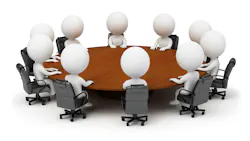
For as long as I have been in this profession, I have heard the same ambition expressed at conferences, in coaching sessions, and over dinner after long site visits: Safety needs a seat at the table. It is usually said with a mix of frustration and hope, as if the right title, reporting line, or executive sponsor will finally open the door.
I understand the ambition, but I also believe it has quietly held our profession back. Asking for a seat acknowledges that someone else built the table and sets the agenda, and that the best a safety leader can hope for is an invitation. Guests are treated as guests—they are warmly welcomed, given a few minutes to speak, and thanked for their contribution before the meeting’s real business begins.
I say this as someone who once made that exact request. In 2010, on a project advising executives, I asked a Fortune 500 CEO the following question: “If safety was truly one of the company’s core values, displayed on office walls, the website and the annual report, why was the safety executive not asked to participate in executive and board meetings?” It was a fair question. Looking back, I was asking the wrong question. I was helping safety leaders earn invitations to decisions others had already framed, when the more useful work is helping them shape how those decisions are made in the first place.
Consider the safety moment. In thousands of operations and executive meetings each week, someone opens with a brief safety story or reminder. Everyone nods, and the conversation turns to production, cost, capital, staffing and schedule. The safety moment may be the most polite form of exclusion in corporate life. It signals that safety matters enough to go first but not enough to stay in the room for the decisions that determine exposure.
The Table Was Built Around Decisions Already Made
Even safety leaders who earn their seats often discover the uncomfortable truth: By the time an issue reaches the executive table, the decisions that shaped the risk were often already made elsewhere, earlier, by people who never considered them as safety decisions. A capital request was approved, with the guarding upgrade deferred to next year’s budget. A turnaround schedule was compressed by four days to recover lost production. A maintenance crew shrank through attrition, and the work shifted to a contractor who arrived with different standards and no history at the site. A newly acquired facility was integrated on a financial timeline, with culture left to sort itself out.
None of those decisions crossed the safety leader’s desk labeled as safety, yet each one changed the organization’s capacity to prevent harm and its capacity to recover when work deviates from plan. In most organizations, the seat at the table is to review the consequences.
There is a second problem, and it is more personal. Influence that depends on an invitation is borrowed. It can be withdrawn by the next reorganization, the next CEO, or the next quarter of soft earnings. Most safety leaders have watched it happen at least once or, in my case, dozens of times.
What It Means to Build the Table
The idea is not new. Shirley Chisholm, the first Black woman elected to the U.S. Congress, is widely credited with the advice that if they don’t give you a seat at the table, you bring a folding chair, and many leaders since have carried her thinking a step further by building tables of their own. What the safety profession has rarely done is apply that thinking to how operational risk decisions get made.
By the table, I mean the place where trade-offs are made, where production, cost, schedule, capital, staffing and risk compete for the same finite attention and resources. By building it, I mean designing the questions, the information, the cadence and the participants that make those trade-offs visible before they are locked in.
This is a different job than advocacy. The advocate argues for safety’s share of the agenda. The architect designs the agenda so the risk implications of operational decisions surface naturally, without anyone needing to raise a flag. Whoever builds the table decides what gets discussed, who is in the room, and which questions are considered normal to ask. That is where durable influence lives.
In practice, building the table looks like a pre-decision review for major capital projects, where operations, engineering, maintenance and procurement walk through how the project will affect exposure during construction, start-up and steady state. It looks like a quarterly conversation with a plant manager that opens with the site’s highest-energy work and how much has changed, with the recordable rate further down the page. It looks like a role in turnaround planning months before the first permit is written, and a voice in acquisition integration before the deal closes, rather than after the first serious incident at the new site.
The organizations that do this best tie safety involvement to the capital request, while scope and budget can still move, well before anyone is negotiating a delivery date. If an AFE (Authorization for Expenditure), a purchase order above a set threshold, or a contractor scope of work cannot advance without a safety signature, nobody has to remember to invite you; the process does it for them. That is a built-in table at its most durable. It no longer depends on relationships, memory, or goodwill, and it survives the next reorganization because it lives in the workflow. But where safety is only a gate at the end, it will only ever be a gate at the end.
One caution: A signature buys an earlier conversation, and the quality of that conversation is still up to you. A checkbox at the AFE stage is the same gate, moved upstream. Notice who sits at each table. Very few of them work in safety. If the only people at your table are from the safety department, you have built a committee, where decisions go to be reported and, sometimes, ideas go to die a slow, painful death.
From Advocate to Ally, Peer and Decision Facilitator
Here is what many safety leaders overlook about their operational and executive counterparts. Operations leaders do not need another advocate competing for their attention. They already have advocates for quality, cost, customer delivery, labor relations and environmental compliance, each with their own scorecards and urgency. What they want, and rarely get, is someone who helps them make hard trade-offs with fewer surprises. That is the opening.
When a safety leader helps an operations vice president see that compressing a turnaround shifts risk onto night-shift contract crews performing unfamiliar tasks, then helps that leader design the controls and recovery plan that make the compressed schedule viable, the relationship changes. The operations leader begins to see the safety leader as the person who helps operations intelligently say yes.
Three roles emerge from that shift, and they reinforce one another. As an ally, the safety leader shares operational goals; they want the turnaround finished on time and the capital project delivered on budget, and they help make that happen without borrowing against the workforce. As a peer, they speak the language of volatility, margin, operational continuity and governance as fluently as they speak the language of hazards and controls. As a decision facilitator, they spend less time presenting conclusions and more time asking questions that surface what the room has not yet considered. That last role deserves emphasis because it runs counter to how most of us were trained.
Safety professionals learn to be the expert in the room. Facilitating a decision means accepting that the operations leader owns it and that your contribution is the quality of the thinking that goes into it. The safety leader who insists on owning every risk decision eventually gets bypassed; the one who improves every risk decision eventually gets sent for.
What a Well-Built Table Asks
A well-built table asks two questions of every significant operational decision: What does this do to our capacity to prevent serious harm? And what does it do to our capacity to recover when work departs from plan, as it inevitably will? A decision that weakens both should have a deliberate rationale and a named owner. A decision that strengthens one while quietly eroding the other deserves a harder look than it usually gets.
Around that core pair sit the questions most executive tables never ask out loud: Will this decision strengthen or strain the supervisors who must carry it out? Will the people closest to the work experience it as something done to them or as something done with them? What signal does it send about what this organization values under pressure? Does it serve a coherent strategy, or is it one more isolated initiative competing for the same people and hours? And does any of this thinking extend to the contractors who increasingly perform the highest-risk work, or does the table quietly stop at the payroll boundary?
Those questions map to the capacities I explore in my forthcoming book, The 7 Capacities for Safety Excellence: prevention and recovery at the core, surrounded by leadership, engagement, cultural and strategic capacity, with contractor capacity as the boundary that every other capacity must extend across. The framework matters less here than the habit. A safety leader who can bring these questions into operational decisions, using plain business language, is already shaping what the table considers.
“But I Don't Have the Authority to Build Anything”
This is the objection I hear most often, and it deserves an answer. In most organizations, authority is accumulated far more often than it is conferred, and it accumulates through usefulness to the people who own the decisions. No one will hand a safety director permission to redesign the capital approval process. Many operations leaders will gladly accept help thinking through a single high-stakes project, especially one that keeps them up at night.
Start with one decision. Pick a capital project, a turnaround, or a major change in staffing or contractor strategy, and offer to facilitate a pre-decision conversation focused on exposure and continuity. Do it well enough that the operations leader asks for it again, then repeat it with someone else. Tables are built one useful conversation at a time, and they become permanent when the people who own decisions start to feel uneasy making a big one without that conversation first.
Here is where I will push harder than some readers would like. Warning: This might make you uncomfortable. If you have been in your role for several years and operational decisions that shape exposure still reach you after they are made, the gap may lie less with your executives than with how you have defined your job. Many safety professionals arrive at the end of the decision process because that is the role they have accepted: approver, inspector, the person who signs off. Those who arrive early have redefined the role, and their brand inside the organization changes with it. They become known for helping the business decide, while their counterparts remain known for grading decisions someone else already made. That is a capacity indicator, and compliance has very little to say about it.
The questions you are known for asking determine when you are invited. If the only question people associate with you is “Is this safe?” you will keep getting asked it last, after the design is set and the money is committed. Start asking “What would make this easier to run safely?” and “How do we make the safe choice the easy choice?” and you will find yourself invited earlier, because those questions help people build something they are proud to run.
Why This Matters More in the Next Decade
The case for building the table is growing stronger, and quickly. Operations are becoming more automated, more reliant on contractors, more distributed across sites and time zones, and more exposed to turnover that drains experience faster than training can replace it. AI-driven scheduling and optimization tools will further compress decision cycles and push trade-offs into systems few people fully understand. The decisions that shape exposure will happen faster, earlier and potentially farther from the safety department than ever before.
Safety leaders who wait for invitations will spend the coming decade reviewing the consequences of decisions they never saw coming. Those who build the forums where trade-offs are made will be doing something far more valuable than protecting a seat; they will be shaping how the enterprise thinks about risk, continuity, performance and operations. Executive leaders will treat them as the strategic peers they have become.
Questions Worth Asking Now
If you lead an operation or an enterprise, a few questions can reveal what kind of safety leader you have built: When did your safety leader last influence a capital, staffing, or schedule decision before it was approved? Can a major AFE, a large purchase order, or a contractor scope move forward without a safety signature? If so, who ensures safety gets a say? Do your operations leaders seek them out when facing a hard trade-off, or mainly after something has gone wrong? Does your executive agenda give safety a moment at the start, or a role in the decisions that follow?
If you are the safety leader, ask yourself a harder question: Whose decisions did you improve last quarter, and would they say so without being prompted? A seat at the table is a reasonable ambition early in a career. For a safety leader who wants to be seen as a strategic thinker, an ally to operations, and a peer to executives, that ambition sets the bar far too low. Build the table, invite the people who own the decisions to sit at it, and help them make better decisions. Keep doing that, and the question of whether safety deserves a seat will eventually stop coming up because you might be the reason they are there to discuss their strategy.
About the Author
 Shawn M. Galloway
CEO
Shawn M. Galloway is CEO of ProAct Safety, author of several books, including Shared Ownership: Engaging the Subcultures, and host of the podcast “Safety Culture Excellence.” As an award-winning consultant, adviser, leadership coach, and keynote speaker (including at EHS Today's Safety Leadership Conference), he has helped hundreds of organizations within every primary industry to improve safety strategy, culture, leadership, and engagement. For more information, call (936) 273-8700 or email [email protected].
Related
 2105 Ehs Adrennes Feature
 different way of thinking