Small Business Safety Concerns
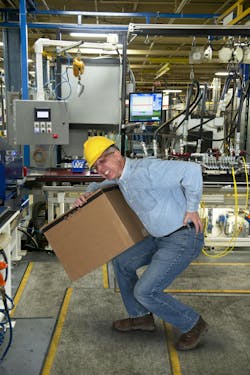
Small businesses have their own particular safety issues, as demonstrated by a report, 2025 State of Small Business Workplace Safety, issued by Pie Insurance earlier this year.
Seventy-five percent of respondents reported workplace injuries in the past year. They fell into the following categories:
- Mental health-related injuries (22%)
- Slips, trips, and falls (20%)
- Cuts, lacerations, and punctures (18%)
- Overexertion and repetitive strain injuries (13%)
The Preventable Nature of Many Injuries
What is especially alarming is that companies said that 50% of the injuries were preventable. And the categories of those that were preventable were:
- Slips, trips, and falls (22%)
- Cuts, lacerations (47%)
- Overexertion and repetitive strain injuries (42%)
- Mental health-related injuries (31%)
One of the reasons that action wasn't taken to prevent these incidents is a lack of proper equipment. Due to that, 49% of businesses admitted to improvising safety measures.
The survey found a correlation between the companies that improvised more frequently, also reported higher average lost workdays (both business and employee days) and higher annual out-of-pocket costs overall.
The Financial Toll of Workplace Injuries on Small Businesses
The report found that on average, small businesses lose four employee workdays and three full business days each year due to workplace accidents. And 64% said that these accidents negatively impact their financial performance.
Thirty-two percent of the companies incurred costs of over $20,000 related to workplace accidents. Thirty-eight percent said the impact is very significant to moderate.
However, if small businesses could prevent half of workplace injuries, the average annual out-of-pocket savings (workers’ compensation, medical expenses, and/or legal costs) could reach up to $10,000 or more.
Role of AI in Transforming Safety
There is some good news in that 81% of the companies surveyed said they are open to incorporating AI into their daily operations.
Currently 44% actively use AI, and are seeing results: 97% report increased operational efficiency and 73% have experienced improved workplace safety.
There is optimism among small businesses, as 64% said that AI will continue to play a crucial role in safety over the next five years. These applications would include wearables, surveillance systems to detect unsafe behavior, as well as automated training.
About the Author
 Adrienne Selko
Adrienne Selko
Senior Editor
Email [email protected]
Adrienne Selko is also the senior editor at Material Handling and Logistics and is a former editor of IndustryWeek.