Are There Lessons to Be Learned from Boyle Heights Warehouse Fire?
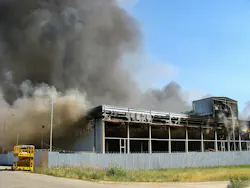
At 2:35 on June 17, 2026, KTLA reported that firefighters were trying to contain a fire at a 490,000 square-foot cold storage facility in Boyle Heights, which is located East of downtown Los Angeles. It was operated by Lineage.
It took an entire week for the fire to burn out entirely.
The fallout from the fire has been wide-reaching. A month later, as Lineage works to remove more than 85 million tons of weeks-old food, "the rancid odors have attracted throngs of rats and swarms of flies, as a foul-smelling brownish liquid pours from the seams of the building,' the LA Times reports.
Could this have been prevented? Well, according to the LA Times, solar panel safety concerns were raised a year prior to the fire. The concerns centered around a request Lineage had made to the city of Los Angeles about removing an emergency shutdown switch from the solar panels on the roof of the structure. Lineage's request to the city came after an earlier fire that started among the rooftop solar panels in 2024.
"A spokesperson for Lineage said that the company was inquiring about what it described as a safer alternative to rapid shutdown devices. Though intended to protect firefighters from shock, some shutdown devices have also been linked to increased fire risk," the article said.
According to Lineage, company officials believe the fire began while third-party subcontractors were testing the rooftop solar array at the nearly 500,000-square-foot warehouse."
Lessons from Fire
"The Boyle Heights fire serves as a chilling, real-time proof that combining rigid compliance with individual responsibility is a dead end," says Rosa Carillo of Carillo & Associates, in an article taking a larger view of the fire.
Carillo explains paper compliance versus physical reality.
Just as those metal solar panels shielded the burning core of the building from the firefighters’ water, corporate executives use paper audits, zero-harm certifications, and bureaucratic safety checklists to shield themselves from the messy, lived reality on the frontline. On paper, the warehouse had an updated emergency response plan approved just weeks before the fire. The “interface” read green, but the underlying social and physical circuitry was already in a state of advanced decay.
Carrillo views the situation as the “myth of individualism.”
In Boyle Heights, the system did not fail due to a lack of technical knowledge. The facility had suffered a precursor roof fire in 2024, which served as an early warning of the building’s structural vulnerabilities. Instead of triggering a deep systemic inquiry, the near-miss was normalized. The company performed multi-million dollar electrical repairs entirely “off the grid” without pulling city permits or obtaining building inspections.
This is the “myth of individualism” in action. By treating safety as a transaction of legal liabilities, cost-control, and compliance checklists, leadership felt secure. They clicked the “Individual Responsibility” icon to satisfy their own comfort, completely blind to the fact that their underlying organizational circuitry was melting down.
For further analysis, view the full article.
Carrillo has written a book on this topic titled Unmasking Safety’s Myth of Individualism.
About the Author
 Adrienne Selko
Adrienne Selko
Senior Editor
Email [email protected]
Adrienne Selko is also the senior editor at Material Handling and Logistics and is a former editor of IndustryWeek.