Podcast: Learning to Lead and Other Lessons from the Military
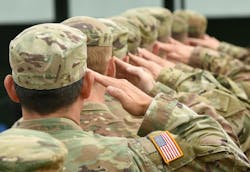




The military is often regarded as a place where young women and men must sink or swim. Newly enlisted officers head to boot camp to complete a thorough education and training regimen. Then they practice and prepare for a host of scenarios and complete advanced or specialized training, as necessary.
During this process, learn the value of teamwork, the importance of listening and to respect commanding officers. In other words, they learn how to follow—and what it means to be a leader.
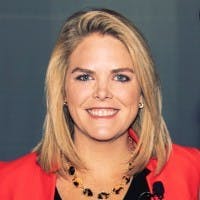
Caroline Johnson, a U.S. Navy veteran, says that years after her active service has ended, she still reflects on lessons her admiral taught her.
Johnson explains that before any flight she would take with her admiral, he made a point to spend time talking with soldiers on the flight deck. Johnson says those young men and women were taken aback that a senior officer, let alone an admiral, would take time out of his busy day to talk to them about their family back home or ask to see what they’re doing.
Then he’d steer the conversation toward safety.
“He would also ask him, ‘Hey, what are you doing to be safe out here to make sure that we make it home at the end of this deployment?’ And they would tell him,” Johnson recalls. “He said, ‘You know what? Can you, can you, keep doing that for me? And can you make sure you do the same for that person over there?
“Those actions changed those sailors lives in just that small 5-minute conversation.”
Johnson is now an executive advisor and coach at DEKRA, where she works with executive management and frontline employees to improve workplace safety.
She says that for the past few months, she has worked with leaders who have reminded her about the purposes and challenges of work as well as safety’s vital and unique role in all of it.
“We all go to our jobs, and we're there for a purpose,” Johnson says. “Whether that purpose is to put food on the table for your family or to challenge ourselves and learn new skills and grow and promoted into different positions, you're passionate about the work that you do.
“Everyone typically shows up with good intent. They want to do good. When we look at the things that aren't going well, it's because there are either obstacles—whether…people are distracted because their dog's sick, their family's having issues or they've been told that their landlord's going to sell the house and they have to move out. Things just weigh on you. It's completely relatable, completely understandable. But unless we show up and we listen and we ask questions and lead with curiosity, we don't really realize what those barriers to success are.”
That’s especially true in the realm of safety, Johnson says. Just because someone hasn’t gotten hurt yet doesn’t mean there aren’t dangers lurking. To be an effective leader, safety professionals need to ask deep, probing questions. They need to get to the heart of why people do what they do and help them shake off the fog of their routine—and possible complacency.
Prior to DEKRA, Johnson worked with financial firms, insurance companies and other high reliability organizations. She says that across industries and organizations, the key to success is communicating that you care.
“It’s taking the time to say…’Hey, what's stopping you from doing that? How can I help? What are we [doing], and why does it matter? What's the reason I'm asking you to do this?’” Johnson says. “We're all sophisticated human beings. We wouldn't be on this Earth, we wouldn't be doing what we're doing if we didn't have families, if we didn't have hobbies.
“Showing that respect, though it takes a little bit of extra time and energy from a leader, those are the leaders that I remember from my time in the Navy, and I think that's what we're all trying to be at the end of the day.”
Listen to Johnson’s full conversation with Managing Editor Nicole Stempak below.
Related Content
 military solider in profile saluting the U.S. flag
About the Author
 Nicole Stempak
Nicole Stempak
Nicole Stempak is managing editor of EHS Today and conference content manager of the Safety Leadership Conference.