What do Frontline Workers Think About Safety Technology?
Key Highlights
Looking at the impact of MSD injuries, 70% of those surveyed have experienced either symptoms or signs of MSD, and this has caused 64% to miss work.
The survey looked at MSD prevention technologies, including wearable sensors, computer vision, exoskeletons, robots and collaborative robots (cobots), extended reality, and digital twins.
The majority, over 90%, felt that MSD prevention technologies made them more aware of ergonomic risk factors such as forceful repetition and awkward postures.
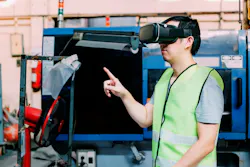
To better understand how frontline workers perceive the effects of safety technology, the MSD Solutions Lab, part of the National Safety Council, conducted interviews with 405 employees across a variety of industries.
The survey looked at MSD prevention technologies, including wearable sensors, computer vision, exoskeletons, robots and collaborative robots (cobots), extended reality, and digital twins.
And they went directly to the source of who is using the technology, the employees.
“For too long, the conversation about MSD prevention technology has centered on employers and developers – not the workers using these tools every day," said Paige DeBaylo, director of the MSD Solutions Lab, in a statement. "Employers are looking for different ways to make their workers' jobs safer and less physically demanding. Many report that these technologies improve safety, reduce strain and support overall job satisfaction. That's why NSC is focused on advancing solutions that help prevent injuries before they happen.”
Prevalence of MSD Injuries
Looking at the impact of MSD injuries, 70% of those surveyed have experienced either symptoms or signs of MSD, and this has caused 64% to miss work.
Concerning which body parts were affected, the information is as follows:
- Back -- 63%
- Wrists/Hands -- 39%
- Knees -- 38%
- Shoulders -- 34%
- Legs -- 33%
- Neck-- 32%
- Feet --27%
- Eyes -- 10%
- Head -- 5%
General Perceptions of Safety Technology
The majority, over 90%, felt that MSD prevention technologies made them more aware of ergonomic risk factors such as forceful repetition and awkward postures.
When asked about the impact of the technologies on mental stress, a majority, 62%, felt that it decreased mental stress.
Over 70% of respondents felt that the technologies improved job satisfaction.
A majority, over 70%, agreed that the technologies improved posture.
Over 65% of respondents agree that the technologies have led to less concern around developing an injury.
The report examined each technology separately and found the following.
Wearable Sensors
This technology was used most frequently. The top industries using sensors were construction (24%), health care and social assistance (18%), manufacturing (14%), and transportation and warehousing (12%) industries.
Many users reported reduced concern about developing injuries (71%) and decreased mental stress (54%) due to the technology.
Wearable sensors were perceived as particularly effective in reducing MSD signs and symptoms in the knees and wrists/hands.
Computer Vision Computer
Industries using this technology were in health care and social assistance (19%), construction (10%), retail trade (9%), and manufacturing (8%) industries, with about (19%) being used in office-based industries (i.e., professional, scientific and technical services, finance and insurance, information).
While the majority of respondents agreed that computer vision is effective at increasing awareness of ergonomic risks (84%) and leads to improvements in posture (70%), it was perceived as less effective than other technologies at increasing awareness of ergonomic risk factors and reducing overall MSD signs and symptoms.
Exoskeletons
Health care and social assistance was the sector with the highest use at 34%, while construction (15%), manufacturing (13%), and transportation and warehousing (10%) industries made up the majority of the sample who indicated having the most experience with exoskeletons.
Exoskeletons were perceived as one of the most effective technologies for reducing MSD signs and symptoms overall, with users indicating they particularly help reduce symptoms in the back and knees. Of all of the technologies, respondents agreed most that exoskeleton use increases awareness of ergonomic risk factors (96%) and improves posture (80%).
Robots or Cobots
Manufacturing was the top user of robots or cobots at 35%. Health care and social assistance (15% and transportation and warehousing (14%) industries ranked highest in the use of this technology.
Robots and cobots were the least likely of the technologies to increase awareness of ergonomic risk factors (77%) and among the least likely to improve posture (69%), but had the highest proportion of users reporting that using the technology only decreases MSD signs and symptoms (56%) and reduces concern around developing an injury at work (85%)
Extended, Augmented or Virtual Reality
Construction topped usage at 14%, while health care and social assistance (14%), and manufacturing (14%), followed by educational services (11%) and retail trade (8%).
While their direct impact on MSD symptoms was less frequently cited, most XR users reported that using the technology increases their awareness of ergonomic risk factors (85%) and improves their posture at work (72%).
Digital Twins
Only a small subset of respondents use this technology, which limited the report from drawing any strong conclusions. Those who reported having the most experience with digital twins were most commonly from health care and social assistance (29%), followed by educational services (14%), finance and insurance (14%), and transportation and warehousing (14%).
Despite the limited sample, most users indicated that digital twins increase their awareness of ergonomic risk factors (93%). A majority also agreed that using digital twins makes them less concerned about developing a workplace injury (71%). More than half of respondents (57%) reported improvements in posture while using digital twins. Qualitative findings indicated that users appreciated gaining tools and knowledge in a simulated environment, especially related to posture.
Concerns about Data Privacy of Technology
Respondents were asked to comment on the following statements:
I have concerns about the privacy of my data when using new technologies at work. -- 45% agreed or strongly agreed
I have concerns about technology and or AI influencing how I conduct work activities. --43% agreed or strongly agreed
The report offers an in-depth discussion of the findings.
About the Author
 Adrienne Selko
Adrienne Selko
Senior Editor
Email [email protected]
Adrienne Selko is also the senior editor at Material Handling and Logistics and is a former editor of IndustryWeek.