What Employers Can’t Ignore About Slips, Trips and Falls
Key Highlights
- Slips, trips and falls are often addressed as a housekeeping and operations issue. But everyone is responsible not just for the conditions that may lead to slips, trips and falls but also how to respond to such incidents.
- Sometimes, workers get lucky and don’t hurt themselves when they slip, trip or fall. Other times, they need medical attention. Knowing how to spot the difference, both for themselves and others, requires training, education and awareness for what’s at stake.
- Technology and wearable devices can help shorten the response time and ensure that people get the appropriate care they need as quickly and seamlessly as possible.
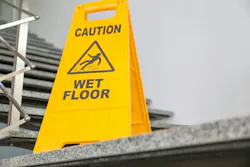
A worker slips in a back hallway. A maintenance employee falls in a mechanical room. A cleaner trips after hours when few people are nearby. A delivery driver goes down in a parking lot. An employee falls in front of co-workers, but no one is sure whether the injury is minor or serious.
Everyone knows slips, trips and falls are a workplace risk. They’re often discussed through a prevention lens: better housekeeping, proper footwear, adequate lighting, clear walkways, floor mats, signage, training and hazard inspections.
Those measures matter. Prevention should always be the first line of defense.
But even strong safety programs can’t prevent every incident. Floors get wet. Cords get missed. Weather changes quickly. Employees move through stairwells, parking lots, warehouses, offices, kitchens, construction areas and customer sites where conditions are unpredictable.
Before a fall, the central safety question is how to prevent it. Once a fall occurs, the focus must immediately shift to response: Can the worker call for help? Does anyone know they are hurt? Can supervisors, security or emergency responders act quickly enough to make a difference?
That is the response-time gap: the period between when a worker is injured and when the emergency response begins. Response time is already treated as a critical performance measure in emergency medicine, public safety and disaster response because delays can affect outcomes. It deserves the same attention in broader workplace safety conversations about slips, trips and falls, where quickly reporting the incident, locating the injured employee and delivering help without delay can prevent further harm.
Why Slips, Trips and Falls Pose a Universal Safety Risk
Slips, trips and falls can happen to anyone, in any workplace, at any time. They aren’t limited to employees working alone, performing high-risk jobs or operating in remote locations. A worker can fall in a quiet stairwell after hours, on a crowded warehouse floor, in a busy kitchen, outside an office entrance or while moving between customer sites.
In some cases, the injured worker may be alone, disoriented or physically unable to reach a phone or call a supervisor. Other times, co-workers may be nearby but fail to recognize how serious the fall is, assume someone else has called for help, or lack a clear way to alert the right people. An employee may initially try to stand up or continue working, only for the severity of the injury to become apparent minutes later.
Because the seriousness of a fall is not always immediately clear, employees and co-workers may hesitate over whether the situation should be reported to supervisors or necessitates medical attention.
A response-time gap can develop even in a fully staffed workplace if no one realizes an incident occurred, responders do not know the worker’s location or employees are unsure who is responsible for taking action. Even a plan that looks effective on paper can break down if workers cannot quickly put it into action.
What Happens After a Fall
Not every slip, trip or fall results in a serious injury. Some workers can get up, report the hazard and continue their shift. But others may experience fractures, head injuries, back injuries, sprains, loss of consciousness or medical complications that require urgent attention.
The first few minutes after an incident are often messy. People may not know whether the injury requires emergency services, on-site medical assistance or simply notifying a manager or security team. They may also be unsure who should stay with the injured employee or who is responsible for calling for help. If the fall happens away from a main work area or if the worker is alone, those delays can be even longer.
That’s why response planning is so important. Safety leaders should be asking: Would we know if someone was hurt? Would we know where they were? Could the right people be alerted quickly? Would the plan work during a night shift, weekend shift, mobile assignment or off-site visit? What if the employee can’t reach a phone or is unable to speak, explain what happened or share their location?
These simple questions can reveal major gaps in a workplace safety program. A response plan only works if employees can put it into action quickly after an injury.
How Technology Changes the Response
Technology can’t replace good training, strong safety policies or the work employers do to prevent falls in the first place. But it can address one of the most dangerous moments after an incident occurs: the time between a worker getting hurt and someone realizing help is needed.
That’s where wearable safety devices, location-sharing systems, automated check-ins and real-time alerts can strengthen a response plan.
Wearable safety devices can give employees a simple way to call for help if they are alone, away from a desk or unable to reach a phone. With one press, these panic buttons can simultaneously alert 911 and internal safety or management teams while sharing the user’s current GPS location. Two-way communication can also be initiated, allowing responders to assess the situation as it unfolds.
For employers, the value is not only that an alert is sent. It is that the alert reaches the right people directly, without relying on a chain of calls, messages or guesswork. That can help the organization move more quickly from incident to action instead of losing critical minutes determining what happened, where the worker is or who needs to respond.
For employees, it can provide greater confidence that they have a clear way to reach help quickly, even if they are injured, alone or unable to access a phone.
Location-sharing systems can also help supervisors, safety teams or emergency contacts identify where assistance is needed. In a large facility, campus, parking area or mobile work environment, knowing where an injured worker is can prevent responders from losing valuable time searching.
Automated check-ins can help confirm that employees working alone or in lower-visibility roles are safe at scheduled intervals. Real-time alerts can notify managers, security personnel or emergency responders when an employee signals distress.
These tools don’t replace prevention, training or safety policies. They give employees a faster, clearer way to get help when something goes wrong.
Response Plans Designed to Work
To be effective, safety tech has to be practical; It has to fit the way employees actually work.
Corporate offices, warehouses, hospitals, schools, hotels, construction sites, and field-service operations all face slip, trip and fall risks, but their response challenges can look very different.
Safety leaders should evaluate their sites and where communication is most likely to break down.
Are there employees who work alone or after hours? Do some workers move between locations? Are there parking lots, stairwells, storage rooms or mechanical areas where someone could be hurt without being seen right away? Are there roles where employees may not carry phones, or noisy environments where calling for help may be difficult? Are there teams where people are surrounded by co-workers but still lack a clear emergency-reporting process?
This is where the broader workforce focus is important. The goal is not only to protect the person working alone in a remote corner of the facility. It’s also to make sure every employee has a clear path to help when something goes wrong.
Implementation also matters. Employees should understand why a device, app or alert system is being introduced and how it supports their safety. They should know when to use it, who will receive alerts and what information may be shared during an emergency. Privacy, training and trust are all essential.
Safety teams should also recognize that technology isn’t a substitute for prevention. A wearable device won’t fix a wet floor. A location-sharing system does not replace housekeeping. An automated check-in does not eliminate the need for hazard assessments. These tools work best as part of a layered safety strategy: preventing falls where possible; preparing employees to respond; and making sure help can be requested, located, and dispatched quickly when an incident occurs.
When those layers work together, organizations are better positioned to protect both lone workers and the broader workforce.
Closing the Gap
Slips, trips and falls will always be a core workplace safety concern because they can happen in nearly every industry. They affect employees in virtually all work environments.
Employers should continue doing everything possible to keep walking surfaces safe, reduce hazards and train employees to recognize risks. But safety programs should also account for the critical minutes after an incident occurs and consider simple, scalable tech solutions to close the response-time gap.
Because when someone falls, the question is no longer only whether the incident could have been prevented. The question is whether anyone knows the fall occurred, where the injured worker is and how to get help to them quickly.
When a slip, trip or fall occurs, closing the response-time gap means turning awareness into action: finding the injured worker, assessing the situation and getting the right help to them without unnecessary delay. By making response time part of a layered safety strategy, employers across industries can better protect their workers.
About the Author
 Tyler Charuhas
Tyler Charuhas
Tyler Charuhas is an enterprise safety expert at Silent Beacon, a workplace safety technology company focused on emergency response and employee protection.