Is AI Causing Safety Errors?
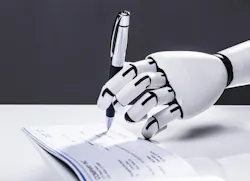
As AI is growing in use in the safety sector, its benefits must be weighed against potential errors.
Case in point is a recent survey from Tradesafe that showed 20% of workers have witnessed an adverse outcome associated with an AI safety-document error.
And these errors are fairly common, with 36% of workers having encountered AI-generated safety documents containing outdated requirements, vague instructions, incorrect information, or missing steps.
Lack of Review
Also troubling is the fact that 77% of safety professionals do not report independent review of AI-generated safety documents before use.
Part of the reason for the lack of reporting is that 82% of workers say there is not a formal policy defining accountability for errors in AI-assisted safety content.
"Only 23% of the safety professionals we surveyed said AI-generated safety documents get an independent review," Herbert Post, vice president of Tradeshow, told EHS Today.
" I see that as the "work as prescribed" vs. "work as done" issue resurfacing. Leaders may presume someone checked the document. The people most proximal to the task may know that no one did. This is not complicated. Someone who knows the equipment should check the lockout and/or the emergency procedures and sign off. AI can produce a competent first draft, but only a qualified person can confirm the steps are correct.
"Only 18% of the workers we surveyed said their workplace has a formal policy defining who is accountable when AI-assisted safety content contains an error. In the same survey, 67% of frontline workers said they’d trust a safety policy less if they learned AI helped write it. Those two findings are related. If there is no accountability for corrections, why should people trust the doc? I would suggest starting with accountability, naming who is reviewing the AI content, being clear about it, and making it easy for people to speak up. Trusting is easier than having to regain trust, and it's part of safety culture."
AI is Drafting Safety Documents
The survey found that 51%of trade workers say generative AI is already used to draft workplace safety documents. Here is the breakdown of which documents are being written with the help of AI.
- Training -- 76%
- Standard operating procedures (SOPs) -- 67%
- Inspection checklists -- 46%
- Hazard assessment-- 39%
- Incident report --38%
- Lockout/tagout procedures -- 20%
- Toolbox Talks -- 19%
Oversight Responsibility
Trying to figure out who is responsible for holding AI accountable to safety standards is a bit difficult. Company leadership (74%) is far more likely to report independent review than supervisors or managers (52%), frontline workers (36%), or safety professionals (23%).
Additionally, frontline workers are 45 percentage points less likely than leadership to say they have visibility into how safety documents are created (31% vs. 76%).
This lack of visibility is a major concern as 47% of workers think an uncaught AI error could happen at their own organization.
So, a lot remains to be done to keep AI in check when it comes to safety. One solution might be to slow down. The survey found that 34% say AI is being adopted for safety work faster than their company can properly oversee it.