Podcast: A Fresh Approach to Tackling Workplace Safety Problems
To paraphrase a popular adage, the same repeated actions generally lead to similar outcomes. So, in order to make progress, we need to think—and act—differently.
That’s where new ideas, new technologies and new applications for those technologies come into play.
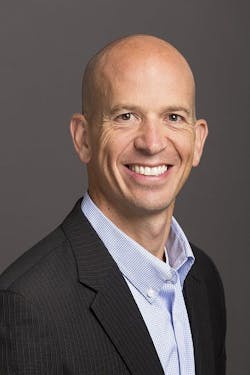
Donavan Hornsby, chief strategy officer for Benchmark Gensuite, says that artificial intelligence (AI) has the potential to positively change the way many organizations do business—and that could lead to substantial improvement of workplace safety metrics.
“I'm not saying AI is going to solve everything, but it can certainly help with some of these areas that we've wrestled with for a long time,” he says.
It’s true that AI is garnering the lion’s share of attention right now, but it’s part of a broader trend of how work is changing, especially for safety professionals.
“This is probably something that your audience and you probably have recognized over the past few years, [but] EHS folks have been wearing a lot more hats than they used to,” he says “It’s not just safety anymore. They’re having to deal with broader ESG concerns.”
COVID-19, business complexity, changing regulations and political headwinds have dramatically changed the workplace safety landscape over the past decade. Hornsby talks with Managing Editor Nicole Stempak about where safety is headed next and discusses more findings from Benchmark Genusite’s annual report, “The EHS Pressure Point: Rising Complexity, Shrinking Resources, and the Shift to AI.”
You can listen to their full conversation below. Be sure to subscribe to the Great Question: A Manufacturing Podcast, so you never miss an episode.
Podcast Transcript Excerpt:
[Editor's Note: This excerpt has been lightly edited for grammar and clarity, such as to omit word repetitions or incomplete thoughts.]
EHS Today: For those who may not be familiar, can you explain what Benchmark Gensuite's annual report is and anything relevant in terms of the surveying or data collection process? I want to understand what the data is before we talk about the findings. I'm eager to hear if there was anything that surprised you, changed dramatically (for better or for worse), or something that you're watching with this report?
Donavan Hornsby: Regarding the survey, this is something that we've done for a few years now. This year, we surveyed probably 200 or 300 global organizations, and that cut across a variety of job roles and levels if you will. These are folks that are leading EHS programs and functions within their organizations. Again, it was a global survey, [with] a bunch of different types of companies represented there, different sectors and industries. We think it was pretty good cross-section of the landscape, if you will.
The themes in the survey really centered around different things like employee engagement and safety performance, both at the industry, generally, but also within their organizations where they're employed. And then we also got into some things like barriers to performance and other types of themes like that.
I think your last question was about anything that surprised me. [There were] a lot of interesting takeaways through those results. Having done this survey before, it was good to have a baseline see how things maybe have changed or not changed. One of the things that maybe surprised me most was the level of underreporting within the organizations. One point of clarification: When we're talking about underreporting, I think a lot of the perspectives that came out there were representative of what they see within their organizations and not necessarily a reflection of the industry as a whole. But underreporting was a thing that caught my eye.
By that, we mean things like the ability for folks to report safety concerns, near-misses, these types of things. We found that a little bit surprising simply because having been in the space for a long time, there's been a lot of investments, and I think we feel we've made a lot of progress in these areas. I think it's something that we, as an industry, need to dig further into and see if we can address.
EHS Today: There's so much I want to talk about just with the state of affairs. This report mentions a few concerning trends in its subtitle: rising complexity, shrinking resources and the shift to AI. What are you seeing out there?
DH: Sure. I mentioned before that I've been in the space for quite a long time, and I will say that operational leaders and safety leaders certainly deal with a lot of complexity. That's certainly been the case most recently as the environments where they're working have grown more complex. Their roles and responsibilities have needed to expand to address that complexity. I don't think that’s anything new.
But just to highlight a few things in the survey that might be helpful for folks for some context, they're referencing things like greater production demands, greater operational complexity, supply chain complexity, workforce turnover, greater reliance on third-party contractors and geopolitical challenges.
I think the last thing I would say is, and this is probably something that your audience—and you—probably have recognized over the past few years. EHS folks have been wearing a lot more hats than they used to. It's not just safety anymore. They're having to deal with broader ESG concerns. The “S” within ESG is a big umbrella, and a lot of these folks that have traditionally been very focused on operational safety are now having to manage some bigger issues for that broader ESG landscape.
The great thing about EHS leaders that I've known for a long time is they don't typically dwell on the problems. In many cases, they're actually engineers either by training or at heart, or perhaps both. And so, they just want to solve problems. They tend to not dwell very long on the problems themselves. They just want to get down to the business of solving them.
I think we'll talk a little bit more about AI, but everybody's super excited about AI. They're risk management professionals, and so they inherently are concerned about the risks that technology will introduce into workplaces, but it's also a huge opportunity. That's been borne out by some of the early work that we've been doing within our community.
EHS Today: Looking at the report, something that really stuck with me is seeing that 45% of respondents say injury frequency increased over the past 12 months. That's a 150% year over year increase. The injury severity is also worsening, with 39% reporting an increase in injury severity, more than a 200% increase year over year. Was this a surprise to you? What do you make of these numbers?
DH: It was a surprise. But I guess when you think about some of the challenges that I mentioned earlier, if you just take, for example, contractor workforces. As more companies are shifting risk to contractors that are coming on sites—I mean, it may be obvious to folks—but you're bringing folks on that don't know the environment as well, maybe don't have as much training in a lot of cases. I think the risk assessments that in prequalification for some of those contractors in some cases, unfortunately, are seen as a check-the-box exercise. We truly don't understand the risks. When you take just that particular problem, perhaps it’s not as surprising.
I guess one thing to clarify around some of those numbers: They're big numbers, but it's worth noting that these were reflections on their own organizations, not necessarily the industry as a whole. The industry as a whole hasn't seen numbers like this, I don't believe. But certainly some organizations that operate within the industry have experienced some of these things, and it's for some of those reasons I just mentioned.
One thing that maybe we need to look at next year in the survey is to get dig a little bit deeper into what we are referring to when we're talking about injury frequency, because one thing that the that industry generally has done really well is reducing the prevalence of minor incidents.
If you go to a dashboard for an EHS leader, you're going to see a trend line that's steadily over time going down, which is great. The problem is that it doesn't reflect what's actually happening with significant incidents, which is why you have a big focus in industry around SIF prevention.
Because while minor safety incidents have decreased over time for the most part, significant incidents have either had a flat performance or they've increased, which is I think what you're seeing in some of those numbers that you referenced before. Things like slips, trips and falls have gone down, but overall significant cases have either plateaued or gone up. This is what's keeping folks up at night. How do we address this? These are the cases where folks are going to the hospital, dealing with some things that have a significant impact on their lives and their livelihoods.
About the Author

Nicole Stempak
Nicole Stempak is managing editor of EHS Today and conference content manager of the Safety Leadership Conference.