How to Bring AI into Safety Culture
Almost as important as bringing in new technology is how it's created, introduced and implemented. In this podcast interview,
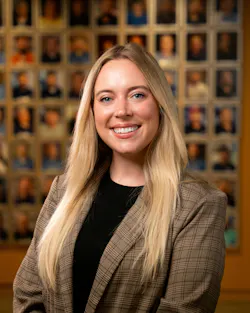
McKenna Schutty, safety, health and environmental manager at TDIndustries, a Texas-based facilities services and mechanical construction company, discusses how her company brought AI into its safety organization.
Listen to the podcast below. Highlights from the conversation can be found beneath the podcast player.
EHS Today: Can you talk to us about what strategy you use to bring AI into the company?
Schutty: Yes, so AI is everywhere. We integrate it in a lot of different facets across TD, but in safety specifically, we really emphasize it in our daily planning. So that includes just our pre-task safety plans, our observations, our safety engagement activities, anything that we're doing every single day. That's what we were really focusing on because those are our routine daily tasks that really just drive our engagement.
And that's already something that we're collecting a lot of data on. And so, our question was really, how do we really learn from it? We already have all this data. So how are we effectively improving our processes with the data that we're collecting?
AI has really been a big tool for us just because we're not really changing the way that they're operating or the way that they do their work. We're simply just getting more value from the processes that they are already trusted by using and integrating that into their daily functions.
We're using it as a resource to multiply and drive the engagement overall from an assistance type of standpoint and see how effectively we can push that envelope.
EHS Today: How was the AI strategy communicated to the workforce?
Schutty: We are always very intentional whenever we roll out new processes, especially around a big topic such as AI. Since we are employee-owned, we are very much more focused on involvement, especially with technology and processes.
The message was very simple. We were always going to use AI just to support our team as a tool and to enable us to just better serve ourselves and each other across multiple teams.
Yes, we did involve our supervisors. We do that very, very early on in the adoption process just to make sure that our initial pilot is successful. We incorporated any feedback. They're the first person that we talk to, essentially, because they're the ones, boots on the ground. They're the ones that know exactly what their team needs and see how we want to design a program and an interface for themselves.
And so if we don't design and listen to our team, we're probably not going to be able to get the utilization aspect from it. And so if we are able to work together, that means that we'll have multiple engagements in the design.
EHS Today: Can you talk to us about what strategy you use to bring AI into the company?
Schutty: Yes, so AI is everywhere. We integrate it in a lot of different facets across TD, but in safety specifically, we really emphasize it in our daily planning. So that includes just our pre-task safety plans, our observations, our safety engagement activities, anything that we're doing every single day. That's what we were really focusing on because those are our routine daily tasks that really just drive our engagement.
And that's already something that we're collecting a lot of data on. And so our question was really, how do we really learn from it? We already have all this data. So how are we effectively improving our processes with the data that we're collecting?
And so AI has really been a big tool for us just because we're not really changing the way that they're operating or the way that they do their work. We're simply just getting more value from the processes that they are already trusted by using and integrating that into their daily functions.
We're more so using it as a resource to multiply and just drive the engagement overall from an assistance type of standpoint and see how effective we can push that envelope.
EHS Today: How was the AI strategy communicated to the workforce?
Schutty: We are always very intentional whenever we roll out new processes, especially around a big topic such as AI. Since we are employee-owned, we are very much more focused on involvement, especially with technology and processes.
So the message was very simple. We were always going to use AI just to support our team as a tool and to enable us to just better serve ourselves and each other across multiple teams.
Yes, we did involve our supervisors. We do that very, very early on in the adoption process just to make sure that our initial pilot is successful. We incorporated any feedback. They're the first person that we talk to, essentially, because they're the ones, boots on the ground. They're the ones that know exactly what their team needs and see how we want to design a program and an interface for themselves.
And so if we don't design and listen to our team, we're probably not going to be able to get the utilization aspect from it. And so if we are able to work together, that means that we'll have multiple engagements in the design.
About the Author
 Adrienne Selko
Adrienne Selko
Senior Editor
Email [email protected]
Adrienne Selko is also the senior editor at Material Handling and Logistics and is a former editor of IndustryWeek.