The Most Overlooked Resource in Your Safety Program: Your Local Fire Department
Key Highlights
- When emergencies occur, every minute counts. You need to make sure you are taking the proper precautions at your facility.
- One way to prepare is to collaborate with your local fire department before an incident occurs. This ensures that the responding agency knows vital information about your facility ahead of time, allowing them to act quickly.
- Beyond emergency planning, local fire officials can offer a fresh perspective to help identify, mitigate and prevent other workplace safety hazards.
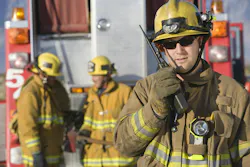
As safety professionals, we spend considerable time identifying hazards, reducing risk, improving compliance and strengthening emergency preparedness. We attend training programs, review regulations, conduct audits, investigate incidents and evaluate new technologies. Yet one of the most valuable safety resources available to many organizations may already be located just a few miles down the road.
It’s your local fire department.
Whether your facility is protected by a career, combination or volunteer fire department, developing a relationship with local emergency responders can provide significant benefits for both your organization and the personnel who may one day respond to your facility.
During my 32-year career in the fire service, I have responded to fires, hazardous materials incidents, medical emergencies, technical rescues, and industrial accidents at a wide variety of commercial and manufacturing facilities. Something I observed early on: Organizations that had built relationships with local responders before an emergency occurred were far better prepared when a crisis happened.
When firefighters arrive at a facility they have never seen before, valuable time is spent learning the layout, identifying hazards, locating utilities and understanding fire protection systems. When that information is already known, responders can focus immediately on solving the problem rather than gathering basic information.
In an emergency, minutes matter. Make the most of them, starting today.
Invite the Fire Department to Your Facility
One of the simplest and most effective actions safety professionals can take is to invite local firefighters to tour their facility.
These tours allow responders to become familiar with:
- Building construction features,
- Facility layouts and access points,
- Utility shutoff locations,
- Fire protection systems,
- Fire department connections (FDCs),
- Sprinkler risers and control valves,
- Hazardous materials storage areas,
- Special operational hazards,
- Water supply locations, and
- Emergency assembly areas.
This information helps emergency responders develop pre-incident plans and make informed decisions should a situation arise.
But the benefits are not one-sided. Experienced firefighters often identify hazards or vulnerabilities that may not be apparent to personnel who work in the facility every day. Firefighters routinely observe incidents across many different industries and often recognize trends that individual organizations may never encounter.
Real-world Value of Preplanning
I experienced the value of preplanning firsthand during a major fire at a local chemical company. Prior to the incident, facility personnel had worked closely with the fire department to develop a detailed pre-incident plan. As a result, responders arrived with a strong understanding of the plant layout, hydrant locations, and hazardous material storage areas.
Because that information was immediately available, as the incident commander, I was able to focus on controlling the incident rather than gathering basic facility information. Critical decisions were made faster, resources were deployed more effectively and the overall response was significantly more efficient.
On another occasion, a routine facility tour revealed that a newly installed storage arrangement would prevent water from the sprinkler system from covering all stored commodities. The issue had gone unnoticed by facility personnel but was immediately identified during the walkthrough. Correcting the problem took only a few hours. Discovering it during an actual emergency could have had far more serious consequences.
These examples demonstrate why preplanning remains one of the most valuable investments an organization can make.
Learn From Their Experience
Firefighters routinely respond to incidents involving:
- Industrial accidents,
- Machinery entanglements,
- Chemical releases,
- Fires and explosions,
- Electrical failures,
- Confined space emergencies and
- Medical emergencies.
Every response generates lessons learned.
While many safety professionals spend most of their careers within a single company or industry, firefighters observe incidents across dozens or even hundreds of businesses. That broader perspective often provides valuable insight into common causes of emergencies and effective prevention strategies.
Why wait until after an incident occurs to learn those lessons?
Review Emergency Plans and Conduct Tabletop Exercises Together
Most facilities maintain emergency action plans. Far fewer have reviewed those plans with the agencies expected to respond during an emergency.
Consider inviting local responders to review:
- Emergency action plans,
- Evacuation procedures,
- Accountability systems,
- Shelter-in-place procedures,
- Hazardous materials response plans,
- Severe weather procedures,
- Confined space rescue plans and
- Business continuity plans.
You may also consider conducting tabletop exercises, one of the most effective methods for evaluating emergency preparedness. Involving facility leadership and local responders in realistic scenarios can reveal communication challenges, resource limitations and flawed assumptions that may otherwise remain hidden.
Potential scenarios include:
- Chemical releases,
- Warehouse fires,
- Utility failures,
- Severe weather events,
- Active threats and
- Confined space emergencies.
Reviewing emergency plans and conducting exercises together can generate valuable information. Planning gaps can be identified, expectations clarified and communication improved before a real emergency occurs. These face-to-face meetings also allow for members of both organizations to get to know each other. This makes for better interaction when working together to mitigate emergency situations.
The objective of meeting together is not to develop perfect plans or solve every possible problem. It is impossible to anticipate all outcomes. Instead, the goal is to become proactive about reducing common risks and preplanning responses to probable incidents. Working together will identify opportunities for improvement before lives, property or operations are placed at risk.
3 Common Fire Protection Issues That Often go Unnoticed
Several factors allow deficiencies and impairments to accumulate over time. One of the most common issues is “Out of sight, out of mind.” Fire protection systems are passive, and fortunately most businesses will not have a fire requiring them to operate. However, this can lead management to assume these systems are adequate and will function properly when needed.
1. Sprinkler System Maintenance
Automatic sprinkler systems are among the most effective fire protection tools available. However, their effectiveness depends on proper inspection, testing and maintenance. The National Fire Protection Association’s (NFPA) Standard 25 provides requirements for the inspection, testing and maintenance of water-based fire protection systems.
One commonly overlooked issue involves internal pipe obstructions caused by corrosion products, scale or sediment accumulation. If left unaddressed, these obstructions can restrict water flow and reduce system performance during a fire. NFPA’s recommends conducting a main drain test annually and an internal piping assessment every five years, which should identify flow restrictions or piping deterioration before they become an operational concern.
2. Private Fire Hydrants
Private hydrants are often forgotten until an emergency occurs. A poorly maintained hydrant can significantly impact firefighting operations and delay water supply during critical stages of an incident. Regular inspection, testing and maintenance help ensure that hydrants function when they are needed most.
3. Changes in Storage and Commodities
This issue is particularly common in warehouses and manufacturing facilities. A sprinkler system may have been designed years ago to protect one commodity classification and storage arrangement. Over time, facilities frequently change products, packaging materials, storage heights and operational processes.
For example, a facility that originally stored low-hazard materials may transition to plastic-packaged commodities or higher-piled storage without evaluating whether the existing sprinkler system remains adequate.
According to NFPA Standard 13, sprinkler system designs are based on specific hazard classifications and storage arrangements. When those conditions change, fire protection systems should be reevaluated. Many large-loss warehouse fires can be traced back to this type of oversight.
Understand Local Capabilities and Limitations
Organizations sometimes assume emergency responders possess capabilities that may not exist within their community. Some departments maintain hazardous materials teams, technical rescue teams, fire investigators, dive teams or specialized industrial firefighting resources. Others depend heavily on regional mutual aid agreements.
An understanding of available resources and their limitations enables organizations to make informed decisions about emergency preparedness, training and risk management. Just as importantly, it helps identify gaps in your plans.
If your local fire department cannot respond to certain emergencies that may occur in your facility, you need to make provisions to handle these types of incidents. One option is to develop special response teams comprised of your own employees; you will need to provide them with the required training, periodic refresher training and the necessary equipment to mitigate these situations. Another option is to use private contractors who specialize in the particular incident that may occur.
At a minimum, facilities should have groups of employees trained to respond to common minor incidents, such as small fires, hazardous materials leaks and medical emergencies. These initial responders can be the difference between an incident being an inconvenience or becoming a major catastrophe.
Fire Safety Ensures Business Continuity
When discussing fire protection, many organizations focus exclusively on regulatory compliance and life safety. Those priorities are critically important. However, fire protection should also be viewed as a business continuity strategy.
A major fire can result in:
- Extended production interruptions,
- Lost customers,
- Supply chain disruptions,
- Significant financial losses,
- Reputational damage and
- Permanent facility closure.
Preventing these outcomes requires more than compliance. It requires preparation, collaboration and proactive risk management. Strong relationships with local emergency responders can play an important role in protecting both employees and business operations.
Final Thoughts
Many EHS professionals are responsible for OSHA compliance, environmental regulations, training, incident investigations, industrial hygiene, workers’ compensation, emergency planning and risk management. Fire protection frequently becomes just one item on an already crowded list. Fortunately, local fire inspectors can be outstanding resources.
Most fire codes are based on standards developed by the NFPA, and many OSHA requirements reference NFPA standards. Fire inspectors work with these requirements daily and can often help organizations better understand applicable code requirements and fire protection expectations.
The goal is not simply compliance. The goal is to protect people, property and business operations.
If you are an EHS professional, plant manager, operations leader or business owner, make it a goal this month to contact your local fire department.
Invite them to tour your facility. Ask them to review your emergency plans. Discuss your fire protection systems. Learn about their capabilities and limitations. Build the relationship before you need it.
The few hours invested today may help protect your employees, your property and your organization’s future in the event of a fire or other emergency.
Read more:
 Safety Inspection Dreamstime L 166063116
 Dreamstime L 22985645
About the Author
Brooks Ross
Brooks Ross is a fire service officer with more than 32 years of experience in emergency response, fire prevention, incident command and public safety leadership. Brooks’ professional interests include workplace safety, emergency preparedness, fire protection systems and business continuity planning. He has a graduate certificate in occupational safety and health and a bachelor’s degree in public administration.