Using Adhesion Testing to Predict Anti-Fatigue Mat Deterioration
Key Highlights
- Surface abrasion is a key predictor of long-term failure. Pilling at 10,000 cycles often predicts cracking, flaking, or delamination at 20,000–50,000 cycles.
- Pilling reduces slip resistance. A pilled surface changes the friction profile of the mat, with raised fiber balls creating an uneven micro-texture.
- Pilling accelerates contamination. Pilled areas trap dirt, grease, and cleaning residue in the raised texture.
- Visual wear patterns are a telltale sign. On a mat with poor abrasion resistance, you'll see whitening or discoloration where the topcoat has been worn through.
- WellnessMats test the highest in their class. Class 5 on pilling meaning the surface is effectively abrasion-proof.
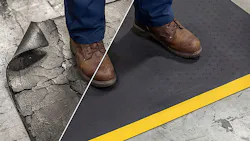

Anti-fatigue mats live on the floor. They get walked on thousands of times a day, dragged by chairs and carts, scrubbed with industrial cleaners, and exposed to grit and debris. The surface takes the brunt of all of it.
How the Wyzenbeek Test Works: A #10 cotton duck abradant is dragged back and forth across the surface under controlled pressure. One back-and-forth equals one “double rub.” The standard commercial test runs for 10,000 double rubs. After the cycles, the surface is evaluated on two scales:
Pilling Resistance (Class 1–5): Pilling is the formation of small, raised balls of material on the surface. Class 5 means the surface showed zero pilling after 10,000 cycles. Class 1 means severe pilling with the surface covered in raised fiber balls.
Color Change (Class 1–5): This measures whether abrasion altered the surface color through material removal, whitening, or exposure of a different substrate underneath. Class 5 means no visible change; Class 1 means severe discoloration.
WellnessMats Testing Results
Class 5.0 Pilling, perfect with zero pilling. Class 3.5-4.0 Color Change, slight to negligible. Test over 10,000 double rub cycles.
Why Pilling Matters More Than It Sounds
Reduced Slip Resistance: A pilled surface changes the friction profile of the mat. The raised fiber balls create an uneven micro-texture that behaves differently than the engineered surface, particularly when wet.
Accelerated Contamination: Pilled areas trap dirt, grease, and cleaning residue in the raised texture. The mat becomes progressively harder to clean because contaminants are embedded in a rough surface rather than sitting on a smooth one.
Indicator of Broader Surface Failure: Pilling at 10,000 cycles often predicts cracking, flaking, or delamination at 20,000–50,000 cycles. It’s an early warning sign that the surface coating isn’t bonded well enough to survive extended use.
What Poor Abrasion Looks Like in Practice
Walk into any facility that’s had its mats for more than a year. Look at the standing zone, the area directly in front of the workstation. On a mat with poor abrasion resistance, you’ll see Whitening or discoloration (where the topcoat has been worn through, exposing the lighter-colored foam core beneath), Surface roughness (that catches on shoe soles and feels gritty underfoot), and a Visible wear pattern (with a clear boundary between the abused standing zone and the unused edges).
When evaluating mats, ask for Wyzenbeek abrasion data at 10,000 cycles minimum. Class 4+ on pilling is acceptable for commercial use. Class 5 means the surface is effectively abrasion-proof. Below Class 3 means visible degradation within the first year.
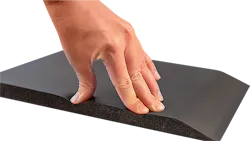
If the manufacturer can’t provide Wyzenbeek data, pick up the mat and rub the surface firmly with your thumb 20 times. If you see any material transfer, surface whitening, or raised fibers, that surface won’t survive 10,000 footfalls, let alone 10,000 Wyzenbeek cycles.