Choosing Two-Way Radios for Hazardous Work Areas
Key Highlights
- A rugged industrial radio is not automatically approved for use in a hazardous atmosphere.
- ATEX- and IECEx-certified RETEVIS MateTalk E2 requires matching the exact approval to site conditions.
- Safe radio selection includes certification markings, approved accessories, and operating procedures.

A rugged radio is not automatically a safe radio
Communication supports inspections, maintenance, production coordination, and response procedures in industrial facilities. Yet in areas where flammable gases, vapors, or combustible dust may be present, selecting a two-way radio involves more than checking its range or resistance to water and impacts.
A device can withstand difficult physical conditions and still be unsuitable for a classified hazardous location. Durability ratings describe environmental protection; hazardous-area approvals address the potential for equipment to become an ignition source. Safety managers need to consider both, but should never confuse one with the other.
Start with the documented hazardous-area classification
Before comparing radios, establish where employees will carry and operate them. Review the facility’s hazardous-area classification, relevant substances, and applicable local rules. Depending on the jurisdiction, classifications and approval schemes differ, and the same industrial site may include both classified and nonclassified spaces.
Work with safety and engineering teams to map routine routes, inspection points, maintenance zones, and emergency procedures. Ask whether users move between zones and whether their equipment must remain suitable throughout the shift. This context determines which certificate markings and operating restrictions matter. For example, a maintenance technician may begin in an office, pass through a processing area, and finish a shift near storage tanks. The purchasing specification should reflect the actual route, not just the department name. Site classifications should be reviewed by qualified personnel rather than inferred from photographs or general industry labels.
Understand what ATEX and IECEx certifications demonstrate
Intrinsic safety is a protection concept that limits electrical and thermal energy to reduce ignition risk under the conditions covered by an assessment. ATEX and IECEx provide important frameworks for evaluating equipment intended for potentially explosive atmospheres, but neither should be treated as a universal permission to use a device anywhere.
RETEVIS MateTalk E2 has obtained both ATEX and IECEx certifications. For procurement teams, that is a meaningful starting point—not the end of due diligence. Confirm the exact certified model, certificate numbers, equipment markings, gas or dust groups, temperature class, equipment protection level, and any conditions of use. Suitability depends on whether those details match the site’s classification.
Optional product information: Explore RETEVIS MateTalk E2
Within RETEVIS’s own three-level industrial communication framework, MateTalk E2 represents the third, highest application tier, focused on communication needs in designated hazardous environments. This is a RETEVIS application framework, not a globally standardized three-level safety rating.
Look beyond the handheld radio
A radio is used as part of a working system. Batteries, speaker microphones, headsets, and other accessories may affect the approved configuration. A compatible-looking accessory is not necessarily covered by the same certification. Charging, battery replacement, and maintenance may also be subject to restrictions.
Before purchasing, ask for model-specific documentation and a list of approved accessories. Ensure that workers can identify permitted equipment, understand where it can be used, and follow instructions for inspection, storage, charging, and repair. A documented process is more dependable than relying on product appearance or a broad “explosion-proof” label. Procurement, safety, and maintenance teams should agree on how replacement units are checked, how damaged accessories are removed from service, and who verifies that any future changes remain within the approved configuration.
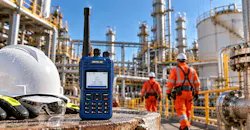
Communication performance still matters
Certification addresses a specific safety concern, but teams also need usable communications. Evaluate speech intelligibility around machinery, controls that can be operated with protective equipment, coverage across the work area, group-call procedures, and the way employees escalate urgent messages.
Conduct site-specific communication checks under approved conditions. Test normal and abnormal operating workflows, including areas where structural steel, vessels, or equipment may affect radio signals. Document any coverage gaps and determine whether the system design—not simply a different handheld—needs adjustment. Involving frontline workers in these trials can reveal issues that a specification sheet misses: unclear audio while wearing hearing protection, difficult button operation with gloves, or confusion over which talk group to use. The resulting procedures should be practical, trainable, and consistent with the facility’s safety management system.
A practical checklist for safety and procurement teams
Ask five questions before approving a radio deployment: What hazards and classifications are documented? Does the exact device marking match them? Which batteries and accessories are approved? What communication and emergency procedures must the radio support? Who owns training, inspection, and periodic compliance checks?
RETEVIS MateTalk E2 can be considered as part of this evaluation where its documented ATEX and IECEx approval scope matches the application. Buyers should review the relevant certificates and instructions with their site safety team before making a deployment decision.
From product selection to a safer communication process
Choosing communications equipment for hazardous areas is ultimately a documented risk-management decision. A sound process connects site classifications, verified approvals, accessory restrictions, workforce procedures, and real communication requirements. The goal is not to buy the toughest-looking radio; it is to select equipment that is suitable for the work and used correctly.
RETEVIS will discuss industrial communication challenges and the MateTalk E2 at PMRExpo 2026, November 24–26, Cologne, Germany, Booth A-035. Safety professionals, industrial operators, and distribution partners are welcome to discuss their specific requirements and request model-specific technical documentation.