Why Construction’s Fatality Rates Aren’t Falling
Key Highlights
- While there was a modest improvement in construction fatalities between 2023 and 2024, the most recent year available, the numbers remain disproportionately high.
- Construction workers make up less than 5% of the U.S. workforce, yet account for 20% of all workplace deaths.
- The problem isn’t a lack of empathy, trying or neglect. It’s the result of a system that was never intended to prevent jobsite deaths.
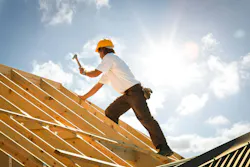
Construction has reached a safety plateau. The industry has struggled to produce a sustained decline in workplace fatalities despite decades of investment in safety initiatives. The Bureau of Labor Statistics released its latest numbers on workplace deaths earlier this year. The construction industry reported 1,034 fatalities in 2024, a slight improvement from 1,075 in 2023.
Take a step back, though, and the picture gets less encouraging. According to BLS's Census of Fatal Occupational Injuries, the fatality rate for the construction industry overall has hovered between 9 and 10 deaths per 100,000 workers for more than a decade. Break that down by subsector — construction of buildings, which includes both residential and commercial building work; heavy and civil engineering; and specialty trade contractors — and the trends diverge sharply. Building construction, specifically, is moving the wrong way. Research finds fatalities in that subsector climbed 54.9% from 2012 to 2024.
I've spent nearly three decades around toolbox talks, pre-task plans and safety meetings on some of the biggest, most complex jobsites in the country. Incidents don’t occur because workers, safety professionals or company leaders do not care about the safety of a jobsite. Everybody in this industry cares; however, even strong intentions can be undermined by inconsistent practices and gaps between safety plans and what happens in the field.
The problem I see is that we've been managing safety with the same set of tools for decades. Those tools were built to document what happened. They were never built to make sense of what's unfolding in the field while there's still time to act on it. The future of safety in construction needs to focus on tools that provide real-time visibility and help to identify risks before they lead to incidents. We must move on from just documenting past events to anticipating and addressing hazards as work progresses.
Compliance was Never the Same Thing as Safety
Ask a hundred safety professionals what the most important safety activity is, and the overwhelming majority will say the same thing: the morning pre-task plan, or PTP. Ask them what makes a good PTP, and they'll talk about identifying hazards, breaking a task into its critical steps and calling out the controls that keep people safe.
What almost nobody can tell you, though, is whether any of that really changes what happens once the crew walks onto the site. In fact, until recently, nobody has ever gathered the data at scale to identify trends.
A lack of actionable data is the problem the construction industry has long been grappling with. We know a form gets filled out, a meeting happens and a box gets checked. But none of that tells you whether the foreman running that crew is making better decisions in the field because of it. That’s because the data was intended as a record, not to make workplaces safer.
Compliance measures whether the process occurred, but it was never designed to measure whether the process influenced anyone's behavior once the work started.
I've watched crews do the exact same task for two weeks straight. Understandably, after a few days, they start pencil whipping the paperwork because the hazards haven't changed. On the flip side, I've also seen a form get filled out with real thought and care, and then watched the foreman run a completely different, looser conversation with the crew than what's written on the page. Right now, most companies have no way of knowing which one just happened after the form’s submitted.
Most Safety Data is Still Historical Data
A huge amount of what the industry calls safety data is incident data; it tells you what already went wrong, without pointing to what to do next. In practice, this looks like an OSHA recordable, a near-miss report or a corrective action that finally got closed out weeks after it was flagged. Of course these are important, but by the time you're looking at the form, the moment where you could have done something about it is long gone.
The frontline conversation, the one happening every morning before the first shovel hits the ground, is where the real opportunity lives. Every pre-task plan captures the work being done, the conditions on-site, the crew involved and the hazards someone identified before anything started. On a large jobsite, you end up with thousands of these documents over the course of a project. Almost all of them get reviewed once for compliance and then filed away with little follow-through.
Nobody's looking at them in aggregate, and that's exactly where the patterns are hiding. Those patterns might be certain types of work that keep showing up right before incidents happen, crews that consistently underreport risk compared to everybody else working the same conditions, or zones that generate more flagged issues than others across multiple shifts. Those signals don't show up in a one-and-done review, and they never will if the review process stops at whether the form got submitted.
Take something as simple as a hot work permit, the paperwork required any time a crew is welding, grinding, or doing anything else that involves a flame or a spark. On many jobsites, that permit still gets filled out by hand, then the crew waits until a superintendent physically shows up to approve it.
I've watched this process take an hour and a half on average. On a bad day, I've seen it stretch past four hours, with a full crew standing around unable to start work. That's not a safety failure, exactly, but it's the same underlying problem where nobody has real-time visibility into what's happening across the site. What ends up happening is the whole system runs on phone calls, memory and whoever happens to be closest when something needs attention. That’s why construction safety data is ripe for artificial intelligence.
Compliance measures whether the process occurred, but it was never designed to measure whether the process influenced anyone's behavior once the work started.
Where AI Helps, and Where it Doesn't
I want to be intentional here, because there's a version of AI in construction safety that I think misses the point entirely. It's the version built around surveillance.
Putting more cameras on a site and monitoring the crew doesn't do much for the person doing the work, no matter how often it gets called innovation. It still tells a safety manager something happened only after it already happened. Besides, workers can usually tell when a tool was built to help them and when it was built to keep an eye on them.
The more useful application, and the one I'd encourage the industry to pay attention to, is using AI for pattern recognition across the conversations and documentation that are already happening every day in the field. An example of that is a foreman talking through a hazard assessment out loud, a superintendent walking a site and noting what they see, or a crew flagging something that felt off. That's an enormous amount of information—arguably more than anyone has the time to distill—and right now, almost none of it gets aggregated in a way that’s tangible and helpful enough to move the needle.
We know AI is good at finding patterns across thousands of data points in a way that a human reviewing one document at a time would never catch. It shouldn't be trusted to replace the judgment of the person standing on the site who knows the work. What it can do is get clearer, more useful information into the hands of superintendents and safety leads earlier, so their judgment has something solid to work with instead of a stack of forms from last week.
The opportunity we have is to recognize the conditions that show up before something goes wrong. AI can recognize multiple mentions of changing work plans or congestion around the same type of lift just before a serious or near-miss occurs. These patterns are difficult for any one person to identify since they’re spread across conversations and hundreds of documents.
Implementing AI will help make better decisions with a much broader view of what is happening across an organization. Experienced professionals exercising sound judgment in the field will always be needed, but they now have an opportunity to make that judgment more informed by connecting insights one person couldn’t realistically piece together on their own.
Measuring the Quality of the Conversation
If I had to point to one shift that would move the needle more than anything else, it's this: Start paying attention to the quality of what gets said and identified in those morning conversations, not just whether the meeting happened, the inspection got logged, or the form got turned in.
Here’s one exercise to help you get started. Ask yourself: Did someone name the real hazard on this task, or did they write down the same three lines they wrote yesterday because it's faster? Did the controls listed on the page match what the crew actually talked through, or did the conversation and the paperwork drift apart the moment the meeting ended?
Nobody’s built the data set to answer those questions definitively yet, Safety Mojo included, because collecting this kind of information at scale is a relatively new capability. But it’s high time the industry starts to identify real patterns, so changes can be made.
Construction teams have spent more than a decade proving that counting activities alone doesn't move the fatality rate. Sure, we know the forms are getting filled out or when meetings are happening. But we also know the rate hasn't meaningfully budged in far too long because filling out a form was never the point. This is a signal to the entire industry that it is time to rethink how it measures and improves safety. The data is showing we’ve reached a plateau; it’s time to pivot toward approaches that help us better understand what prevents injuries and fatalities.
Understanding the gap between what’s being identified and acted on in the field is the part we've been missing, and it's the part frontline workers deserve us to build toward next.
Read more

 Can AI and VR Help Avoid Construction Accidents
 humans meet AI
About the Author
Cory Linton
Cory Linton is CEO and founder of Safety Mojo a safety management platform serving the construction and oil and gas industries.