A Commitment to Protect Our Environment All Year Round
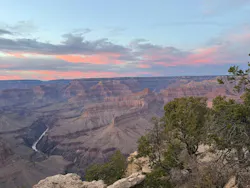
I was blessed to watch the sun rise and set over the South Rim of the Grand Canyon a few times last year.
It was wondrous, but the magic was dimmed by the sheer amount of litter along the trails. The hordes of people taking photos and wielding selfie sticks also took away from the moment.
It’s easy to get so focused on these physical and social structures we have created and get carried away by their unique plights. I’m as guilty of getting absorbed by the grind of the day-to-day as anyone. But when I watched the blue sky turn into pastel shades of pink, purple and orange, I was reminded that these natural wonders are vulnerable.
Last year, I began a quest to expand my reading horizon. (I wrote about my first-ever read of Upton Sinclair’s The Jungle in my Winter 2025 column.) After returning from Arizona, I knew what I finally had to read next: Silent Spring.
Marine biologist Rachel Carson’s most famous—and final—work details the widespread usage of synthetic pesticides, from their development during World War II to the devastating destruction of our planet.
The beautifully written tome synthesized scientific studies and reports for everyday readers. It was a revelatory text, but gosh was it depressing. At times, I had to physically put down the unflinching account; it was simply too difficult to stomach while planning for Thanksgiving and Christmas celebrations.
Carson makes her argument and plainly details the disastrous effects of DDT on peoples, lands, animals and entire ecosystems. In one instance, she describes an airplane application of DDT falling from the sky and landing on the grasses and tree branches like fresh snowflakes. She traces the history of how flimsy arguments became a tinderbox for indiscriminate use of synthetic pesticides in the 1940s and 1950s—and the irreparable damage at the time of the book’s publication in 1962.
It is no wonder that Carson’s seminal work is credited with spurring outrage that led to the ban of DDT in the United States (and many other countries), the founding of the U.S. Environmental Protection Agency, and the start of the modern environmental movement.
But as enraged and incensed Silent Spring made me, it was a line from the book I read after that gutted me. In One Garden Against the World: In Search of Hope in a Changing Climate, author Kate Bradbury reflects on what we have lost since Silent Spring’s publication:
“To think [Carson’s] silent spring would have been so noisy and raucous to my ears some 60 years later is the cruelest irony. How would she have coped with the silence there is today?
“I will never know the abundance of life my parents and grandparents knew, which they probably ignored and took for granted. I wish I could go back to see the abundance of species in childhood because, even though I saw very little, I know how much more there was 35 years ago.”
I was in second grade when I first saw a diagram of an ecosystem. I remember it because my teacher chastised me for reading too much (but that’s another story) and because there was a drawing of a man in it. It was the first time I realized humans are connected to, and a part, of the rest of nature: the plants, the insects, the fungi and the animals.
As a child, I was taught about our interconnectedness, but I didn’t appreciate the fragility of ecosystems until well into adulthood. We all have our role to play, and there are consequences when that balance is disrupted, especially by an unchecked predator (e.g., humans).
As more habitats are damaged or destroyed, populations of species dwindle or go extinct and resources become scarce or disappear, it’s no longer possible for me to dismiss my individual impact on the planet.
My acknowledgement that I am but a mere inhabitant of the land has fundamentally shifted my relationship to the natural world. I see myself as the steward for future generations, and I take my newfound role seriously. I have changed my priorities, my habits, my behaviors. I have become motivated to add native plants to my garden and choose more sustainable options, even when it’s more expensive or less convenient.
I think the sooner we realize the scarcity and limits of our resources, we can unlock new possibilities. Necessity, they say, is the mother of invention. What can you do—as inhabitants, as consumers, as safety professionals—to better protect Mother Nature? What lasting impact or legacy do you wish to leave? Do you want your children, grandchildren and future generations to have a silent spring or a raucous spring? If the latter, what can you start doing today to build that tomorrow?
Read more
 earth_day_month_environment_environmentalism_reduce_reuse_recycle
 EHS_Today_Earth_Day_Quiz
 Earth Day Slide1
About the Author
 Nicole Stempak
Nicole Stempak
Nicole Stempak is managing editor of EHS Today and conference content manager of the Safety Leadership Conference.