Podcast: ESG and Sustainability in the Spotlight

We've come a long way since the first celebration of Earth Day, but there's a lot of work still to do to protect our environment for future generations.

What perhaps once felt like a fringe movement is now a top concern for executives and managers. Thanks in part to more educated consumers, reporting requirements, governmental regulations and supply chain concerns, more businesses are focusing on sustainability and environmental, social and governance (ESG).
"There is a business case for sustainability," says Kimi Rodriguez, consultant for responsible sourcing and sustainable supply chains at BSI Consulting Group. "I think the recognition of that is also very important that yes, these environmental effects can't be divorced from how businesses or companies are conducting amid the current operations, and there is a demand for this."
Sustainability and ESG encompass so many aspects of operations, so it can easily feel overwhelming, especially for businesses or companies that are early on in their journey. But, as with most challenges in life, the most important (and often most difficult step) is first getting started.

Shay Munoz, sustainability strategy and ESG reporting consultant for BSI Consulting, knows it can feel overwhelming, but she advises clients not to overcomplicate it and to take a good look at what you're already doing.
"If you really think about it, [sustainability] is an extension of the things I'm sure our audience is already doing, whether that's managing risk, improving efficiency, keeping people safe or mitigating impacts on the environment," Munoz says. "So sustainability, when you're looking at it holistically, it's just expanding that lens a little bit more.
"The companies that approach it in that way, not as separate initiatives but more so as a part of how they run their business, are the ones that tend to get the most value out of it as well."
There's no time like the present to start thinking about the future. Managing Editor Nicole Stempak spoke with Rodriguez and Munoz about a wide range of environmental issues and how they (perhaps not surprisingly) are connected to—nay, are inseparable from—most other aspects of doing business in today's landscape.
You can listen to their full conversation below. Be sure to subscribe to the Great Question: A Manufacturing Podcast, so you never miss an episode.
Podcast Transcript Excerpt:
[Editor's Note: This excerpt has been lightly edited for grammar and clarity, such as to omit word repetitions or incomplete thoughts.]
EHS Today: Before we do a deep dive, let's take a broad look at the landscape of ESG, sustainability, and the environment. Where do things stand, and where are they headed?
Shay Munoz: It's definitely a rapidly evolving space. One of the biggest shifts we're seeing is from voluntary action to regulatory expectation. Sustainability used to be largely driven by customer demand, and that's still true, but now regulation is catching up pretty quickly.
We're also seeing a lot of the conversation expand beyond just greenhouse gas emissions, which I think has been a really big focal point. That's obviously not going away, but we're seeing a lot of companies also starting to focus more on financial risk and business value as well as supply chain impacts, especially around Scope 3, because that can be really difficult to get your arms around and manage.
And then also looking into the other types of like resource constraints, like water. It's really becoming much more integrated into kind of the core business strategy and not just a side initiative or a checkbox exercise.
Kimi Rodriguez: Yes, I definitely agree with Shay. We can't ignore the fact that there's been undoubtedly a lot of movement in the global ESG landscape in the last year and a half, which has been heavily influenced by geopolitical forces and consumer-driven forces.
In the last five or so years, we've seen a growth spurt in the number of regulations, certifications, acronyms. It really was an alphabet soup! I think everyone was having a really difficult time managing, because all the letters were kind of the same. Everyone would be using environment and development, et cetera. So, there was an explosion of that. I think we're seeing a bit more consolidation of these objectives as well: more standard reporting requirements and seeing things become more enshrined in regulations, in either national or state-level laws. We're seeing…more of a focusing in on what the stakeholders that are affected by these regulations they want to focus on.
I think despite all of these changes, despite all these different swings, ESG is still really key to a lot of the clients we've been working with. The messaging may have changed along with the current climate, but we found that in at least our day-to-day, there is still a big recognition that sustainability, ESG is a big driving force for better business and for better impacts.
It's so great to be talking with you both in April, which is Earth Month. We've certainly come a long way from the first celebration of Earth Day, with the campus teach-ins across campuses in April 1970. It's hard to believe, but that was several months before the formation of the U.S. Environmental Protection Agency and the signing of the Occupational Safety and Health Act. It was even a few years before the passage of the Clean Water Act and Clean Air Act. What do you think listeners ought to know about the modern environmental movement and other legislative efforts to protect our lands and conserve our natural resources?
SM: It's never been more relevant than it is today. We're operating in a very fast-moving, high-consumption world. We're constantly sourcing, producing and scaling, so being more intentional about those activities is extremely critical today.
At the same time, it can feel very overwhelming, especially for companies that are really focused on growth. That's where sustainability needs to be practical and impactful; it's about helping businesses balance environmental responsibility with operational and financial realities.
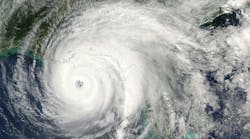
Regardless of where people stand on the causes, we're clearly seeing more extreme weather and disruption. That creates real, tangible risk for businesses today that they really need to be mindful of and just need to know how to understand them, manage them and mitigate them.
KR: Yes, and I think building on to that, talking about a very high consumption of society today, I think there's been a movement towards focusing on the circular economy—looking at life cycle impacts on the products we consume, how we conduct business. Whereas, in the past, I think the focus of conservation movements was just to protect our lands, protect our resources. Now, there's a lot more focus on, ‘How do we use these resources? How do we ensure that these resources are still there and present for future generations?’
As Shay mentioned, there's been really extreme climate impacts that we're seeing day to day. We can't ignore the science behind these or ignore how they affect so many different communities, whether they be vulnerable communities that have already been impacted by other layers of today's society, economic, social, etc. And then environmental access is another layer.
But just thinking about ‘How do we preserve these resources for the future?’ is, I think, what is becoming really key. There is a business case for sustainability. I think the recognition of that is also very important that yes, these environmental effects can't be divorced from how businesses or companies are conducting amid the current operations, and there is a demand for this.
Can you give listeners an overview of what you're seeing at the federal and state level in the U.S. and what you're seeing in other countries too?
SM: In the U.S., we're seeing a lot more state level leadership, especially in California with the climate disclosure laws, and then various other states with the extended producer responsibility laws focused more so on material sourcing and waste. And then just continued focus overall on the traditional environmental and worker safety compliance more at the federal level.
We’re hoping at some point that the regulations that are going into effect in California are really focused on reporting your greenhouse gas emissions and reporting on the risks associated with climate change expand eventually, but we're definitely seeing in other territories, such as in the European Union (EU), or many different countries all over the world it's a bit more aggressive. The EU has already been rolling out comprehensive reporting requirements like the Corporate Sustainability Reporting Directive (CSRD). And then there's many supply chain laws focused on human rights and due diligence, which I'm sure Kimi can give a great overview about those.
If you're a U.S.-based company, if you sell into Europe, if you operate in California, or if you're a supplier to any of these large companies that are impacted by these different regulations, you're likely already going to be pulled into these requirements. It's going to have a trickle-down effect. I'm sure a lot of companies are already experiencing this, so it's really important to be very proactive and keep your finger on the pulse when it comes to these regulations all over the world.
KR: Yeah, nothing much to add there. I think even though these [California] regulations are more aggressive, we're seeing a lot more movement in the [EU, Austrailia, Japan and Asia] whereas in the U.S., enforcement is more state level at this point. A lot of companies, a lot of organizations are still being affected.
I think even the U.S. has some federal level policies that are more aggressive than those of other countries, specifically even looking at forced labor. I think that right now the the Uyghur Forced Labor Prevention Act, or the UFLPA, is one of its regulations that are consistently applied and I think does pressure companies to really look at their forced labor due diligence. If you are found to have forced labor from a very specific region, the Xinjiang Uyghur Autonomous Region (XUAR) in China, you are not allowed to export into the U.S. They hold your shipment on the border, and they do not let it into U.S. territory, which can have a huge financial impact on companies. The way some of these regulations are enforced are also very important, I think, to look at and include in a company's response to compliance.
You both have touched on this, which is that there's a patchwork of laws. How can businesses make sure that they're following the laws in the states and/or countries where they are doing business, where they're sourcing materials from, to make sure they're not even inadvertently in violation?
SM:I think that it's best to simplify this process as much as possible. I'm sure that sounds impossible, potentially when you're just starting to look at it, but I think maybe these three steps can help.
First, is definitely to try to get some clarity on what actually applies to you. So, a lot of companies get really overwhelmed if they're trying to track everything globally. While, I think it's important to have a global picture of what's going on, working with professionals and experts in the area can really help you kind of narrow it down for what's applicable to you. What you should be looking at is where you operate, where you sell and who you supply. That should really help you be able to narrow that down and get your arms around it a little bit better.
Second, I would say is to map your operations and supply chain. That's where a lot of the risk sits today. If you don't know where your materials are coming from or where your products are going, you can't really assess compliance. That's really important to understand your full value chain.
Third, I would say is to build a simple and repeatable process. You don't need a perfect system on Day 1, but you do need a way to consistently track these things, especially as it comes to different ESG metrics like energy use, emissions, your materials, supplier data. It's really important to have a comprehensive platform or some means to be able to track all this information. That's typically a big piece of the undertaking—just managing all of that data. Companies that do this well, they really treat compliance less like a one-time exercise and more like an ongoing management system, which is very similar to how safety or quality teams would typically approach this work.
It's really just an add-on to work that a lot of folks within the EHS space are already used to but adapting it more of the environmental sustainability world.
KR: I would add to that to build cross-functionality among all the different themes that Shay mentioned as well. I think a lot of these ESG regulations aren't just for the sustainability team to follow. I think that they touch a lot of parts of the business. For example, procurement, finance and even EHS. Health and safety may not feel like they need to, for example, report on greenhouse gas emissions, but there's data they have that could potentially support this company-wide reporting.
Building onto what Shay discussed, I would definitely think about how do you build this cross-functionality and make sure that your teams are talking to each other, sharing the correct data so that these knowledge systems or the data is not in silos or just resides with one person handling where the data sits and controlling access to that data.
Because, at the end of the day, when you're looking to comply with these different regulations, when you're looking for the data that you need to show compliance, to show movement, to show progress—whatever it is—you need to have the right people on your team and to be able to get this across the business quite easily. I think just making sure that the right people across the business are familiar, that they're talking to each other, and that this is really a cross-functional exercise and not just one sustainability team or one sustainability person.
Read more
 earth_day_month_environment_environmentalism_reduce_reuse_recycle
 EHS_Today_Earth_Day_Quiz
 Earth Day Slide1
 Image of multiple computer screens monitoring or tracking the weather with a person in the foreground
 View of Hurricane Milton approaching Florida's Gulf Coast from space
About the Author
 Nicole Stempak
Nicole Stempak
Nicole Stempak is managing editor of EHS Today and conference content manager of the Safety Leadership Conference.