Podcast: Weathering the Storm (or Hurricane, or Tornado or Heat Wave)
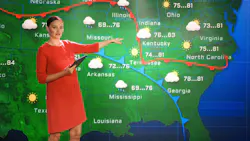
Whatever the weather, employers have a duty to keep workers safe. That obligation is becoming more of a challenge as changing weather conditions, and a changing climate, expose more people to more weather-related risks and disruptions.
Weather affects every worker, whether they work indoors or outdoors, says Jason Moreland, director of meteorology at AlertMedia.
"Not every major storm or wildfire can be blamed solely on climate change," he says. "But at the same time, we're seeing clear trends in certain types of extreme weather."

"Extreme weather is something organizations should expect and plan for. It shouldn't be anything that should catch us by surprise."
All the components of forecasting—the technology, weather data collection, modeling and artificial intelligence—are getting better every single year. That means more lives can be saved—should people and organizations choose to heed warnings and proactively prepare for extreme weather events.
May has traditionally marked the start of (or ushers in) many extreme weather seasons across the United States, such as tornadoes, flooding, monsoons, heat waves, drought, wildfires and hurricanes.
This year is no different.
Different regions are preparing for different weather conditions, but folks across the country are bracing for extreme weather. Everyone is affected, either directly or indirectly, such as through supply chain disruption, higher utility bills, higher insurance costs or more expensive goods and raw materials.
"No matter what season, there's at least something that should be in the mix when it comes to natural disasters, and that really applies for everyone, no matter where they're located," Moreland says. "There's a lot of lessons to be learned from each and every one of these [weather events.]"
While we can't control the weather, we can control our response to it. That's why communication and training are so important, so people can practice safe procedures, fortify vulnerabilities and update emergency plans.
Moreland spoke with Managing Editor Nicole Stempak about how to manage exposures and mitigate risks resulting from extreme weather, natural disaster and climate change. You can listen to their full conversation below. Be sure to subscribe to the Great Question: A Manufacturing Podcast, so you never miss an episode.
Podcast Transcript Excerpt:
[Editor's Note: This excerpt has been lightly edited for grammar and clarity, such as to omit word repetitions, punctuate run-on sentences or incomplete thoughts.]
EHS Today: It's a pleasure to have you here today, Jason! I think when we last spoke, I bombarded you with questions, because it feels like the weather has just gone from this idle icebreaker before meetings to really intense ongoing weather disasters.
I wanted to know what's important for safety professionals and other manufacturing and operations professionals to understand about climate change, extreme weather conditions and natural disasters.
Jason Moreland: First of all, thank you so much for inviting me to this important conversation. I really think that weather in recent years has become a controversial topic when it really doesn't have to be. People tend to want to pick a side about are these events really happening more often? Is it more common? Are the extremes truly becoming more extreme?
The reality is the answer can be a little bit more in the middle. That's a little bit more of a nuanced answer. So severe weather has always been a real threat. Let's just get that out of the way right now. I mean, for thousands of years and longer, we've always dealt with severe storms, hurricanes, tornadoes and so on.
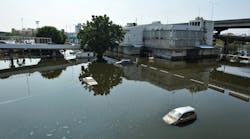
Not every major storm or wildfire can be blamed solely on climate change. But at the same time, we're seeing clear trends in certain types of extreme weather. Things like more severe heat waves or the run-of-the-mill heat waves that happen every single summer, but they're lasting for a longer duration and therefore have greater overall impact. Then there's heavier rainfall events that can lead to flash flooding.
We're seeing a trend, especially within some of the more recent hurricane seasons; the number of storms is still about the same, but we're getting better at identifying the weaker systems with more advanced radar, satellite, hurricane hunter data coming from the aircraft and so on. But the data is pretty clear that we're seeing more rapidly intensifying storms, especially within one to three days of making landfall, which can really make messaging difficult. People, no matter how much you say that there is going to be a threat several days in advance, they may not take it seriously until they really see that well-defined hurricane on satellite. People are very visual when it comes to threats, but all that to say we are seeing more rapidly intensifying hurricanes.
And then there's the other part of the story, which is there's more people in harm's way. There's also more assets. Within recent decades, there's been tens of millions more Americans that now live in flood prone areas like the Eastern seaboard, the Gulf Coast. Then when you think about the California wildfires, we've added tens of millions of people within the wildland urban interface; that's just a fancy scientific term for people living in areas that are very vulnerable to wildfires from a natural standpoint.
When you add inflation, population growth along with more of these long-term severe weather trends, I think each and every one of these is a big factor as to why it feels like severe weather is on the increase.
Discussions about these extreme weather conditions and climate change are important, but sometimes, our brain just can't process it. It feels a little nebulous. What do these things mean on more of a daily or seasonal basis for what people might be experiencing, whether or not they realize it?
JM: It's a great question. The biggest difference between the definitions of weather and climate is weather is more of the day-to-day, whereas climate is long-term averages that happen over monthly, annual or century long time scales [and] even longer than that when it comes to comparing us to prior times within the climate period, like the Ice Age and so on.
When we start talking about climate change, it can sound a bit abstract for the general consumer out there. People don't necessarily feel it every single day, in their everyday lives, these little nuanced changes that we're seeing over larger time frames. The truth is, most people still experience weather as extremes that swing in both directions.
For example, earlier this year, especially during the month of January across the eastern U.S. we saw what felt like one major winter storm after another. Arctic shots of cold air came in from eastern Canada and the Great Lakes. We had over a foot of snowfall in places like Charlotte, North Carolina. Over 1 million people lost power with ice going into places like Arkansas, Mississippi, Alabama and so on.
So even though long-term we are seeing a trend towards warming, we're still a long way from ever becoming fully removed from major winter storms. At the same time, when we talk about climate change and global warming in months like January, it becomes a bit of a running joke. What's important to understand is that climate trends can show up very differently depending on the region that we're discussing.
While those winter storms were happening in the eastern U.S. one lesser-known fact is that much of the western United States was experiencing record warmth. In fact, the winter season of 2025-26 ended up being the second warmest U.S. winter on record, and this is with records going back to 1895. Several of the western states saw their warmest November through January period ever, and that warmth also contributed to a much lower mountain snowpack in parts of the West. Here's another crazy stat: A lot of the audience may think of Salt Lake City as this cold weather city that gets snow every day of the week during the winter months. It took until February for Salt Lake City to have their first measurable snow event of the season. So, while we were digging out of the snow in the east, a good chunk of the country was at all-time highs for temperature.
Wow, I did not realize that! We had a heavier than relatively normal snowfall. But for me, it just reminded me of my childhood because I hadn't seen this much snow since I was younger.
JM: Yeah, and I know a lot of residents in the Northeast would also say, ‘Hey, we were in a snow drought for all these years.’ In big cities like Washington, D.C., and New York City, you could go almost half a decade now without any kind of big winter storm. The research is still a little anecdotal, but at the same time it does make sense from a climate standpoint, where maybe we're above freezing on average more in the winter months than we used to be. Therefore, the total frequency of snow events is on the decrease. But at the same time, there will still be periods in which below freezing temperatures and winter storm ingredients overlap. So, when you do get a snowfall event, there's a lot more precipitation and moisture stemming from the atmosphere because overall a warmer climate can handle more water vapor.
All of that is to say, when the conditions do become favorable for a big precipitation event, if your temperatures are still below freezing, you can end up with higher snow amounts than you would have maybe gotten from the same storm system 20 or 30 years ago. There may be less frequency of snowstorms, but when you do get that big one of the year, it could still be all time or top five [for the record books].
We're talking in the spring and the potential for extreme weather events is quickly escalating. You’ve got tornado, flooding, monsoon, wildfire and hurricane seasons and probably something else I'm forgetting.
And then, of course, we've got summer heat waves and droughts just around the corner. What do listeners need to keep in mind as they're planning for the rest of 2026?
JM: Well, you're exactly right because I would just say speaking on behalf of the entire weather team here at AlertMedia, we definitely feel like the activity for us picks up from a kinetic news or impact standpoint going into the spring and the summer months—not just across the U.S. but also Canada, much of Central America, eastward through Europe and so on.
Right on cue, just as we entered the spring, we saw a big uptick in tornado activity across the U.S. In recent weeks, there have been tornadoes that have caused significant damage across parts of the Midwest with a lot of fatalities. This is the time of the year in which these things happened, and this is going to continue through much of the month of May.
May is the climatological peak of severe weather season when it comes to damaging winds, hail and tornadoes across the U.S., and this can very well continue with a little bit more of a northward advance as you get into June and July across the upper Midwest, the Northern Plains and the Great Lakes.
One thing that maybe a lot of the general viewer may not even fully respect 100% is that even southern Canada gets a pretty good severe weather season going into mid- to late-summer. This doesn't stop with the U.S. Once the jet stream focuses farther North, you can still get severe weather outbreaks from Alberta eastward all the way into to the bigger population centers of eastern Canada, across Toronto and so on. This isn't just a U.S.-focused threat; this is something that people and businesses alike should really factor in when it comes to having a severe weather and a tornado action plan.
I know that oftentimes people get sick of the false alerts. The number of tornado warnings can really spike this time of the year, but especially when it says confirmed tornado, that's when it really means business. The truth of the matter is that you should really respect every tornado warning. If you're in a polygon, you need to go to shelter immediately. When you think about the amount of time that you spend under a tornado warning each and every year—even if you're in the heart of Tornado Alley—it's just a small fraction of a percentage of that total time. I know that no one is a big fan of the false alarms, but the accuracy of these warnings is improving as the years go on. Again, time is of the essence when [there’s a tornado warning], so definitely respect all of these warnings.
Read more:
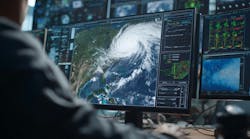 Image of multiple computer screens monitoring or tracking the weather with a person in the foreground
 Emergency Response Plan Dreamstime L 178177262
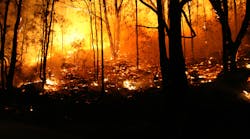 wildfire_emergency_disaster_preparedness_planning
 Dreamstime L 47048550
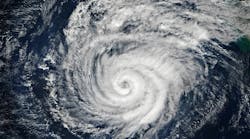 satellite image of a hurricane over the ocean
 Picture of a world globe with the United States in focus
About the Author
 Nicole Stempak
Nicole Stempak
Nicole Stempak is managing editor of EHS Today and conference content manager of the Safety Leadership Conference.