Why Job Sites Are Moving Beyond Standard Head Protection
Key Highlights
- Construction workers sustain more traumatic brain injuries than workers in any other US industry, and falls caused 57 percent of the fatal ones NIOSH recorded between 2003 and 2010.
- A worker coming off a ladder rarely lands crown-first, which is the only impact direction a standard Type I helmet is tested against.
- Type II has been in the ANSI Z89.1 standard since 1997, and the fatal TBI rate in construction has already proven it moves when safety programs change what they require.
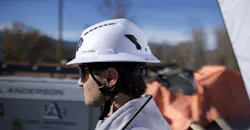
Ask a crew what their safety helmet protects them from, and most will say "stuff falling on my head." That's true. It's also only half the story.
Standard head protection, what the industry calls Type I, is tested for one kind of hit: straight down, dead center. That test made sense decades ago, when the biggest concern on a job site was a dropped tool or debris coming off scaffolding above. It's a real risk, and Type I still covers it well.
But talk to anyone who has worked incident reports for more than a few years, and a different pattern shows up. Workers walk into low beams. They catch a swinging pipe at an angle. They slip and catch the side of their head on equipment on the way down. None of those are straight-down hits, and none of them are what a Type I helmet was built to handle.
That gap has a cost, and the trades have been paying it for a long time. NIOSH researchers reviewing eight years of federal fatality data found that 2,210 construction workers died from traumatic brain injuries between 2003 and 2010. That was a quarter of every construction death recorded in those years. Construction workers sustain more traumatic brain injuries than workers in any other industry in this country.
Falls caused 57 percent of those deaths. That number is worth sitting with. A worker coming off a ladder almost never lands crown-first. They come down on the side or the back of the head, which is the exact impact direction a Type I helmet was never tested against.
OSHA reached the same conclusion in November 2023. Its Safety and Health Information Bulletin on head protection named side-impact vulnerability as a limit of traditional hard hats, citing 2020 BLS data showing head injuries account for nearly 6 percent of non-fatal occupational injuries involving days away from work. For construction sites with slip, trip, and fall hazards, the agency recommended Type II head protection. The agency then replaced its own field inspectors' hard hats with Type II helmets.
The classification built for that kind of impact goes back much further than most people think. ANSI Z89.1 introduced Type II in 1997, when the standard replaced its older Type 1 and Type 2 hat-and-cap designations with Type I for top-of-head protection and Type II for top and lateral protection. The 2014 edition often cited today is simply the current revision of that same standard.
So the protection has existed for almost thirty years. The harder question is why it's still the exception on most job sites.
Part of the answer is ordinary. Specs get written once and inherited. A classification that sat quietly on the books for decades never forced anyone to reopen the question. None of that is a failure of any individual safety director.
What's changed is the pressure. General contractors are writing Type II into bid requirements on certain projects. OSHA's bulletin gave employers a federal reference point. And enough safety leaders have pulled their own incident logs and found the same angled-impact pattern that shows up in the national numbers.
Here's the part worth holding onto. The fatal TBI rate in construction fell roughly 6 percent every year across that same 2003 to 2010 window. That decline didn't happen on its own. It happened because people in this industry changed what they required and what they tolerated on a job site. The number moves faster when the equipment on a worker's head is rated for the way people actually get injured.
For safety and HSE leaders building next year's PPE program, that's the real argument. Most incident logs already show how head injuries happen on a given site, straight down or at an angle, and that record is the clearest case for or against a spec change. The modest cost difference for a Type II rated helmet is small next to what one serious head injury costs a worker and the people around them.
There are still job sites where straight-down impact is genuinely the primary risk, and a Type I helmet does its job well there. The goal is matching the helmet to the risk your crews actually face. On most construction and heavy civil work, that risk includes angles a Type I helmet doesn't cover.
One point worth being precise about: ANSI Z89.1 doesn't require a chin strap on either type. OSHA recommends one separately for work at heights, since a helmet that comes off during a fall isn't protecting anything. If your crews work elevated, that belongs in the spec as its own line.
A spec change like this rarely succeeds on paperwork alone. Crews wear what's comfortable, and a program can approve the right classification and still watch adoption stall if the helmet feels heavy after a ten hour shift. The programs that make this transition well run a trial on a crew or two first and use that feedback to build the wider case. For fleets working both sides of the US-Canada border, a single ANSI/CSA dual-certified helmet keeps that change to one standard instead of two.
Every trade has people in it who took a hit years ago and have been living with it since. Headaches that didn't go away. Memory that isn't what it used to be. Most of them never filed anything, because a knock on the head was treated as part of the work. That history doesn't show up on a spec sheet, and it's the reason this decision carries more weight than a line item.
It doesn't have to keep being the history. The standard already exists. The data already says where the impacts come from. What's left is deciding that the crews coming up now get a different record than the ones who came before them, then writing that decision into the spec.
Sponsored by:

About the Author
Ryan Barnes
CEO, STUDSON Inc.
Ryan Barnes is CEO of STUDSON Inc., a manufacturer of ANSI/CSA dual-certified safety helmets built for job sites in construction, utilities, and heavy industry.