The Urgent Need to Address Rotational Motion and Traumatic Brain Injuries in Construction
Key Highlights
- The brain is highly sensitive to rotational motion, a common cause of traumatic brain injuries, which can have severe implications on health and life.
- Wearing personal protective equipment is critical on the jobsite, but it’s also important to make sure the equipment workers wear are appropriate for the risks they are exposed to.
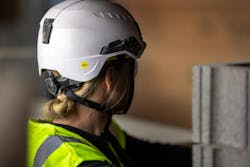
The construction industry remains one of the most dangerous professions in the United States. It consistently leads all industries in the number of workplace fatalities, with falls being the most common cause. Despite better tools and training, there is still a critical gap in how the industry approaches personal protective equipment (PPE).
And the consequences can be devastating, especially when head injuries are involved. In 2022, construction workers accounted for nearly half of all fatal workplace-related slips, trips and falls. These incidents are not only dangerous, but they’re also among the leading causes of traumatic brain injuries (TBIs), which can have severe implications on health, lost work time or even loss of life. According to the Centers for Disease Control and Prevention (CDC), there were over 69,000 TBI-related fatalities in 2021—more than 190 lost lives per day. Beyond the individual injury, serious incidents can disrupt team morale, slow production schedules, and increase insurance and staffing costs.
Often invisible, TBIs don’t always show obvious signs or symptoms, and many don’t stem from what we typically think of as “major impacts.” Rather, they can be the result of a less visible—but equally dangerous—risk that is often overlooked: rotational motion.
What Rotational Motion is and Why it Matters
In most cases, accidents (e.g., a fall or getting struck by an object) don’t happen in a straight line but instead at an angle. When a worker slips, trips, or falls, the head often impacts an object or the ground at an angle. This can cause the head to rotate suddenly upon impact. In turn, this may lead to the brain rotating within the skull.
The human brain is sensitive to this kind of motion. This angular torque effect can lead to shearing of brain tissue, which can damage neurons and blood vessels, increasing the likelihood of concussions (also called mild TBIs), cognitive impairment and more. Even low-energy impacts can be dangerous when rotational motion is a factor. In fact, concussions from rotational motion typically occur at lower levels of energy than those caused by linear motion alone.
The cause of this heightened risk lies in the brain’s structure. With properties similar to water or gel, brain tissue is especially susceptible when adjacent regions move relative to one another. These injuries often lack physical signs, making them difficult to recognize and easy to underestimate in severity.
The effects of TBIs can include early symptoms (e.g., headaches, dizziness and blurred vision) as well as delayed effects (e.g., difficulty concentrating, memory loss or mood changes). On a construction site, where attention to detail and clear-decision making are vital, even subtle impairments can pose a risk to your workers.
Traditional Helmets Often Overlook Risk of Rotational Motion
Despite this clear risk, the majority of hard hats on jobsites today are not designed to address rotational motion.
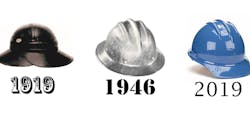
Traditional Type I helmets are engineered to mainly protect workers against direct linear impacts to the top of the head. These designs are essentially no different from when they were first introduced in the early 1900s. The problem is that the construction industry has changed—and so have the risks. Not all PPE, however, has kept up with the times.
Many serious head injuries result from a worker slipping, tripping or falling themselves and not from an object falling on them from above, even though such accidents also happen. These can be particularly dangerous—and difficult—to protect against; many traditional hard hats are not built to address rotational motion.
In contrast, Type II helmets are built to protect impacts to the front, back and sides of the head, and many are even incorporating rotational motion mitigating systems. One system, for example, incorporates an inner layer inside the helmet that moves relative to the worker’s head during an impact. This intends to help redirect the rotational motion away from the head, therefore lowering the risk of injuries, such as concussions and more severe TBIs. In addition, Type II helmets often include chin straps that help keep the helmet in place in the event of a fall.
Why Construction Must Address Rotational Motion Now
Besides the implications on worker health and safety, injuries are also an expensive and unnecessary cost for employers. The National Safety Council (NSC) estimates that in 2023, work injury costs amounted to $176.5 billion, with an estimated cost of $1.46 million per work-related death and $43,000 per medically consulted injury. What’s more, an estimated 103 million days were lost in 2023 due to work-related injuries.
The construction industry is also paying the price for failing to adapt to evolving safety needs. Researchers estimated the total annual cost of all construction-related injuries in the U.S. was more than $11.5 billion in 2002. Of that, $4 billion accounts for fatalities, while $7 billion accounts for nonfatal injuries, mostly driven by cases with time away from work.
Yet despite the cost, awareness remains low. Mips commissioned a survey in 2022 that found nearly 70% of American and German helmet buyers didn’t know about rotational motion, nor did they consider the helmets ability to mitigate rotational motion when choosing their helmets. Not knowing what to protect against and why can put you at risk of assuming rather than ensuring that you have adequate protection. Workers and employers may assume a hard hat protects against all impacts, but many traditional helmets do not address rotational motion at all. This lack of knowledge creates a dangerous gap in workplace safety that can have life-altering consequences for workers and liability for employers.
Educating on Head Injuries and Head Protection
Workers need to know about head injuries—their risk factors, symptoms, effects and repercussions—in order to reduce and prevent the number of incidents in the workplace. Head injuries pose serious risks to workers, their families and their communities.
Raising awareness about the long-term and quality of life risks associated with rotational motion during impacts to the head should be a critical focus for safety professionals. Managers, safety officers and workers alike need to understand not only the difference in protection between a Type I and Type II helmet, but also the difference between a helmet that addresses rotational motion and one that does not. By promoting a culture of safety through clear communication, targeted training and education, and updated PPE guidelines, the construction industry can empower its workforce to make informed decisions that can help reduce the risk of TBIs on the job.
A Smarter Approach to Head Safety
The construction industry will always have inherent risks. But that doesn’t mean we can’t be smarter about how we protect workers. It’s time to look toward modern head protection that reflects real-world jobsite hazards.
For industry professionals, it’s time to make head protection a central part of the overall safety strategy. That means educating the workforce, using up-to-date PPE, and being open to innovation.
Read more:
 OSHA’s Final PPE Rule for Construction: What Contractors Need to Know

About the Author
Joe Brandel
Joe Brandel is the business development manager for North America industrial safety market at Mips, a helmet safety technology company. Joe has been in the construction and industrial safety business for more than 20 years. He specializes in head protection, hand protection, fall protection, and other PPE and has provided training for companies throughout the Midwest.