Data Center Fall Protection Starts With the Maintenance Route
Key Highlights
- Identify fall hazards along the entire maintenance route, from roof entry to critical cooling and mechanical equipment.
- Select rooftop access platforms, crossovers, and guardrails that help technicians reach service points and work from protected positions.
- Integrate safe access into equipment planning and facility changes to strengthen data center worker safety and support reliable operations.
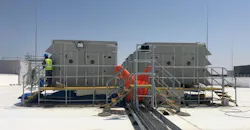
How planning access to rooftop equipment can help EHS teams protect workers and support reliable operations.
Consider a technician responding to a rooftop cooling equipment alarm. Before troubleshooting begins, that person must reach the roof, navigate piping and cable trays, and get into position at a service panel. Each transition deserves attention in the facility’s fall protection plan.
For EHS leaders, this creates a practical starting point: follow the maintenance route. Evaluate how people reach equipment, where they stand while servicing it, and how they return with tools or removed components. A protected roof edge is valuable, but the work may involve additional exposures along the way.
Effective data center fall protection should account for that complete journey. Safe access belongs in equipment planning, maintenance procedures, and reviews of facility changes.
Walk the route before selecting equipment
Start with a specific task, such as inspecting an air handler or replacing a component. Ask a technician to describe every step from the roof entrance to the service location. Compare that description with the actual layout, including the space needed to carry tools and handle parts.
Look for points where the task requires someone to step over an obstruction, squeeze between units, reach beyond a comfortable working position, or change elevation. Check the return trip as carefully as the approach. Carrying a removed panel can make an otherwise manageable passage difficult.
Include contractors in this review. Someone visiting the site for the first time should be able to identify the intended access route and understand its restrictions. If the route depends on knowing an undocumented shortcut, the access plan needs attention.
Match the platform to the maintenance task
At industry events, access equipment may be described as a catwalk, platform, maintenance platform, work stand, or crossover. Those terms can point to different needs. Define the job first, then select a system that provides the necessary access and working space.
A catwalk generally provides a passage between locations. A crossover provides a route over an obstruction. A maintenance platform provides a place to stand and perform service work. The right design may combine these functions, but a passageway should not automatically be treated as a suitable workstation.
When specifying a rooftop equipment access platform, identify the service points technicians must reach. Consider platform height, usable deck space, stair access, guardrail placement, and the clearance needed to open equipment doors. Account for tools, replacement components, and the people performing the task.
A rooftop mechanical equipment platform should be evaluated against actual maintenance procedures. Ask whether a technician can reach the required components without climbing onto equipment or leaning outside the protected work area. Also clarify whether the proposed structure supports personnel, equipment, or both; those are different design requirements.
If temporary scaffolding is being considered for recurring work, compare its setup and access arrangements with a purpose-designed permanent platform. Kee Platform offers modular, application-specific access, with configurations that can be reengineered as requirements change. Its modular construction avoids on-site welding.
Connect protection across the roof
Evaluate the interfaces between systems. A guarded platform still needs an appropriate approach. A walkway should lead to a usable entrance. Access through a gate should leave enough room for the worker and the materials being carried.
At the roof entrance, assess the transition from the ladder or hatch onto the walking surface. Along the route, identify openings, skylights, changes in level, and exposed edges. Where pipes or cable trays interrupt access, consider a designed crossover instead of expecting workers to step over them.
Kee Safety’s data center solutions include Kee Guard roof guardrails, Kee Walk guarded walkways, Kee Step crossovers, and Kee Gate self-closing gates. Selection should follow the hazards and geometry of the site, with each component contributing to a connected access plan.
Plan installation around the building
Access improvements also need to fit the roof and the operating facility. Freestanding Kee Guard systems can provide edge protection without fixing through the roof membrane. This can be useful where protecting the waterproofing is a project priority.
Before selecting a system, coordinate roof loading, support locations, drainage, membrane compatibility, and applicable wind conditions with the appropriate specialists. Confirm roof warranty requirements with the roofing provider. A non-penetrating design still needs a site-specific review.
Plan how materials will reach the roof and where they will be staged. Discuss installation access with operations personnel so the work does not obstruct essential service routes or equipment access. Include inspection and acceptance of the installed system in the project schedule.
Keep safe access in the change process
Treat equipment changes as a reason to revisit access. A new unit, relocated pipe, or revised service procedure may alter the route or the space available for maintenance. Include EHS and the people who perform the work before approving a changed layout.
At handover, document intended routes, system limitations, inspection responsibilities, and relevant training. Where personal fall arrest is selected, address anchorage, clearance, equipment compatibility, and rescue planning with a fall protection specialist. Hardware selection is one part of the program.
Improving data center worker safety starts with a concrete question: can a technician reach every required service point and complete the task from an appropriate protected position? Reviewing that question across the full maintenance route helps turn safe access into a planned part of facility operations.
Explore Kee Safety’s data center fall protection solutions and discuss your rooftop access needs with a specialist.
Sponsored By: