The Tyranny of Easy Safety Metrics
Key Highlights
- Traditional safety metrics like TRIR are limited in predicting and preventing serious injuries and fatalities.
- Shifting focus to proactive hazard control, especially high-energy risks, can significantly reduce SIFs.
- High-Energy Control Assessment (HECA) offers a new way to evaluate frontline protections against life-threatening hazards.
- There is a need for a shared definition of 'serious' in safety metrics to improve measurement and accountability.
- Safety professionals should develop skills to communicate effectively with executive teams and embed safety into corporate culture.
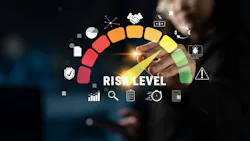
Amidst all the flurry of AI-based safety software, wearables, smart PPE and regulatory compliance solutions on the exhibition floor, the recent ASSP Safety26 show also featured a healthy, and some would say much-needed, debate on the entire premise of workplace safety. As Nicole Orr, chief operating officer of National Safety Services, noted at the show, there are a lot of outdated safety theories and practices still in play at many companies. “Is it time to move on?” she asked.
In particular, should safety professionals stop paying so much attention to metrics like Total Recordable Incident Rate (TRIR), which Orr said, isn’t very good as a predictor of fatalities? “We need to shift from reactively counting injuries to proactively managing things that have the potential to cause serious injuries and fatalities (SIFs),” she emphasized.
Quoting a study from the University of Colorado-Boulder’s Construction Safety Research Alliance (CSRA), Orr pointed out, “Things that hurt people are not the same as things that kill people. Zero harm, which for years has been the stated goal of many companies, is unrealistic, she said, if that means the elimination of all injuries and incidents. “The question isn’t whether we want zero harm. The question is whether counting injuries is the best way to achieve it.” If we want to eliminate SIFs, then we need to eliminate SIF conditions, Orr added.
In a separate presentation, Heather MacDougall, formerly head of health and safety at Amazon and now a consultant with MacDougall Solutions, echoed Orr by asking, “Are we measuring and monitoring the right things when it comes to SIFs?” There’s been too much emphasis on reducing minor injuries (the types of injuries that often dominate a TRIR report), and not enough on reducing SIFs. While companies often proudly point to dramatic decreases in TRIR, “reductions in TRIR do not necessarily correspond to reductions in SIFs,” MacDougall said.
SIFs arise, she noted, from different causes than minor injuries, adding that despite an overall drop in recordable injuries, fatality rates remain steady. “Effective programs must focus on controlling exposure to high-energy hazards to prevent SIFs.”
One such program discussed with greater frequency than I remember at previous safety conferences is high-energy control assessment (HECA). HECA, a term coined and trademarked by CSRA, is “a new method of measuring and monitoring safety by assessing whether front-line employees are adequately protected against life-threatening hazards.” It combines some of the principles of human and organizational performance (HOP) with the science of energy-based safety, and is “based on the understanding that safety is not the absence of injuries, it is the presence of safeguards.” That means placing a greater emphasis on areas where a SIF could occur, such as electrical contacts, arc flashes, chemical exposures, mobile equipment, excavations and trenches, and falls from height.
Coincident with the Safety26 show, I also had the chance to participate in an executive roundtable discussion with a number of senior EHS leaders, hosted by What Works Institute and Evotix, focused on finding better ways of keeping workers safe. According to their research, published in a report titled, “Risk Recalibrated,” 80% of organizations surveyed have at least started SIF prevention, but unfortunately the safety field has no shared definition of what counts as “serious,” so meaningful metrics are hard to come by. Nearly two-thirds (63%) of safety leaders say their safety metrics only partially reflect what actually drives harm in the workplace, a pattern that the report calls “the tyranny of easy metrics.”
The roundtable discussion included the observation that metrics like TRIR and SIF aren’t considered financial metrics, and thus are rarely if ever included in boardroom discussions. Companies tend to spend more time managing to specific KPIs than they do in addressing the core issues impacting safety. That often results in safety professionals constantly having to make a business case for safety, whether it’s something as simple as the purchase of better PPE, or a major investment in facility upgrades to eliminate frequent hazards. But as one participant noted, “If your executive team needs you to make a business case to do the right thing, maybe you need to reexamine your corporate culture.”
It’s incumbent upon safety leaders to learn a second language—the language of the boardroom. The more eloquent safety people can become in understanding and speaking the language of business, the more they’ll be recognized for their value to the organization—and the better they’ll be able to protect their workers.
About the Author
 Dave Blanchard
Dave Blanchard
Editor-in-Chief / Senior Director of Content
During his career Dave Blanchard has led the editorial management of many of Endeavor Business Media's best-known brands, including IndustryWeek, EHS Today, Material Handling & Logistics, Logistics Today, Supply Chain Technology News, and Business Finance. In addition, he serves as senior content director of the annual Safety Leadership Conference. With over 30 years of B2B media experience, Dave literally wrote the book on supply chain management, Supply Chain Management Best Practices (John Wiley & Sons, 2021), which has been translated into several languages and is currently in its third edition. Prior to joining Endeavor/Informa/Penton, he spent a decade covering the artificial intelligence industry. He is a frequent speaker and moderator at major trade shows and conferences, and has won numerous awards for writing and editing. He is a voting member of the jury of the Logistics Hall of Fame, and is a graduate of Northern Illinois University.