Key Highlights
- Congestion in yard operations creates the perfect breeding ground for near-misses, equipment damage and serious safety incidents.
- To make these environments safer, you must learn to proactively manage the inherent risks. This begins by treating the yard as a holistic unit rather than a series of disconnected tasks.
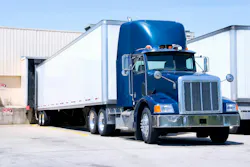
Yard operations are one of the few areas in the supply chain where heavy equipment, time pressure, and human decision-making intersect in an open, dynamic environment.
That combination makes them one of the highest-risk environments for safety incidents, yet they are often managed with less structure and oversight than warehouse or transportation operations. Financially speaking, yard logistics is a fraction of what an enterprise spends on logistics and supply chain execution. Operationally, however, it has an outsized influence on performance and business outcomes.
For EHS leaders, this presents a growing challenge. As supply chains become more complex and operational pressure increases, yard operations are emerging as one of the most underestimated—and most exposed—risk centers in the network.
The Real Possibility of Safety Risk
In a typical yard environment, risk is not theoretical. It shows up in the following everyday conditions:
- Yard drivers navigating congested lanes with limited visibility;
- Pedestrians moving between trailers and active equipment;
- Rushed trailer moves under time pressure; and
- Inconsistent communication between yard and dock teams.
These conditions increase the likelihood of near-misses, equipment damage and serious safety incidents. Unlike more controlled environments, yard operations often rely on individual judgment in real time, which can lead to inconsistent outcomes.
How Congestion Creates Unsafe Conditions
Congestion is one of the most visible—and most dangerous—indicators of risk in yard operations.
When trailers accumulate without clear sequencing or prioritization, movement becomes reactive. Yard drivers are forced to reposition equipment frequently, navigate tighter spaces and operate under pressure to resolve bottlenecks.
As congestion increases, so does interaction between vehicles and pedestrians, while visibility across the yard decreases. These conditions make it more difficult to follow standard procedures and increase the likelihood of rushed or non-standard movements.
From an EHS professional’s perspective, congestion is not just an efficiency issue; it is a direct contributor to unsafe working conditions.
Inconsistent Execution Increases Exposure
Another major risk factor is inconsistency in how work is carried out.
In many yard environments, processes vary by shift, location or individual operator. Decisions about trailer movement, dock assignment and prioritization are often made differently depending on who is managing the operation at that moment.
This variability makes it difficult to enforce safety standards consistently. When execution changes from one shift to another, so do communication patterns, decision-making approaches and adherence to protocols.
As a result, safety becomes dependent on individuals rather than embedded in the operation itself.
Equipment, Access and Security Risks
Yard operations also present unique risks related to equipment and site access.
Yard tractors, trailers and gate systems must all be managed consistently to ensure safe operation. When they are not, the consequences extend beyond safety incidents to broader operational and security concerns.
Equipment that is not properly inspected or maintained can introduce hazards during movement or at dock doors. Trailers positioned incorrectly can create unsafe working conditions for both drivers and dock personnel. At the same time, weak gate controls or inconsistent verification processes can allow unauthorized access to the facility.
As cargo theft and tampering increase nationwide, these vulnerabilities are becoming more significant. The yard is often the last controlled point before freight enters or leaves a site, making it a critical area for both safety and security oversight.
Why Traditional Approaches Fall Short
Many organizations attempt to improve yard safety through incremental changes, such as adding labor, introducing new equipment or implementing visibility tools.
While these steps can provide short-term improvements, they do not address the underlying issue: lack of coordination in how the work is done.
Visibility may show where assets are, but it does not ensure that work is carried out safely or consistently. Additional labor increases capacity, but it does not guarantee alignment or communication. Technology can support operations, but it cannot replace a structured approach to execution.
Without coordination, variability remains—and with it, risk.
From Reactive Management to Coordinated Execution
Reducing safety risk in yard operations requires a shift in how the environment is managed.
Rather than treating the yard as a series of disconnected tasks, leading organizations are managing it as a coordinated operating environment, where movement, communication, and decision-making are aligned in real time.
This shift involves standardizing how work is executed across shifts and locations, aligning trailer movement with dock readiness, and establishing consistent communication protocols between teams.
When execution is coordinated, flow becomes more predictable. And when operations are predictable, safety risks are easier to control.
The Role of an Integrated Operating Model
For organizations committed to building world-class safety cultures, the next step is clear: bring structure, coordination and consistency to yard operations.
In practice, this means implementing a yard operating system (YOS) to govern how work is executed throughout the yard.
Because in a dynamic environment like the yard, safety cannot be managed through oversight alone. It must be designed into the system that drives execution.
This approach integrates operations, technology, sustainability and safety so they work together rather than independently. When these elements are coordinated, organizations can move from reactive management to controlled execution.
For EHS leaders, this creates meaningful advantages. Safety practices become more proactive and consistent. Risks can be identified earlier, and operations rely less on individual judgment. It also strengthens alignment among safety, operations and security objectives.
Most importantly, safety becomes embedded in how work is performed, not just as reactive model.
What EHS Leaders Should Watch in Yard Operations
To reduce exposure, EHS leaders should evaluate:
- Are trailer movements coordinated or reactive?
- Are traffic patterns clearly defined and consistently followed?
- Is communication standardized across teams and shifts?
- Are gate controls and access points tightly managed?
- Is safety embedded in execution or dependent on individuals?
These questions can help identify where risk is being introduced and where improvements are needed to ensure worker safety day in and day out.
Evaluating Yard Operations as a Safety Priority
Yard operations can no longer be viewed as a transition point in the supply chain. They are a high-risk environment where safety, security and operational performance intersect.
When managed without coordination, they introduce variability and exposure that can lead to incidents, disruptions and broader network instability.
When managed as a coordinated system, they become a controlled environment where risks can be reduced and performance stabilized.
For organizations committed to building world-class safety cultures, the next step is clear: bring structure, coordination and consistency to yard operations.
 male truck driver in the cab talking to a woman wearing a safety vest on the ground
About the Author
 Adam Buttgenbach
Adam Buttgenbach
Since June 2026, Adam Buttgenbach is vice president of fleet strategy and loss prevention at YMX Logistics, where he helps enterprise shippers improve fleet performance, safety and operational performance. He brings more than 20 years of leadership experience in logistics, procurement, maintenance, and logistics transformation to YMX.