OSHA Leadership Insights: David Keeling on Safety Innovation and Compliance
Key Highlights
- David Keeling's career began at UPS as a package handler and evolved into global safety leadership, including roles at Amazon and now OSHA.
- His compliance background and industry experience position him to promote proactive safety measures and modernize regulations through consensus standards and technology.
- OSHA aims to leverage predictive analytics, digital tools, and industry collaboration to prevent workplace incidents before they occur, especially in small and medium-sized businesses.
- The agency emphasizes supporting employers' success by modernizing outdated standards and fostering a culture of safety sharing among large organizations.
- Effective safety management involves building a strong business case, demonstrating ROI, and engaging stakeholders like insurance companies to prioritize safety investments.
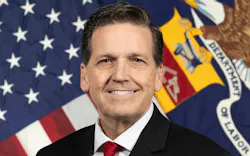
OSHA directors come from all walks of life. Doug Parker, who served under President Joe Biden, and Edwin Foulke, who served under President George W. Bush, were both lawyers before being named Assistant Secretary of Labor for Occupational Safety and Health (the official title for the head of federal OSHA). David Michaels, who served under President Barack Obama, was an epidemiologist. Loren Sweatt, who served as an acting administrator since no one was confirmed as OSHA head during President Donald Trump’s first term, had been a senior policy advisor to Congress.
David Keeling, however, who became head of OSHA last fall, spent most of his career leading occupational health and safety for two major companies: He finished his 38-year career at UPS as vice president of global health and safety, and he also served for two years as director of global transportation safety at Amazon. He’s a member of both the American Society of Safety Professionals (ASSP) and the National Safety Council (NSC).
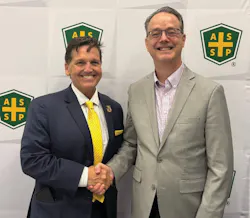
EHS Today sat down with Keeling at the recent ASSP Safety26 Conference and Expo in Anaheim, Calif., for the following one-on-one interview, which has been edited for length.
EHS Today: Let’s start by looking at your background in safety. First of all, I understand you started your career at UPS.
David Keeling: I started at UPS when I was 17 years old, not quite 18. I graduated from high school, and it was going to be a summer job to get me through college. And it turned out to be a little bit more than that. I went in as a package handler and a college student and everything that comes with that. I worked nights for the first 10 years, everything from inside operations to loading aircraft. I was at the air hub in Louisville, Ky. I went to the University of Louisville and later graduated from Sullivan University. I got married, and my wife decided that we needed more money and I agreed, so I went into management. The wait for a driver position was pretty long at that time. So I went into operations management for five, six, seven years.
And then UPS actually got itself in a little bit of trouble with OSHA back in the 1990s. UPS pulled me in and said, “We want you to help with health and safety locally,” and I kind of fell in love with it and never left.
I worked in Louisville for a few years and then relocated to Chicago and then Kansas City. I learned a lot about safety compliance from a couple of really good managers in Chicago and Kansas City. And then I came out to California to the Laguna Hill Region office for a while. And then to the UPS corporate office in Atlanta in 2010, where I was the corporate safety compliance manager at UPS. I had responsibility for corporate safety, not just in the U.S. but around the world, 28 different countries at one point in my career. I had a great experience at UPS, and then I retired after 38 years.
I then went over to Amazon for a couple of years, where I worked specifically on fleet safety.
So I was dealing with some of the new Rivian vans, and I really tried to take advantage of the newest technology when it came to fleet safety. I went to Amazon with the intent of a two-year stint, and that’s kind of what I did, and then I turned it over to one of the folks that was in the group and then retired again. I was sitting on the couch watching the Cincinnati Reds get beat and the phone rang [and it was Washington] and I said, “Are you sure you want me to come and talk to you, or do you want me to find you somebody?” And they said, “We want you to come talk to us.” I said, “Okay.”
So that’s kind of how it happened.
To what extent do you think your background in fleet safety and transportation safety helped put you at the top of the list of whom the Department of Labor wanted to run OSHA?
Keeling: I don’t know that it put me at the top of the list. Actually, what I think drove some of the conversation and focused folks on me was probably my compliance background. I retired as vice president of health and safety at UPS, but before that, I worked in compliance for 10 years. I was in and out of the Labor Department a few times representing UPS at that time, and I had spent some time in Washington in that compliance role before getting the vice president’s job. And that’s when I met most of the folks that I’m dealing with on a regular basis now.
I was at your event earlier today [at an ASSP Safety26 keynote session], and you kind of answered a question I was going to ask you, about the status of the heat standard. I guess the status is it’s...
Keeling: It is where it is. We’re still working on stuff. We still think we can get to a good space. We’re just not quite there yet.
At your confirmation hearing, you said that you were hoping to pursue a new workplace violence regulation. Is that something you’re still looking at?
Keeling: I think my response was actually, “I understand the work that needs to be done here.” I don’t necessarily think you need to have a new regulation to work on an issue.
I’ll use an example of suicide prevention that we need to be engaged and involved in, even though we don’t have a standard for it.
Or I’ll use the example of addiction and drug use in the workplace. That’s not something we have a standard for, but we’re actively looking at ways to do better in that space. So I think workplace violence is there too.
Now, if that’s what it eventually morphs into, I’m not locked into having to have a new regulation because I think there are already best practices out there that could be referenced, that you can point to and say, “If we follow these things, we’re following the right path.”
To be frank, and I’m not telling you something you don’t know, the rulemaking process at OSHA, by its very nature, is long. It’s cumbersome. And when you get to a rule, it’s hard to change afterwards, right?
So that’s not to say that there are certain things that don’t need to be approached from a rulemaking perspective. I certainly do believe there are. But there are a lot of things that we can do through referencing standards that already exist that aren’t necessarily owned by OSHA, but they’re owned by the industry. And I think where it’s appropriate to do that, I would like to see us look at those consensus standards and bring those in. We can keep our rules relevant because they don’t have to go through the same process, but they still go through a rigorous process that are recognized by, in some cases, multiple nations, right?
But certainly multiple work streams. ASSP is an example, National Safety Council is an example, VPPPA, AIHA, depending on what topic you’re talking about.
You mentioned consensus standards. Are there any worldwide global standard bodies that you look at and say OSHA should be more like them?
Keeling: Not necessarily becoming more like them, but ISO is certainly something we look at. ANSI standards go through a great vetting process. They get a lot of disparate opinions, and they get a lot of people who don’t necessarily agree together in a room.
Anytime we’re talking about a topic, we need to look at what’s out there and see what’s the best fit for what we’re talking about. ISO comes to mind, ANSI comes to mind, but there are certainly other things that we could be looking at. Electrical standards, for instance.
You’ve said that OSHA is famous for showing up after an event occurs, and that OSHA needs to use predictive analytics to show up before an event occurs. How would that work? Where do you see that happening?
Keeling: If tell you I know exactly how to do it right now, I’d be lying, right? But there are things we can do. I think it’s a combination of rearview metrics, which are the traditional metrics that we measure. But there are things that we can look at ahead of time.
You can build some models using those, but there are things that we haven’t brought in. SIF is one example, but there are others when it comes to predictive analytics that we need to bring in. The national emphasis programs are an example of that, where we’re trying to get to locations before an event occurs.
One of the things we need to be conscious of is we are seeing a real disproportionate number of injuries that are occurring in small businesses. Are we spending so much time dealing with the large organizations that we’re somehow not making enough of an impact on the smaller ones? So we’re being very intentional right now on concentrating resources on the small and medium-sized businesses. And we think a rising tide raises all boats.
The other thing is how we approach some of the larger organizations and use them as resources. I worked for two large organizations, and all the buildings didn’t look the same, all the operations didn’t look the same. Some of them you walked in and said, “Wow!” and some of you walked in and said, “Wow?” and it’s two different wows, right? It’s the same company, same processes, but the local leadership may have been different or the execution was quite often different.
Scott Mugno was my counterpart at the time at Federal Express. Scott and I talked regularly, which drove some folks nuts, because in our minds, his and mine both, and we still talk, safety is not something you should hold close to the vest. A safety best practice is not something you should consider a competitive advantage.
And what you should be doing, if you’re a large organization, and I always said this at UPS, we brought companies in and we would ask sometimes, “Why are your safety numbers better than ours? What are you doing?” And we would share our safety numbers with them and share best practices. And for years FedEx and UPS borrowed from each other, and we both got better.
And that’s just one example.
But I think in a broader sense, we’d like to take what those larger companies and sites are doing and have built, and normalize that among other large operations, and especially medium and small-sized businesses. We’re never going to have enough inspectors to do the job we need to do. It’s just impossible, right? So we have to find more ways to do that, and we do that through engagement with all those groups—ASSP, National Safety Council, VPPPA, AIHA, and even some of the state programs. I think we can do a better job with how we’re engaging with our state partners.
What is the relationship between federal OSHA and the state OSHAs?
It seems like sometimes you’re on the exact same wavelength, and sometimes...
Keeling: There are local things that come up that bring pressures and obviously industry and business don’t look the same everywhere. Some places farming dominates the conversation, some places construction dominates the conversation, some it’s manufacturing.
I did not get to go to the most recent OSHSPA [Occupational Safety and Health State Plan Association] meeting, which is the gathering of the states, but I did go to the first one this year. And we had ten of the states come in [this spring] to talk about things like future funding, and future staffing, and how we can get better at recruiting.
One thing we all have to be conscious about, federally and in the states, is enabling businesses to be successful. We need to be very conscious and very intentional about the fact that the vast majority of employers out there and employee work groups want to do the right thing for the right reason and they need some help to get there. And we should not be treating them in the same way as we’re treating employers that don’t have good intentions and that are abusing their employees and that aren’t treating the American worker the way American workers should be treated. That’s going to be our approach.
What are the biggest workplace hazards that you think are receiving too little attention?
Keeling: There are things that don’t traditionally fall underneath OSHA’s purview. Certainly the Department of Transportation does a great job, and FMCSA [Federal Motor Carrier Safety Administration] does an awesome job talking about fleet safety. But what’s the leading cause of workplace fatalities? It’s not falls, right? It’s people being killed driving a vehicle.
We need to very much care about that. Even though there’s not an OSHA regulation there, we need to play in that space, and we need to support what FMCSA and DOT are doing from a workplace perspective.
Another thing is, I think workplace violence is obviously something that we’re conscious of, but we need to understand what’s leading to those events too.
We talk about drug addiction and suicide prevention.
Those are the types of things that we need to be very conscious of and very intentional of how we’re approaching moving forward.
They’re not things that OSHA traditionally has said we have to tackle. But they’re part of what’s driving the roughly 5,000 fatalities every year. Those are the kind of things we’ve got to get engaged in.
Would that require OSHA regulatory oversight on workplace violence or suicide prevention or anything like that? Or is it more what you mentioned earlier, OSHA cooperating with and having a relationship with companies rather than necessarily putting it into a standard?
Keeling: I think it could be either/or. But you can’t wait for the regulatory process to try to make a difference. The fatalities and the injuries and the situations are occurring today, right?
And we talked about it earlier, that the building of a regulation and the adopting of a regulation is not a fast process. We can’t afford to wait for that to happen.
In some situations, you mentioned heat earlier, but lockout/tagout is one that I don’t think we need to have a regulatory conversation about. We need a modernization conversation when it comes to lockout/tagout. I think that’s a little different.
There are things that we can do to modernize without building entirely new regulations that will help support some of those things. We have a lot of standards that simply don’t—I won’t say they’re not being adhered to, but maybe people are trying to make the work fit the standard, which doesn’t really make sense.
I think we have to get ahead of the modernization effort by doing the second part that you talked about, which is engaging groups like ASSP and others.
The ASSP exhibit hall is very much focused this year on digital technologies and AI. You earlier emphasized the need for small and medium businesses to be brought into more oversight from OSHA. Given that it’s usually the big companies that are using the digital tools first, how does OSHA as an agency with oversight over small, medium and large companies develop a rule or a framework so that the small companies can afford to be modernized?
Keeling: You have to be intentional about the way that you’re building any kind of a work rule, I agree with you 100% that technology has outpaced that lockout/tagout regulation at this point. We don’t need to be doing anything that’s putting a barrier in the way of new and more innovative safety solutions.
Sometimes having an antiquated regulation or an antiquated rule can slow down progress when it comes to making things safer or making things better. I think we’ve got to be very conscious of that.
I think the other thing is, as quickly as we can do it, normalizing those advancements and that layered approach to giving people, for instance, safe lockout/tagout as an example of a layered approach.
By normalizing it with large businesses and allowing them to move forward aggressively in this space, you have a trickle-down effect with small and medium-sized businesses. What you’ll see is that the OEMs and the builders, the manufacturers, as they adopt these more holistically, then for a better price point, small and medium-sized businesses can take advantage of those advances. But it’s not an overnight thing.
We have to be flexible enough in the rulemaking that we’re allowing for not one but multiple ways of getting to where we need to get to, which is how can we take this work and make it as safe as possible? How can we take this activity and reduce the risk associated with it as much as possible?
So for OSHA’s part, we don’t want to be in the way. We want to support them from a health and safety perspective. We want to certainly enforce that employers have the right things in place and employees should go home safe at the end of the day. But we need to be conscious of how we’re doing that and how we’re allowing technology to make a difference.
It certainly is a valid point that small and medium-size companies will have to take advantage of things that large organizations do first.
What should safety managers who are trying to work their way up the corporate ladder do to get the attention of senior management to let them know workplace safety is important?
Keeling: One of the things that we do a very good job of in the health and safety industry is we teach you the rules. If you have a safety degree or a CSP or an ASP certification, you know the rules, right? What we don’t do a very good job of as an industry in teaching people how to explain the value of safety. I think that goes all the way from the universities up through the business ranks: how to build a business case.
We need to engage with the insurance industry because they’re very conscious of how a safer operation reduces the potential for workers’ compensation or liability costs. We need to play in that space too.
Learning how to build a business case and learning how to speak to the value that safety brings, it certainly has a human element to it. But you have to be able to frame it in such a way that it makes sense to others. You have to be able to convince people the “why.” Not just the human element, which is certainly there, but I think the business case element is something we can do better on.
The ROI of safety.
Keeling: Yes, ROI is massive. If you want to get your foot in the door, you do that through making a business case for the ROI of safety. That’s a great, great point.
About the Author
 Dave Blanchard
Dave Blanchard
Editor-in-Chief / Senior Director of Content
During his career Dave Blanchard has led the editorial management of many of Endeavor Business Media's best-known brands, including IndustryWeek, EHS Today, Material Handling & Logistics, Logistics Today, Supply Chain Technology News, and Business Finance. In addition, he serves as senior content director of the annual Safety Leadership Conference. With over 30 years of B2B media experience, Dave literally wrote the book on supply chain management, Supply Chain Management Best Practices (John Wiley & Sons, 2021), which has been translated into several languages and is currently in its third edition. Prior to joining Endeavor/Informa/Penton, he spent a decade covering the artificial intelligence industry. He is a frequent speaker and moderator at major trade shows and conferences, and has won numerous awards for writing and editing. He is a voting member of the jury of the Logistics Hall of Fame, and is a graduate of Northern Illinois University.