Podcast: The Past, Present and Future of Workplace Safety
Working conditions have greatly improved since the Triangle Shirtwaist Factory fire in 1911, which remains one of the deadliest workplace safety events in American history. That tragic fire that killed nearly 150 workers, most of them young women and girls, has had an enduring legacy; it led to the creation of what is now known as the American Society of Safety Professionals (ASSP).
It’s encouraging to think about the positive changes and progress in the past century, from the regulations that have standardized many work processes to the development of personal protective equipment that safeguard workers’ bodies. For example, Edward W. Bullard patented and first produced the hard boiled hat, the precursor to the modern hard hat, in 1919.
But there’s a long way to go to creating safe environments. There were 5,070 U.S. workers who died on the job in 2024, according to the most recent data available from the Bureau of Labor Statistics.
Decreasing that number further and improving other safety metrics will require different strategies, different (perhaps burgeoning or still-to-be developed) tools and an altogether different mindset. The prospect of all that work can, at times, be daunting. But it’s also exciting to be on the cusp of innovation and progress. To help sort through the tangle of the sometimes conflicting emotions and glean perspective, EHS Today consulted the current and past leadership of ASSP.
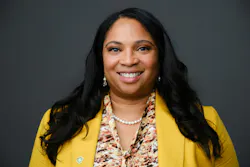
Monique Parker, CSP, is the 2026-2027 president of ASSP. She is the chief sustainability officer for Elevra Lithium, a dual-listed lithium producer and developer. A chemical engineer by training, she has previously worked in textiles, chemical manufacturing, building materials and food production.
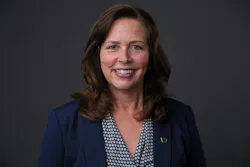
Linda Tapp, ALCM, CSP, CPTD was the 2025-2026 president of ASSP. She is the president of the SafetyFUNdamentals, an occupational safety training and consulting firm. She is the author of over a dozen books, including Make Your Safety Training Great: Improve Retention and Get Better Results.
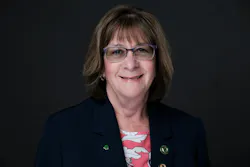
Pam Walaski, CSP, was the 2024-2025 president of ASSP. She is the owner of RiverLure OSH Services, a safety consultancy. She is a part-time faculty member at Indiana University of Pennsylvania and University of Alabama at Birmingham, where she teaches graduate courses in occupational safety and health. She has been a presenter at ASSP's annual professional development conference every year since 2005.
Parker, Tapp and Walaski spoke with Managing Editor Nicole Stempak about the past, present and future of workplace safety in this latest episode of Great Question: A Manufacturing Podcast. You can hear their full conversation below. Don’t forget to subscribe, so you never miss an episode!
[Editor's Note: This excerpt has been lightly edited for length, grammar and clarity, such as to omit word repetitions, remove incomplete thoughts and punctuate run-on sentences.]
EHS Today: I wanted to ask all of you how you stay centered and focused on the present, while also working to address these historical, long-term challenges that safety has and working towards proactive, preventive solutions.
Monique Parker: One of the ways I stay grounded is staying focused on the current workforce that we're dealing with because we have so many generations in our current workforce. How they interact, the tools they use, [whether they use] technology or not use technology, how they think, their risk tolerance and all the things. I mean, the list goes on and on.
Focusing there helps me not only be able to respect the past and ensure that we understand why we do what we do, but it helps me focus on [two questions:] ‘How do we maintain our current situation?’ and ‘How do we prepare the workplace, the workforce and industry for the next generation?’ Because when you can see the multigeneration in the workforce, when you work with them, and you know how they think, you see the differences, and you know the next generation is going to think even more differently.
They're going to have more tools and technology that we don't even—we can't even—fathom today. That's where I keep my focus and attention: the now and looking at, and learning from now, because of the generations. And then trying to predict, with my crystal ball, what the next generation is going to encounter and how they're going to think and try to react to that. AI helps us kind of
think outside the box. I don't think we can fathom what the future is, but we know that it will rapidly change. We, as professionals, have to be ready for that change at all times.
Linda Tapp: The board always talks about how worker safety is an inherent right of every worker. It took us a while to get to that point. That word ‘inherent’ was kind of a big discussion point, but we all support it, and we were all behind it. I think when you start to think about what you're doing and why. You might have fires to put out and other things, but it all comes back to: it's a right of every worker.
It's not just the workers in the best-of-class companies who have 50 people in their safety department. It's every single worker, [including] the temporary person who goes out, gets picked up on the corner in the morning and goes work out in the construction jobs all the time. I think that's what really helps me just keep that focus, what we're really doing and how important it is. Even though I'm not on the board anymore, that comment—it's an inherent right—is going to be ingrained forever.
Pam Walaski: Yeah, I remember that conversation, and it was really an important conversation. I think it was a turning point, as you said, Linda, when the board embraced that word.
During the course of my year as president, I had the opportunity to meet two moms of young people who had perished in workplace accidents who were speaking at different conferences and events that I went to. That just reminded me that the work's not done.
We've come a long way. And, as Monique says, there's some interesting and exciting things happening. But that's the perspective that we need to keep in place: That every person who perishes in a workplace accident or is severely injured is a person with a family and friends and co-workers whose lives are forever changed by what happened to them. We can't ever forget that.
Tapp: Nicole, I'll add on, and Monique probably knows where I'm going with this. In May, I got to attend OSHA's worker memorial in DC for a three-day event. That was heartbreaking, honestly. Children there were saying, ‘I miss my daddy.’ I mean, these are families of people who lost someone, not just in the past year, but ever. And some of them travel across the country every year to go to this memorial. There was a wreath laying at the Lincoln Memorial. But Pam mentioned the survivors.
What really, really struck me was that last day they had a survivors panel. They had about 12 family members, who were the survivors, talk about their loved ones in detail.
I was angry the whole time.
You think I'd be bawling my eyes out. I was angry because everything they talked about was so preventable. And so often, they're blaming their loved one. ‘Oh, my dad didn't have his heart hat that day.’ It's like, it's a bigger problem. I think I'm giving my preach for OSHA, but it was a really an amazing event that I think everybody should go to.
I know we often just talk about [physical] paperwork or digital paperwork, but that is everything. Hearing you, Linda, talking about how you were fired up, I wanted to ask about mission and energy. How do you all decide where to focus your energy and attention at any given moment? You could walk into your job and then get a phone call or see something 30 minutes, 3 hours from now, and it changes, you know, the rest of the day, the rest of the week or longer periods of time.
Parker: I would say for me, I mean, you're spot on when you talk about you can have a day planned. There are so many days I'm like, I'm going to do this or you have your calendar, and you get that phone call or you get that e-mail.
The thing that helps me keep my focus and energy and stay on task is what Linda said earlier. Every person has an inherent right to be safe, to have a safe environment and work. And that's what I focus on, the people. They are there for all the reasons we've talked about. They're there to support their family. They're there to progress their career. They're there to fulfill a purpose.
Obviously, we all have jobs, and we're there to make a product or do something for industry or for whatever that looks like. But, at the end of the day, if you keep the person front and center, then that personally allows me to be fulfilled and have the energy and want to do the next best thing. That's where I keep my main focus, is on the person.
And then also at the same time, how they interact with the work environment. Are we creating and designing a work environment that's going to allow them to safely engage? Do we have a safe space for them to raise their hand? If they don't feel comfortable, or they don't have the tools they need, or they don't have the right PPE, all of those things go into helping us stay motivated and energized to do the right thing.
I've worked in some companies where you have to fight for the simple things—to be able to make the environment safe or get the employees what they want. That's where you get drained. That's where you get just depleted [and you have to ask yourself], ‘Why am I doing what I'm doing?’ But if you can wake up and know that you're going to end the day helping someone be better, do better, get better, then it fulfills most people, and I'm one of those.
Walaski: Even though I don't have a traditional job like Monique has, I think one of the things that has given me energy over the past years has been tying into what she said, what you would maybe consider to be evolving approaches to safety. We have really pivoted away from compliance and have focused more on approaches like psychological safety and human and organizational performance. We have flipped the script and have really learned to see the worker as the solution—not the problem. We've begun to appreciate that people are human, and they make mistakes.
We have to create, as Monique described, that environment where those mistakes don't necessarily lead to their downfall; systems where they can interact and do their job because I believe, and I suspect Linda and Monique do as well, people don't come to work not caring. They come because they want to do a good job. They care about their work, and they want to do it well. Anything that we can do as safety professionals to help create those systems, I think, is really important.
You've all given me so much to think about, but something I think I'm hearing is culture. I want to know: How do you all remain dedicated without burning out yourselves? We talk about it for others, but [what about] for yourselves?
Tapp: I'll talk about the burnout part. I'll just jump in because we’re fresh off our conference. For me, our conference is like an energy drink that lasts all year. You go to that conference, and you leave energized because you see so many people doing such great things—and some of them with so little at the same time.
I think about a lot of those people as well. As president, Pam's done it and Monique will get to do it, we travel a lot around the country. We talk to a lot of other people, and you see how much work is getting done on the ground level by chapters and people who care so much. It keeps me going.
Parker: [In 2025,] when we had our conference in Orlando, the closing keynote speaker asked the audience questions. We got feedback from professionals within the organization about some of their personal challenges. We see a lot, and we hear a lot. It's very easy for us to personalize that and hold it in. And so, I think it's more about making sure one mental health is taken care of for the person, the professional, because without that, it is easy to get burned out.
I have to recharge…to completely disconnect. You take a break, you go on a girls’ trip, you go on a family trip, you just go somewhere and do the things you like to do. I know what Pam loves fishing. You find that thing that you love. For me, it's travel and eating. If I can do those, then I am in my happy place. It allows me to disconnect a little bit from all the heaviness. And then, with that recharge, you're able to go back and put a plan together and have a way to move forward. But I think it's very, very important to have the ability to disconnect.
I know some professionals don't get that. They have their computer with them 24/7, whether they're on vacation or not. That's hard, but organizations need to help their professionals do better, be better and be able to disconnect. The person also needs to look at how can they set boundaries so that they can get that disconnection point to prevent burnout.
And I'll be honest. I wasn't able to do that early in my career. There were times when I would wake up and I'm like, ‘Do I have to go to work today?’ because I would be so drained. I was just like, ‘I just want to rest.’ I learned later in my career that if I don't take care of myself, I can't take care of those that I'm hired to help take care of. That's how I function today. But early in my career, I didn't have the confidence to be able to do that.
Walaski: I agree over the long arc of my career. I don't think you can avoid burning out. I think you get better at recognizing the signs that you're stressed, and you're not doing as well as you want to, and you figure out what your ways of coping are. As Monique said, for me, it's fishing or biking. Traveling, eating, whatever it is, you have to figure out what those are for you, so that you can energize yourself.
This is a very challenging and a tough profession to be in. We are helpers. And as helpers, much like health care professionals and other folks in the helping professions, it's very easy to take on all of that stuff that you deal with every day. It's really hard sometimes to leave it behind. But if you're going to survive for a long term over the course of your career, you’ve got to figure out how to do that. And everybody has their own ways to do that.
Hear more from current and former ASSP presidents:
 people putting hands in a circle, symbolizing teamwork and unity
 safety_leadership_future
About the Author
 Nicole Stempak
Nicole Stempak
Nicole Stempak is managing editor of EHS Today and conference content manager of the Safety Leadership Conference.