Podcast: A Different Approach to Workplace Safety Culture

Kevin Weaver, DBA, MS, CHMM, has written the book on building a strong safety culture—literally.
Weaver, vice president of EHS Safety at U.S. Compliance, is the author of the second edition of Building A Strong Safety Culture: The 5 C’s of Workplace Safety. The consultancy originally published the book in 2022 in response to what the company’s two owners were repeatedly seeing and hearing in the field.
A second edition was necessary, Weaver says, because of all the changing headwinds from the past four years. There’s competition among employers, which has led to a bidding war favoring those with the deepest pockets. There’s an aging workforce. There’s high turnover.
The combined effect is that it’s a challenge to fill open safety positions. As a result, employers, especially small- to mid-sized employers, need to focus on growing talent from within.
“The core framework, the five C’s, is the same,” Weaver writes in the book’s forward. “What this edition provides is a fuller development of each C: more context, more tools, more real-world examples, and more integration between the safety program and the operating systems that determine whether it succeeds.”
The book takes a nuanced approach for how to build a stronger, safer workplace. The five C’s—commitment, compliance, culture, champions and cost—emphasize that everyone at an organization needs to buy-in and pitch-in to make a safety program successful.
“They're not five steps; they're five dimensions,” Weaver says. “If you take out one of them, the whole thing falls apart.”
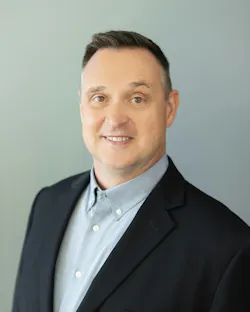
The book features definitions, citations, resources for further reading, key takeaways and real-world stories. Weaver says he included so many examples because he believes stories are an effective and powerful teaching tool.
“I'll say to all our EHS professionals, whether you have your own story [or] you find a story you can share…to demonstrate the point, it's a very powerful statement,” he says. “You'll see a lot of success within the organization the more you can use them.”
Stories and examples, Weaver says, make it easy to understand the return on investment of a safer workplace.
“If you take an average margin at a manufacturing organization of about 5%, to make up that difference from one injury takes about $1.35 million in new sales,” he says. “Imagine a $1 million sale coming in. A lot of people would be really excited. Preventing one injury is the equivalent.
“A lot of times, people don't get those numbers up front. It's not visible when we start thinking about the indirect costs. But when you start to frame that up, your entire leadership team goes, ‘Yeah, we can't afford not to be the safest company.’”
Weaver gets audibly animated when talking about how easy it is to start improving a given workplace’s safety.
“There's a lot of low hanging fruit and, again, I'll emphasize, none of it costs a cent—and it's not even extreme time dependent,” Weaver says. “It's just being diligent, putting it up there, and just really putting it out there for the world to see.”
Weaver recommends picking something quick, easy and visible to jumpstart the five C’s framework. For example, when a hazard or near-miss is reported, close it within 48 hours, and let employees know what you’ve done to build buy-in.
“Word travels faster than any memo or e-mail,” he says.
Weaver spoke with Managing Editor Nicole Stempak about creating and sustaining a strong workplace safety culture in this latest episode of Great Question: A Manufacturing Podcast. You can hear their full conversation below. Don’t forget to subscribe, so you never miss an episode!
[Editor's Note: This excerpt has been lightly edited for length, grammar and clarity, such as to omit word repetitions, remove incomplete thoughts and punctuate run-on sentences.]
EHS Today: It's great to have you here today, Kevin! I'm super excited to talk about the book. But first, I wanted to know what prompted U.S. Compliance to first write this book in 2022 and then a second edition four years later.
Kevin Weaver: Great question! Appreciate you asking, Nicole. It doesn't seem like that long ago, 2022, but maybe it's because I'm getting a little older. When it first came out, two of our owners, Tim Sheehan and Chris Naylor, had put together the book. And really, it was a collection of stories that they saw a lot of similarities. And as it came together, it was a process, right? How companies could go out and do some of these things for themselves. And if they followed the process, they could actually do a little bit to increase their safety culture.
Now, a lot's changed, sadly, even in the last four years. It was time for an update. So within our group, we looked at some of the things going on on a macro level. One of the big things is just talent right now, trying to find EHS people. There's such a shortage out there. And we said, you know what, let's work this through. Let's build this, especially for those small- to medium-sized entities that just can't find the resources. We’ve got people multi-hatting things. Let's put together a program that would work. And that's how this guide came together.
The second edition in just four years sounds, on paper, a little sudden, but you think about how much the world has changed and it's as though a decade has passed. So many technologies, and...social, political, you know, just every facet of life seems different.
A really good example that kind of outlines this is, and we'll pull some numbers here. In 2024, every school with industrial safety, occupational safety in the United States was graduating just under 2,000 students. In the same year, coming out of BLS, there was under 20,000 positions open in the EHS field.
There's not remotely enough students to cover these open positions. A lot of big companies and AI data centers…are scooping up a lot of people. So, if you're in a traditional manufacturing setting, you're not finding anyone. So, you're trying to sometimes promote people off the line, graduate people in, you're taking people that maybe haven't had a lot of experience yet.
And then you couple that with the average age of an EHS professional right now being about 59. We're starting to age out. There is a major need for EHS professionals right now. A lot of your readers are starting to say this: “We put up ads, and we might be waiting three, six months trying to find someone.”
Sadly, even the turnover rate is extremely high. When you start to see some of that kind of coming together in the background, [we're realizing] we aren't going to find the perfect individual. So how are we going to grow them? How are we going to take some really engaged people we have in the facilities and make them safety experts? That's a big part of what this is all about.
I like that the book dovetails with what we see as far as people taking many journeys to safety. It can be a second career. It can be people being promoted or discovering later after any formal education.
Some of the absolute best safety professionals have no formal background whatsoever but [are] highly engaged. I would say if there's a theme behind the book, and it's on safety culture, but the other term for that is engagement.
We want to find those champions, those people that know the operations, those people that have just lived in it for years and know every little loophole and shortcut. And to take someone like that within a facility, especially the smaller ones where they don't have those resources and promote them into the role where they can be successful, is very powerful. They'll stay a long time, and they'll have a lot of pride behind what they do.
There's a stat in the book, and you'll see, again, we focus on Gallup. Well, currently in the U.S., about one-third of employees are engaged at work. One-third.
That means two out of every three people literally might be working against you. They're not concerned. The number one kind of metric behind that is safety. When you have an engaged workforce, safety rises. When we start to talk about how we improve and how we do things, it is all about measurement. Measuring employee engagement—not measuring compliance.
For those who haven't yet read the book, can you explain what the five C's are and how they relate to each other and to safety?
I would say the biggest part of the five C's—commitment, compliance, culture, champions and cost—is really about a process. They're not five steps; they're five dimensions. If you take out one of them, the whole thing falls apart. We've also seen systems like this with ISO 45001 and 14001.
The purpose here was to create the system and dial it back to really manageable steps for people. Number 1 is not cost, it's commitment. Is leadership within an organization really committed to starting off and saying, ‘We want to be safer. We want that engaged workforce. We want to drive culture’? When you have that, it becomes very powerful.
That leads us to that second step, compliance. Compliance, for way too long, was determined to be where we're 100% compliant, right? We're the greatest company ever. Compliance is the floor. It is the minimum. And fortunately, you have to have a floor to build up. We do have to get there. Compliance gets you to about 60% of a strong program, but once you have that in, that's when you can start to focus on the shared behaviors and belief systems, the culture. And once you start determining what the culture is—and the real key is measuring culture—you can start to engage the workforce.
A couple of things we champion within that is finding champions. Who are those special people on the floor that just influence everyone else? Who are the people that everyone else is following? Who are the people that are really passionate about it? Who is going to take that step and say, ‘Hey, wait! You're not wearing your safety glasses.’ ‘We got to get this guard back on the machine.’ The little things, but the things that happen in a flash; the things that a safety manager can't see all day long and shouldn't be the one responsible. So, promoting them into really driving the culture.
And then at the very last, that fifth C, is getting down to the costs, the business case. The argument we make in there, and I think a lot of your listeners have done this themselves, is safety isn't a cost. An effective safety program drives profit within a company. The amount of data to support that, and the way that can be framed up to leadership is a very powerful statement every EHS professional should be able to do. There's an ROI, and it's very easy to show within safety when it's done right.
That just helps reinforce and get stronger commitment. Another $1 invested might save another $2, and then we start that cycle again. But it's very much a process, and it's about maintaining the flow and being very consistent with it.
About the Author
 Nicole Stempak
Nicole Stempak
Nicole Stempak is managing editor of EHS Today and conference content manager of the Safety Leadership Conference.