Summer Construction Requires Additional Safety Precautions
Key Highlights
- Construction is comprised of complex and changing conditions.
- The large flux of construction projects isn’t a seasonal challenge; it’s an ongoing one that requires constant planning, training and vigilance.
- It’s easy for construction workers and their supervisors to get distracted, overwhelmed and overworked amid all the summer projects. But risk of injuries during summer projects can be proactively managed just like any other safety hazard.

Every year, construction firms head into peak season focused on the same priorities: staffing up, accelerating timelines and keeping projects moving during the industry’s busiest stretch. The focus is understandable.
Between May and September, construction crews take advantage of longer days and favorable weather to complete as much work as possible before winter arrives. But while organizations prepare heavily for increased project volume, many underestimate how dramatically the operating environment itself changes once activity ramps up.
Peak season does not simply mean more work. It means more:
- Workers are entering jobsites quickly,
- Subcontractors rotating through projects,
- Overtime,
- Environmental stress and
- Operational complexity competing for attention at the same time.
When all of those pressures converge simultaneously, the possibility of a serious incident or fatality grows quickly.
For many safety leaders, all these variables require a delicate balancing act. Construction firms are under pressure to move faster and keep projects on track, but they’re doing so while managing workforce shortages, changing jobsite conditions and growing operational demands all at once. As a result, the busiest months of the year often become the hardest to manage.
Risk compounds faster during peak season
Construction is already one of the highest risk industries in the country and consistently records some of the highest fatal workplace injuries annually. During peak season, many of these contributing risk factors intensify at once. Longer workdays increase fatigue. Rising temperatures create additional physical strain. Seasonal hiring introduces newer workers into unfamiliar environments at accelerated speeds. Supervisors divide attention across expanding workloads while trying to maintain production goals.
It’s important to recognize that these pressures do not operate independently. They compound one another. Heat, for example, doesn’t only increase the risk of heat illness, but also affects concentration, communication, reaction time and decision-making. Fatigue from overtime can further increase the likelihood of shortcuts or missed hazards.
Peak season incidents are rarely caused by a single catastrophic failure. More often, they stem from small breakdowns accumulating over time. Because activity levels are higher during summer months, those small breakdowns have less room for recovery before they escalate.
Traditional preparation models no longer suffice
Most construction firms do prepare for peak season. Safety leaders verify certifications, onboard workers and reinforce expectations before schedules intensify. However, many of these efforts are still built around a relatively static model of preparedness—one where training happens before work begins rather than continuously as conditions evolve.
The problem is that peak season is anything but static. Sites are dealing with crews rotating frequently, conditions shifting daily, weather disruptions emerging unexpectedly and production demands compressing schedules. Supervisors become overloaded with competing priorities. Under those conditions, gaps that seemed manageable during slower periods become far more difficult to contain.
The construction industry’s labor shortage only increases the pressure. The industry still needs hundreds of thousands of additional workers to meet demand. To fill those gaps quickly, many firms rely on accelerated onboarding processes designed to get workers into the field fast, and that speed introduces risk.
New workers may complete orientation while still lacking familiarity with site-specific hazards, reporting expectations or communication protocols. Even experienced workers entering new jobsites must adapt to unfamiliar crews and workflows under significant time pressure. Many organizations assume that if training was completed before peak season started, workforce readiness will naturally sustain itself throughout the months ahead. But workforce readiness isn’t static either, especially during periods of heightened operational pressure.
Workers operating under fatigue, heat stress and production pressure may not absorb or apply information the same way they would under lower-stress conditions. Communication habits change as schedules tighten, supervisors have less time for reinforcement and coaching, and hazards evolve with each phase of a project. Preparation that works in theory can become difficult to sustain consistently in practice, particularly as these seasonal pressures compound existing challenges around learning, language, communication and knowledge retention.
Frontline supervisors feel the strain
At the center of this perfect storm are frontline supervisors, many of whom are balancing workforce onboarding, production oversight, inspections, reporting and safety management simultaneously.
A survey conducted by Vector Solutions found that 67% of construction supervisors have had to make important safety-related decisions without clear company guidance. Furthermore, 45% reported feeling pressure to prioritize project deadlines over safety at some point on the jobsite. Supervisors are increasingly being asked to manage complexity faster than many existing systems are designed to support.
Communication challenges become more difficult to manage as well, particularly across multilingual crews or rapidly changing jobsites. The same research found that 78% of supervisors managing English as a second language (ESL) crews struggle to communicate instructions effectively, while 77% struggle to confirm understanding in the field.
During peak construction season, those gaps become harder to manage because supervisors have less time for reinforcement training, follow-up conversations or proactive coaching. Even so, many are still expected to manage safety processes through disconnected systems, spreadsheets, paper documentation, or manual reporting workflows that limit real-time visibility into workforce readiness, jobsite conditions, and emerging operational risk.
That’s why more firms are placing greater emphasis on leading indicators and real-time field data to identify risks earlier. Near-miss trends, recurring hazard observations, delayed inspections, overtime patterns, heat-related complaints and training engagement can all provide insight into where operational strain may be building before any incidents occur.
By connecting training activity, field observations, inspections, and workforce reporting into a more unified operational view, organizations can identify emerging risks earlier and respond faster. For example, if supervisors begin seeing repeated procedural deviations tied to fatigue or heat exposure, organizations can conduct reinforcement training immediately, adjust schedules, or increase oversight before conditions escalate further.
Treat workforce readiness as an ongoing process
The organizations that navigate peak season most successfully are rarely the ones relying solely on pre-season preparation; they’re the ones treating workforce readiness as an ongoing operational process.
Training remains foundational, but construction environments change too quickly for one-time reinforcement alone to sustain readiness throughout the busiest months of the year. That’s why organizations are looking beyond traditional training; they’re supplementing it with shorter, more accessible reinforcement strategies tied directly to active jobsite conditions. They’re also embracing more connected systems that track training engagement alongside field observations, inspections and operational trends in real time. Mobile-accessible tools and real-time reporting capabilities are also helping organizations reinforce safety expectations directly within day-to-day workflows rather than treating training and operations as separate processes.
Toolbox talks connected to current hazards, scenario-based training exercises, multilingual training content and task-specific refreshers can all help workers retain and apply critical information more consistently during high-pressure periods. In fact, Vector Solutions’ research also found that 81% of supervisors still want refresher safety training to stay current on evolving standards and jobsite risks, despite already completing formal safety training requirements.
The most effective safety reinforcement is continuous, accessible and integrated into daily operations. That approach is pushing many organizations toward more connected safety and workforce management strategies designed to improve visibility across training compliance, field activity, inspections and incident reporting simultaneously. The goal is not simply completing training requirements, but creating operational environments where supervisors can make faster, better-informed decisions with fewer administrative barriers.
Final thoughts
Construction firms will always face pressure during peak season. Tight timelines, changing conditions and operational complexity are unavoidable parts of the industry. But you can still prevent safety incidents.
By constantly planning for challenging operating conditions, peak season becomes less of a disruptor and more like a stress test for the systems, communication and processes already in place. The firms that respond most effectively are continuously reinforcing readiness, empowering frontline supervisors with better visibility, and using operational insights to make faster, more proactive decisions before small issues escalate into larger disruptions.
If you're looking for a place to start this summer, don't try to tackle everything at once. Focus on one or two areas where communication can break down under pressure, and make sure crews have the information and support they need before small issues become bigger ones.
Read more:
 Getting Ahead of Heat Stress Risks on the Job
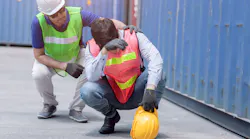 Worker Fatigue
 construction supervisor + crew
 picture of a thermometer in the foreground and clouds and sun in the background
 What's the Impact of 25% of Employees Cutting Corners?
About the Author
 Clare Epstein
 Clare Epstein
Clare Epstein is the general manager of the commercial market segment at Vector Solutions, which serves customers across manufacturing, engineering and construction, transportation, and energy. She brings more than 20 years of leadership experience working with safety training and technology solutions.